
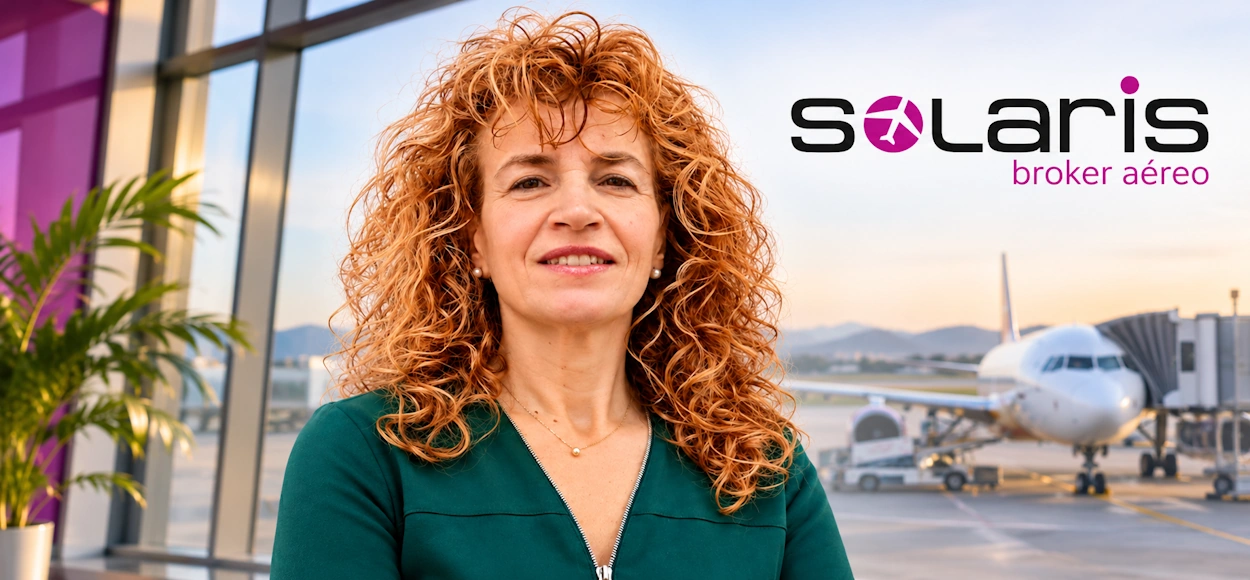
Marce Cruz Padilla, CEO and founder of Solaris Air Broker and a member of the Spanish Tourism Board, has spent much of his professional career in a field where decisions, coordination and the ability to react have immediate consequences. The career of Marce Cruz It provides an inside look at a sector where experience and trust are crucial.
In this conversation for In the First Person, Marce Cruz He talks about responsibility, leadership, entrepreneurship and human relationships. He also recalls some of the most difficult moments of his career and explains why founding Solaris after the age of 50 was one of the most important decisions of his professional life.
1. If you look back at the woman who started out in aviation and the woman you are today, what part of that Marce remains exactly the same, and what has changed completely?
I think I’m still, at heart, the same person: a woman who believes in people, who tries to do things honestly and who is genuinely committed to what she does. I’ve always tried to treat others as I’d like to be treated myself.
What has changed is experience and, with it, a certain wisdom that only comes with age. You learn to better assess where it is worth investing your energy, when to fight for a deal and when it is better to take a step back. In our line of business, it’s not all about generating revenue: sometimes, taking on a deal at any cost can end up causing more problems than it brings benefits.
I have also learnt to deal with disappointments, to be more cautious without losing faith in people, and to tackle challenges with greater confidence. Founding Solaris Broker Aéreo after turning 50 was a way of taking control of my future and one of the most important decisions of my professional life. I believe I still have the same enthusiasm as I did back then, but today I have more experience to help me decide where and how to channel it.
2. You have been working for many years in a sector where decisions can have immediate consequences. What has aviation taught you about taking responsibility?
Aviation has taught me that responsibility is not just about making decisions, but also about accepting the consequences of those decisions and responding when things do not go as planned.
In our sector, there are many factors beyond our control, but it is up to us how we respond to them, how we coordinate with the parties involved and how we seek solutions. Behind every operation there are customers, passengers, airlines and teams who trust that everything will be managed correctly.
I have also learnt that you have to be realistic, keep calm and recognise when a situation calls for a change of strategy. You cannot always avoid a problem, but you can work to minimise its consequences.
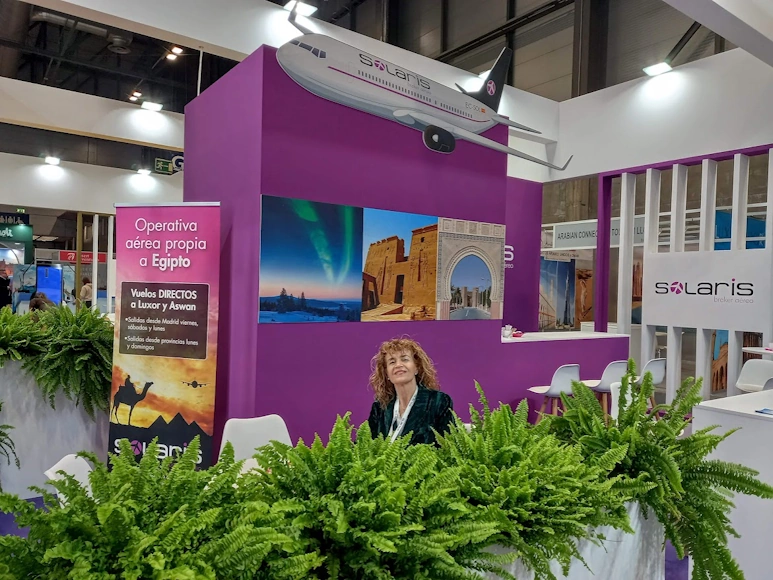
3. Passengers see the aeroplane, the crew and the destination. What part of all the work that goes on behind the scenes of a flight do they never even imagine?
I think many people aren’t aware of everything that goes into organising a charter flight. From the outside, it might seem as though all you need to do is hire a plane and set a date, but the reality is much more complex.
We need to identify the availability of the aircraft best suited to each operation, coordinate timetables, routes, permits, airport services, client requirements and a host of other details that must all fall into place. Furthermore, we must try to anticipate potential issues and be able to react swiftly should anything change.
At the air travel agency, our job is precisely to match our clients’ needs with what the airlines can offer, seeking the most suitable solution for each booking. Often, when everything runs smoothly, our work goes unnoticed. And, in a way, that’s a good sign: it means we’ve managed to ensure everything went according to plan.
4. Can you recall any particularly complicated operation that has shaped you as a professional?
Over the years, I have been involved in numerous complicated operations – the sort where plans go awry and you have to react quickly to find solutions.
But there is one situation I remember in particular from my time at Oasis Airlines: the day the company went bankrupt.
The last flight it operated was from Madrid to New York, using the only aircraft still in service. When the aircraft arrived in New York, staff from Delta Air – to whom Oasis owed money – removed the FADEC from the engine, preventing the aircraft from returning to Madrid. As a result, all passengers who had planned to fly from New York to Madrid were left there, with no possibility of returning on that aircraft.
I knew that this meant the end of the company and that, as a result, I would be out of a job, but, even so, that night – which was a Saturday – I went to the office to try to coordinate with Head Office (which was in Italy) the best way to bring back all the passengers who had been left stranded in New York. At the same time, I had to attend to and reassure our clients, the tour operators who had placed their trust in Oasis throughout its history.
Throughout that long, gruelling night, I didn’t miss a single call. The company might have been on the brink of collapse, but I felt I still had a responsibility to our customers and to the passengers affected.
When it was all over, some of those customers came to thank me because, even though I knew everything was lost and that I was going to lose my job, I hadn’t left them in the lurch.
That made a particular impression on me. I think it sums up very well how I view my profession: circumstances can change from one moment to the next and a company can disappear, but responsibility, commitment and the way you treat people remain. Ultimately, beyond operations and results, what remains is how you’ve behaved when things have got really tough.
This is just one example, but there have been many others throughout my career. Every stumbling block along the way teaches you something and helps you to be better prepared for the next time. However, the reality is that you’re never fully prepared for the thousands of setbacks that can arise in aviation. The important thing is to stay calm, look for solutions and not lose sight of the fact that behind every operation there are people who need everything to run smoothly.
5. In a business where almost everything can change in a matter of hours, how do you learn to cope with the pressure and uncertainty?
I think you learn over the years, through experience and, above all, by going through situations that force you to react. In aviation, no matter how much you plan, something can always come up that completely changes the situation.
My way of dealing with it is to try to stay calm, analyse the situation and focus on what I can actually do something about. It’s inevitable to worry, but letting your nerves get the better of you doesn’t help you find answers.
It has also helped me a great deal to learn to put things into perspective. Difficulties are part of our daily lives and, although they may seem insurmountable at the time, a solution often eventually presents itself. As I often say, after the storm comes the calm.
6. When you have to make an important decision, which carries the most weight: data, experience or intuition?
I think all three things are important and that, over the years, you learn to balance them.
Data is essential for understanding the real situation and assessing the available options. Experience enables you to recognise situations you have already encountered, anticipate potential problems and understand aspects that do not always feature in a report. And intuition, which also develops over the years, sometimes alerts you to the fact that something isn’t quite right.
In my case, I try to listen to all three. I don’t like making hasty decisions, but neither do I believe there’s a foolproof formula. In a business like ours, you need to know how to analyse, assess the risks and have the ability to make decisions, even when you don’t have all the information you’d like.
7. Starting your own business means moving from simply dealing with problems to also taking on all the risk. What was the hardest part about taking that step?
The hardest part was regaining the trust of the clients I’d built up over many years in the profession. When you’ve been working in the sector for so long, you’ve established strong relationships, but getting a client to switch suppliers isn’t always easy, even if they’re satisfied with the service they’re receiving.
Loyalty is something that is built over time, through hard work and trust, and starting your own business means proving once again that you can live up to expectations.
What’s more, starting a business after the age of 50 means taking a significant risk and stepping out of your comfort zone. But there came a point when I realised I wanted to set up my own business and take control of my professional future.
It hasn’t been an easy journey, especially as the pandemic struck when Solaris had only just got off the ground. Even so, I believe that starting this business was one of the best decisions I could have made.
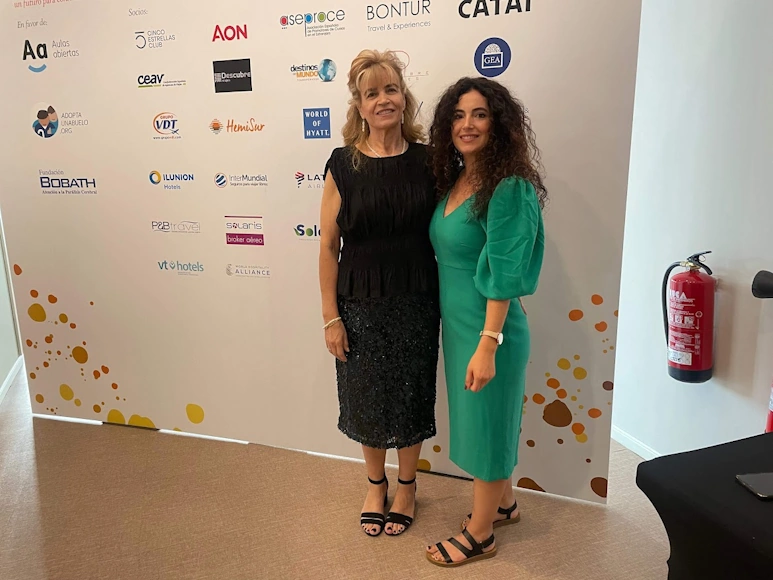
8. What does being an entrepreneur mean to you today? Freedom, responsibility, pressure, excitement… or a bit of everything?
A bit of everything, no doubt. Being an entrepreneur gives you the freedom to make your own decisions and build a business based on your own understanding of how it works, but it also comes with a great deal of responsibility.
There are days filled with pressure, worries and difficult decisions. When you run your own business, you never really switch off completely, because there’s always something to sort out or plan. But there’s also a huge sense of satisfaction when you see that your efforts are paying off and the project is continuing to make progress.
I’m feeling particularly happy at the moment because we’re celebrating the ninth anniversary of Solaris Broker Aéreo. Nine years of hard work, challenges, learning and, above all, trust. Looking back and seeing everything we’ve built is a source of immense satisfaction and also motivates us to carry on with the same enthusiasm.
9. You have worked for many years in an environment that has historically been very male-dominated. Have you ever felt that you had to prove yourself more because you are a woman?
Not particularly, although I have seen instances of inequality throughout my career.
My approach to tackling challenges has always been the same: to work hard, get involved and demonstrate my professional ability through my actions. I believe that the courage to face challenges has been one of the qualities that has characterised me throughout all these years.
I don’t like to generalise, because every experience is different, but I believe there is still some way to go before opportunities truly depend on each person’s talent, training and ability, regardless of whether they are a man or a woman.
10. What has actually changed for women in leadership roles within the tourism and aviation sectors, and what still needs to be done?
I believe progress has been made and today we see more women holding positions of responsibility and leading projects; however, there is still work to be done to ensure that their representation is more balanced, particularly in certain managerial and technical roles.
It also remains important to facilitate a work-life balance and ensure that motherhood or family responsibilities do not become an obstacle to women’s career development.
For me, the key lies in ensuring equal opportunities, valuing people on the basis of their ability and their performance, and fostering working environments in which talent can flourish. It is not about giving anyone an advantage, but about ensuring that everyone has access to the same opportunities.
11. What sort of people are you looking for to build a good team? What quality do you value most, apart from professional experience?
Experience is important, but it isn’t everything. I particularly value honesty, responsibility, empathy and the ability to work as part of a team.
For me, it is essential to be able to trust the people I work with. In a sector like ours, where unforeseen events arise and we have to react quickly, attitude, commitment and the ability to find solutions are also very important.
I believe that knowledge can be expanded and many skills can be developed, but the way we treat others and our personal values make a huge difference. I enjoy working with people who are committed, who are able to acknowledge their mistakes and who understand that goals are best achieved when there is mutual trust.
I always say that ability can be improved, but that it will never be achieved without the right attitude.
12. There is a lot of talk about innovation and technology in aviation. What part of the job do you think no tool or artificial intelligence will ever be able to replace?
Technology and artificial intelligence can be of great help in streamlining processes, analysing information and working more efficiently. I believe we should make the most of these tools and adapt to the changes.
However, there is one aspect of our work that I believe is difficult to replace: human interaction, trust and the ability to understand what each client really needs, particularly when a problem arises and a solution has to be found.
In our line of business, it’s not all about comparing prices or finding an available aircraft. We also have to negotiate, assess risks, understand the circumstances of each operation and make decisions when the situation changes. Technology can be a great ally, but I believe that judgement, experience and a personal touch will continue to play a vital role.
13. Which professional mistake has taught you more than many successes?
Probably trusting people too much right from the start and giving it my all without holding anything back. When you’re someone who tries to act with honesty and good faith, you tend to think that others will respond in the same way, and, unfortunately, that isn’t always the case.
Disappointments hurt, but they also force you to re-evaluate certain things and learn to set boundaries. Over time, I’ve come to realise that trusting people doesn’t mean ceasing to be cautious.
I try to hold on to what I’ve learnt and move forward, gracefully setting aside whatever doesn’t benefit me. I believe that mistakes and failures are also opportunities for growth, both personally and professionally. The important thing is to learn from them, without losing sight of who you really are.
14. After so many years working with different companies, clients and teams, what have you learnt about personal relationships in business?
I have learnt that trust is essential and that it is not something that is built overnight. It is built through hard work, honesty, commitment and consistency. Lasting professional relationships do not depend solely on a single project, but on how you conduct yourself over time.
I have also learnt that it is important to nurture relationships, to listen and to put yourself in the other person’s shoes. Sometimes, a good relationship makes it possible to find solutions that would otherwise be much more difficult to find.
My guiding principle has always been: «Do not wish upon others what you would not wish upon yourself.» I try to apply that principle in business as well. That doesn’t mean everything will always turn out well, but it does mean that I want to be able to look back with the peace of mind that comes from having acted in the way I believe to be right.
15. When you look back on your entire career from a distance, how would you like those who have worked with you to remember you?
I would like to be remembered as an empathetic, honest, approachable person who is committed to their work. Someone who has tried to do things properly, who has been there when difficulties have arisen, and who has treated others with respect.
On a professional level, I would be delighted if the hard work behind Solaris and the project we have built up over the years were recognised. And, on a personal level, I would like my daughters to feel proud of what I have achieved and of the values I have tried to instil in them.
I’m excited at the thought that Solaris might continue to grow and become a small but significant family legacy; in fact, my eldest daughter works with me and is doing a truly outstanding job. But, above all, I would like those who have shared a stage of their professional lives with me to retain fond memories of me as a person, beyond any job titles or results.