


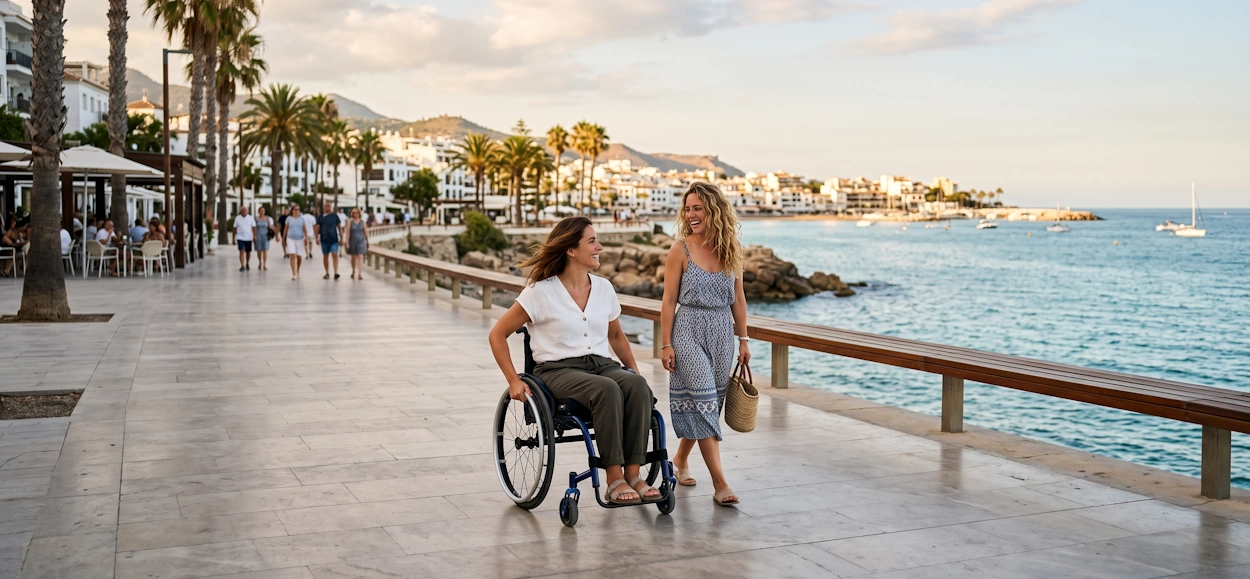
Tourism accessibility isn’t just measured in terms of ramps, lifts or accessible toilets. You can tell when a person is able to organise a trip with the same peace of mind as any other traveller, without having to sort out an endless list of concerns before they’ve even packed their suitcase.
A reflection that remains fully relevant today.
A few years ago, I had the opportunity to contribute to an article on accessible tourism.
Since then, the tourism sector has changed enormously. We have made progress in terms of infrastructure, technology, regulations and, above all, social awareness. Today, we talk much more naturally about inclusion, accessibility and universal design.
But making progress does not mean we have arrived.
The underlying issue remains exactly the same: Everyone should be able to enjoy a tourist experience on an equal footing.
Because travelling usually begins with a sense of excitement.
We choose a destination, look for a hotel, think about the places we want to visit and start to imagine what the experience will be like.
For many people, however, the journey begins differently.
Will I be able to get into the hotel?
Will the room actually be accessible?
Will I be able to find suitable transport?
Will I be able to get to the beach?
Will the information I find on the website be reliable?
These are questions that crop up long before you even pack your suitcase.
And perhaps that is one of the best ways to gauge a destination’s true accessibility: to see whether a person can focus on enjoying their trip, or whether they still have to spend time and effort working out whether they will be able to do so.
Accessibility begins long before you reach your destination. It begins when a person can plan their journey with confidence.
We are not talking about a different kind of tourism
I have always understood accessible tourism in terms of a very simple idea: a person with a disability, reduced mobility or specific needs should not have to rely on a different form of tourism.
They should be able to access the same places, services and experiences as anyone else.
We have made great strides, but accessibility cannot be limited to installing a ramp, providing a lift or reserving an accessible room.
It also affects people with visual or hearing impairments, cognitive difficulties, intellectual disabilities, temporary limitations, older people, or travellers who simply need environments that are clearer, more intuitive and easier to use.
The real question is no longer simply whether a suitable facility exists.
The issue is a different one:
Can a person enjoy their entire holiday experience independently, comfortably and safely?
Accessibility works like a chain
Let’s imagine a museum that is fully accessible but difficult to get to.
Or an excellent accessible room in a hotel whose restaurant has accessibility barriers.
Or a beach with specific facilities, details of which are almost impossible to find before the trip.
Accessibility is available at certain points, but the experience remains incomplete.
Tourism works like a chain.
Transport, Accommodation, public spaces, establishments, beaches, monuments, restaurants, activities, websites, booking systems and visitor services are all part of the same experience.
And all it takes is for one of those links to fail for the whole journey to go awry.
That is why the aim should not simply be to provide accessible services.
We should aim to build accessible destinations.
The invisible barrier: uncertainty
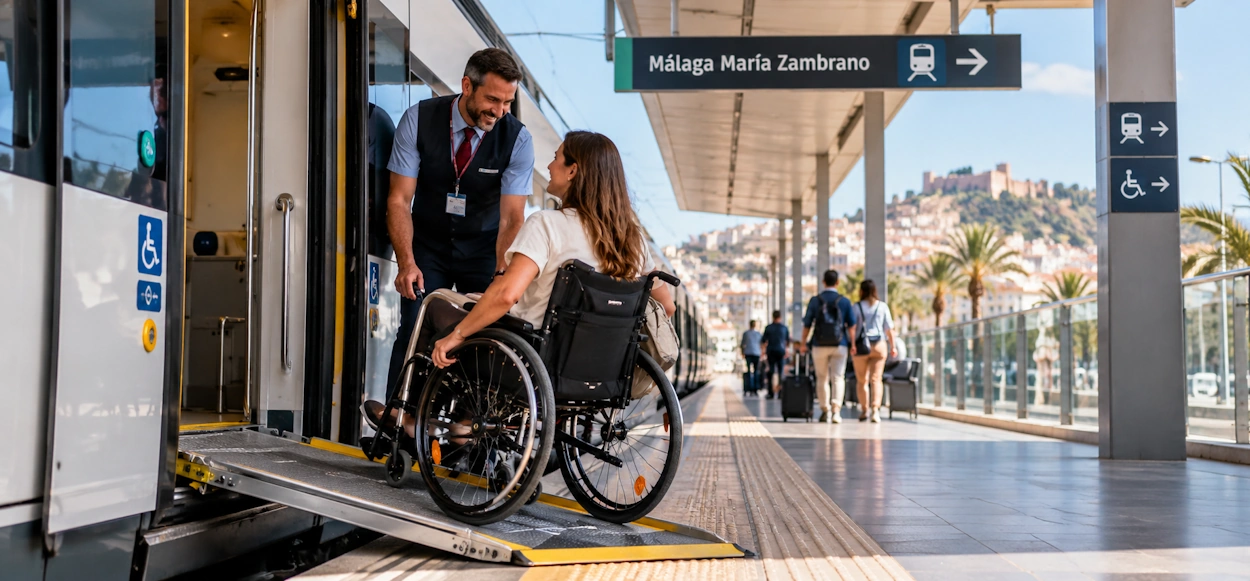
There is also a barrier that is less often discussed but which affects many journeys: the lack of information.
For many people, having accurate information before travelling can be just as important as the physical layout of the venue itself.
The word “accessible”, on its own, is not enough.
Accessible to whom?
Is there an entry threshold?
Is the shower at floor level?
Is support available?
Does it have visual or audible warning signals?
Do I need to book in advance?
The more objective information a traveller receives, the better equipped they are to make their own decisions.
That’s accessibility too.
Because accessibility does not mean making decisions for someone else.
It means providing you with the information and tools you need so that you can make your own decisions.
Clear information also breaks down barriers.
From compliance to experience
Spain has come a long way.
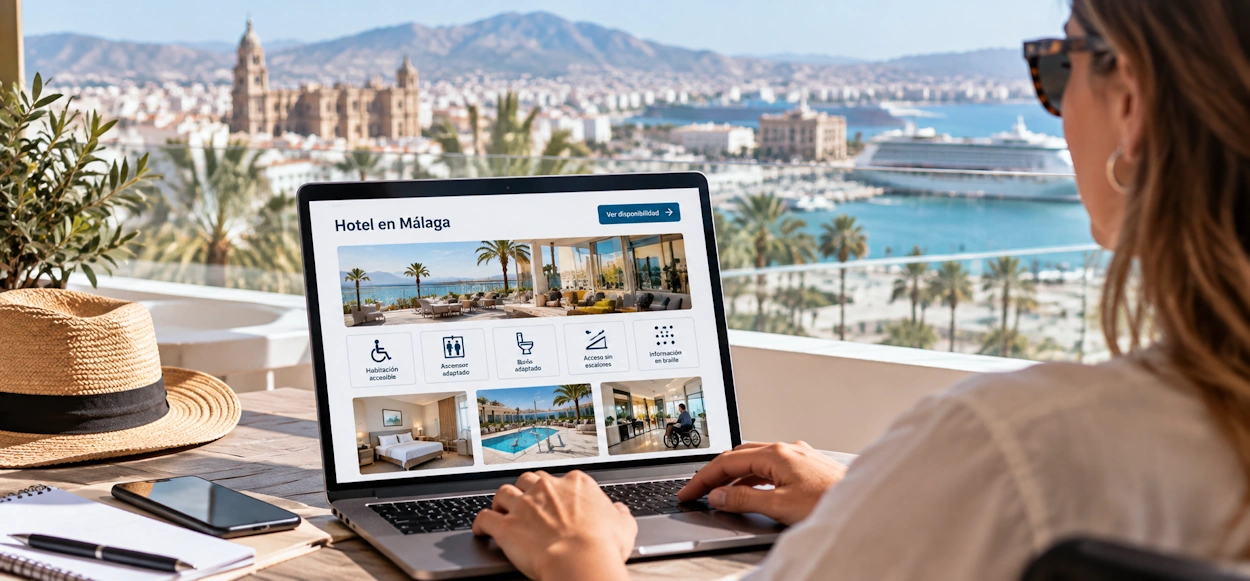
Transport, airports, trains, public spaces and numerous tourist establishments have made a considerable effort to improve their accessibility. We also have stricter legislation and a much greater social awareness than we did a few years ago.
It would be unfair not to acknowledge this.
But there is a fundamental difference between comply with a standard and provide a good experience.
A premises may technically comply with the law and yet still be inconvenient for those who need to use it.
A ramp that is too steep.
An accessible room situated away from the lifts.
Signage that is difficult to interpret.
Furniture that hinders mobility.
An inaccessible website.
Small details that can turn a formal adaptation into an impractical experience.
Compliance with the regulations is essential.
But it should be the starting point, not the end goal.
The question should no longer be merely:
Shall we do it?
to become:
Can a person use this service comfortably and independently?
People are also an integral part of accessibility
Not all barriers are removed by building works.
Many can be eliminated through knowledge, training and sensitivity.
We can invest heavily in infrastructure, but if those who deal with travellers do not know how to meet their needs, a crucial part of the job will remain undone.
The person who welcomes guests at a hotel, the waiter, the tour guide, the lifeguard, the information officer or the driver are also part of the accessible experience.
Knowing how to listen.
Don’t assume what a person needs.
Ask before you help.
Find out what resources are available.
Explain clearly which services are available and which are not.
These are simple gestures that do not always require a significant financial outlay, but they can make a huge difference.
That’s why Accessibility should also form part of tourism training.
A right that also represents an opportunity
Talking about the economic aspect of accessibility can make some people feel uncomfortable, as if acknowledging a business opportunity might detract from its social value.
It shouldn’t be like that.
Equal opportunities come first.
But tourism businesses also need to understand how society is changing and what their customers’ needs are.
When a traveller finds an establishment where they can manage independently, receive good service and feel that their needs have been understood, they are more likely to return and recommend the experience.
Accessibility can build customer loyalty, boost demand, enhance a destination’s reputation and help destinations attract visitors all year round.
Doing the right thing and doing what makes financial sense do not have to be two different things.
Designing with everyone in mind
There is also a fact that we often overlook: many accessibility improvements do not benefit only people with disabilities.
Barrier-free access is useful not only for a person in a wheelchair, but also for an elderly person, a family with a pushchair or a traveller dragging a suitcase.
Clear signage helps people with cognitive difficulties, but it also helps those visiting a city for the first time.
A simple website is beneficial for people with specific needs, but it also enhances the experience for all users.
Good lighting, a well-placed lift or clear signage make travelling easier for everyone.
Perhaps that is one of the major changes we still need.
Stop building first, and adapt later.
Design from the outset with people’s diversity in mind.
To incorporate accessibility into hotels, restaurants, transport, beaches, museums, conferences, activities, websites and booking systems as a natural part of service quality.
Not as an afterthought.
The traveler that any of us could be tomorrow
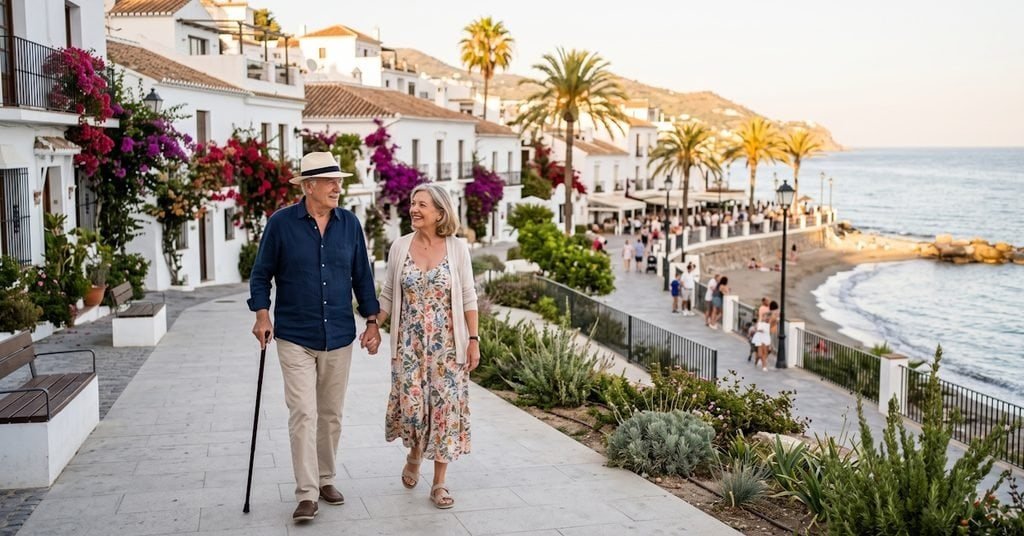
When we talk about accessible tourism, we all too easily tend to think of “other people”.
But abilities change over the course of a person’s life.
We may suffer a temporary injury.
We may start to experience mobility difficulties.
We may need help during a particular period.
Or simply getting older and realising that things which used to be straightforward are now starting to require different conditions.
That is why tourism designed for everyone does not only benefit those who currently require specific adaptations.
We are also building the kind of tourism that any one of us might need tomorrow.
The day we stop asking
The tourism sector is constantly talking about innovation, sustainability, digitalisation, competitiveness and new travellers.
All of this is essential.
But the future of tourism should also be judged by our ability to ensure that no one is left behind.
Perhaps the ultimate aim can be summed up very simply.
No one should have to ring ahead before booking to ask if they’ll be allowed in.
No one should have to scrutinise photographs in search of hidden steps.
A generic label stating “adapted” should not be used as a substitute for clear information.
That people can choose a destination for its beaches, its culture, its cuisine, its scenery or the experiences it offers.
Just like any other traveller.
Because we will probably know that we have achieved truly accessible tourism when accessibility ceases to be a constant concern and becomes something natural, integrated and practically invisible.
Accessibility is a right.
It’s quality.
It is also an opportunity to companies and destinations.
But, above all, it is a way of understanding tourism from a perspective that we should never lose sight of: people.
A truly excellent destination is not just one that makes us want to visit it.
He’s the one who makes it possible for all of us to do it.