

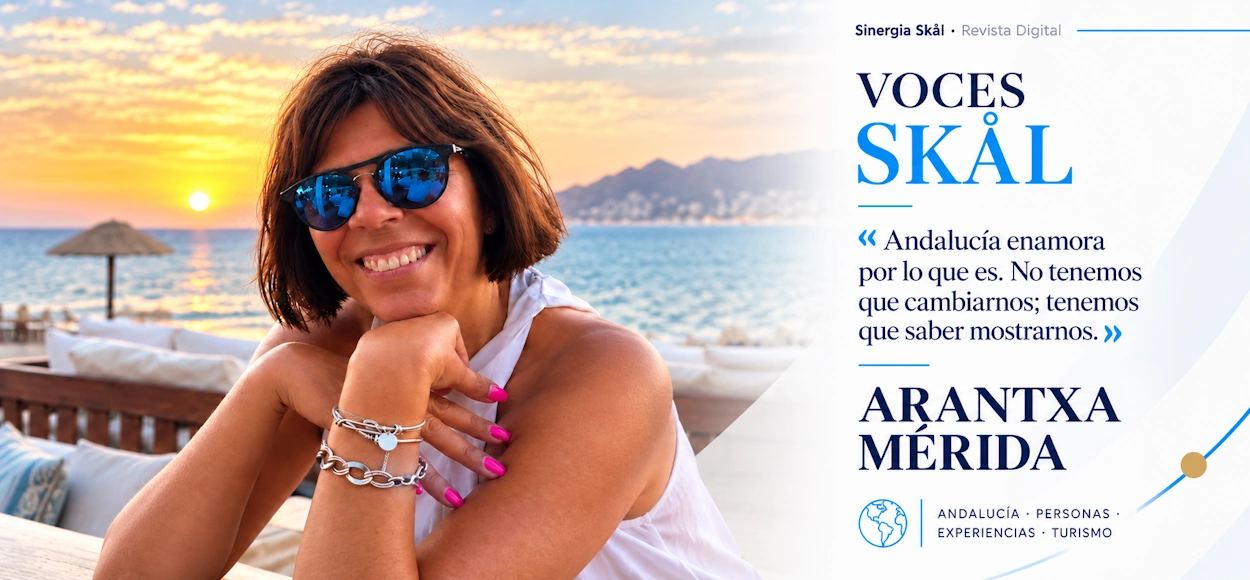
Arantxa Mérida · Tourism, Andalusia and a way of travelling that puts people first
Traveling has been a part of Arantxa's life long before it became her profession. By the age of sixteen, she had already traveled extensively throughout Europe, driven by her curiosity about languages, other cultures, and different ways of life. This restlessness naturally led her to tourism, and in 1995, to found Loymer Tours, a pioneering company in the marketing of rural houses and holiday accommodations in Andalusia for the European market.
After two decades at the helm of that project and subsequently becoming involved in other business ventures, particularly in the passenger transport sector, he returned to a more local scale with Loymer Travel. It is here that he has been able to bring together the elements that define his approach to this profession: direct contact with travellers, showcasing Andalusia from the inside, and creating experiences that connect people with the region.
That same vision is behind Soul of South and also her new role at Skål International Málaga-Costa del Sol, where she has been particularly involved in developing tourism talent and building bridges between experienced professionals and new generations. We spoke with her about Andalusia, how travelers have changed, authenticity, Skål, and something she considers essential even in the midst of technological transformation: the profoundly human nature of tourism.
Traveling has been a part of your life since you were very young. How did it end up becoming your profession?
Traveling has always been a part of my life. By the time I was sixteen, I had already explored much of Europe. I was very drawn to languages, getting to know other countries, other cultures, and other ways of life, so when it came time to choose what to study, Tourism was a pretty natural choice for me.
In 1995, I founded my first company, Loymer Tours, at a time when rural tourism was just beginning to develop as a tourism product. We were pioneers in marketing rural houses and holiday accommodations in Andalusia, especially for the European market. I led the company for twenty years, which gave me the opportunity to get to know both the European traveler and an Andalusia that was then beginning to open up to a different way of experiencing tourism.
Later came other business ventures, some larger in scale, especially those related to passenger transport. And years later, Loymer Travel was born, a smaller, more specialized company, but one where I've been able to focus on what is truly my passion: direct contact with travelers, showcasing our region, and creating experiences that allow them to discover Andalusia in a more intimate and authentic way.
After so many years teaching Andalusia to those who come from outside, what have you learned about your own land through their eyes?
When you see your land through other eyes, you realize how extraordinary something that is part of your everyday life can be.
Andalusia is a land of contrasts. It is spontaneous, natural, sincere, welcoming, and incredibly diverse. It has history, culture, landscapes, traditions, and a unique and special way of life.
But if there is one thing that truly wins over those who come from outside, it is our people: the friendliness, the hospitality, the ease of sharing, of conversing, and of making those who arrive feel, from the first moment, part of our land.
Andalusia is captivating. And after so many years, I continue to rediscover my own land through the eyes of those who come to explore it.
You talk about not just knowing a destination, but feeling it. What does that difference mean to you?
For me, getting to know a destination is visiting it; feeling it is living it. And Andalusia is a land that lends itself especially well to being lived.
We have magnificent monuments and world-renowned landmarks, and also an immense wealth of experiences in every town, every corner, and every small detail. There is history, culture, gastronomy, folklore, traditions, landscapes, contrasts, and a diversity that is the result of everything we have been throughout the centuries.
To truly experience a destination is also to immerse yourself in its people, to converse, share a meal, discover its customs, and become part of its way of life, even if only for a few hours. That's why I believe that in Andalusia, even a short excursion can become an unforgettable experience.
Because in the end you can visit many places, but it is the experiences, the people and the emotions that make you truly connect with a destination.
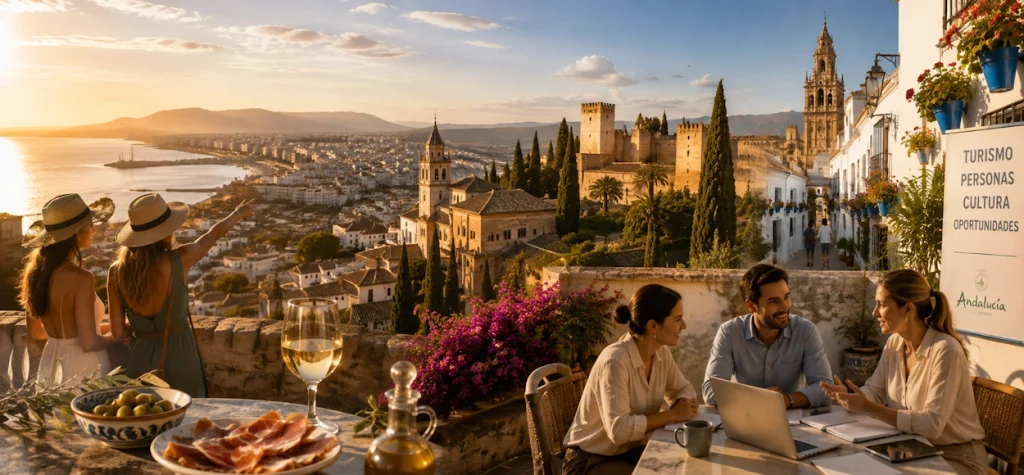
Are we teaching Andalusia well, or is there still another Andalusia to discover and tell about?
I think Andalusia is being presented well. The problem is that visitors usually have limited time and, understandably, want to see the most iconic and internationally renowned places first.
For me, the challenge lies precisely there: in ensuring that, even when visiting these essential places, the traveler has the opportunity to discover something more. That a visit isn't just about seeing a monument, admiring a landscape, or hearing its history, but also allows them to connect with the life around it, the traditions, the cuisine, the customs, and, of course, the people.
It's not so much about finding another Andalusia to show, but about finding new ways of experiencing and telling the story of the Andalusia we already have.
Soul of South was born from that idea. What do you hope to achieve with this project, and why take it to the international B2B market?
Soul of South was born precisely from that idea: to seek new ways of experiencing and sharing Andalusia. We don't want to present a different version of Andalusia, but rather offer a different way of experiencing it.
We want visitors to be able to discover our great destinations and, at the same time, get closer to everything that is part of our identity: our culture, our gastronomy, our traditions, our landscapes, our towns and, especially, our people.
Soul of South seeks to create experiences that allow you to delve a little deeper into the real and close-knit Andalusia, to meet the people who keep many of our traditions alive, and to discover stories and places that are not usually part of a conventional visit.
And bringing this concept to the international B2B market allows us to take another step: working with professionals from other countries so that this way of discovering Andalusia can reach travelers from different markets, always maintaining the authenticity and essence of our land.
The traveler has also changed a lot. How has the market evolved and what does it demand from tourism professionals today?
The market has changed dramatically because travelers have changed too. Today, they arrive much better informed, have immediate access to a vast amount of information, compare, select, and know quite well what they want to do even before reaching their destination. This also compels us professionals to evolve and offer increasingly refined proposals tailored to different interests.
At the same time, I believe that Andalusia is doing a great job of international promotion, showcasing the enormous variety of possibilities that the destination offers and reaching very different markets and traveler profiles.
And there's something that's fundamental for me: we don't need to reinvent ourselves to respond to new trends. We have an extraordinary product. The challenge lies in knowing how to present it, adapting it to new ways of traveling, and making it accessible to every type of traveler.
Andalusia is captivating for what it is. We don't need to change; we need to know how to present ourselves.
Your connection with Skål began years ago in Cádiz and now continues in Málaga-Costa del Sol, where you have decided to become actively involved. What does this new stage mean to you?
I’m at a stage in my career where I’d like not only to develop my own projects, but also to get involved, put forward ideas and help create new ones. And to do so from Málaga-Costa del Sol, my home and the place where I carry out much of my work, holds a special meaning for me.
For me, Skål has enormous potential because of its ability to connect tourism professionals from all over the world, bring together experience, knowledge and new ideas and, above all, turn those connections into real projects and opportunities.
That is precisely what has led me to become more actively involved: I believe that Skål can be not only a great meeting point for professionals, but also a space from which to promote initiatives and contribute to the future of the sector.
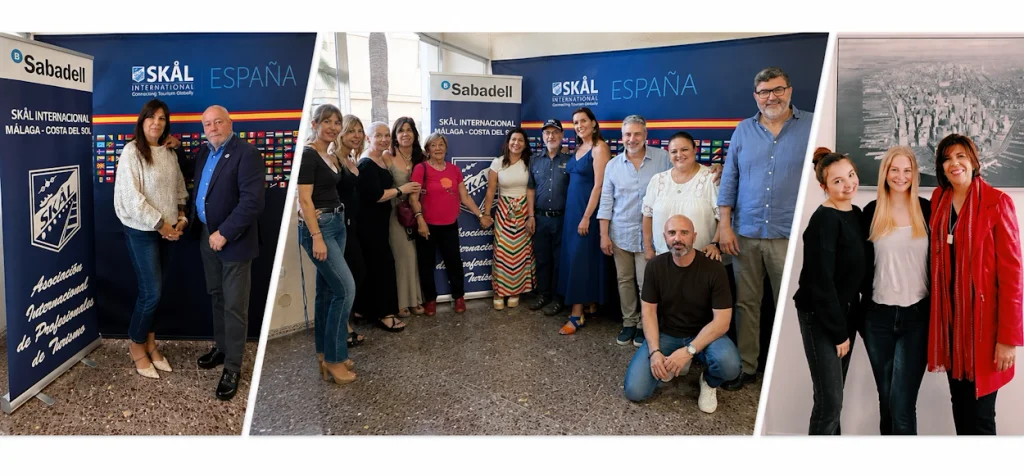
As secretary of Skål International Málaga-Costa del Sol, what would you like to contribute to the club and where would you like it to evolve?
For me, the important thing is to unleash the full potential that Skål already has. We are part of a unique international organization because of its ability to bring together and connect, on a global scale, professionals from all branches of tourism: travel agencies, hotels, transportation, restaurants, destinations, experiences…
In addition to all that diversity, there is something that I find especially valuable: the coexistence of different generations, from professionals with a very long career to the new generations that are beginning to join the sector.
My goal is to help translate all that potential into real collaborations, initiatives, and projects. That we know how to leverage what each of us can contribute and, above all, that we do things together.
You've championed the need to support, mentor, and open doors for new generations. What did you miss when you were starting out, and what can those of us with experience do today?
When I started out, breaking into the industry was much harder. You had to knock on a lot of doors, seek out your own opportunities, and gradually build your professional relationships.
That's precisely why I would like us to start building a real link between those who are starting their professional career and those who already have a track record in the sector.
And here's something that's fundamental for me: Skål can be an extraordinary bridge between generations. Our companies need talented professionals, and we have the opportunity to participate in developing that talent, bringing them closer to the realities of the industry, sharing our experience, and helping them develop the skills they'll need professionally. At the same time, we can get to know and mentor those who may one day join our companies.
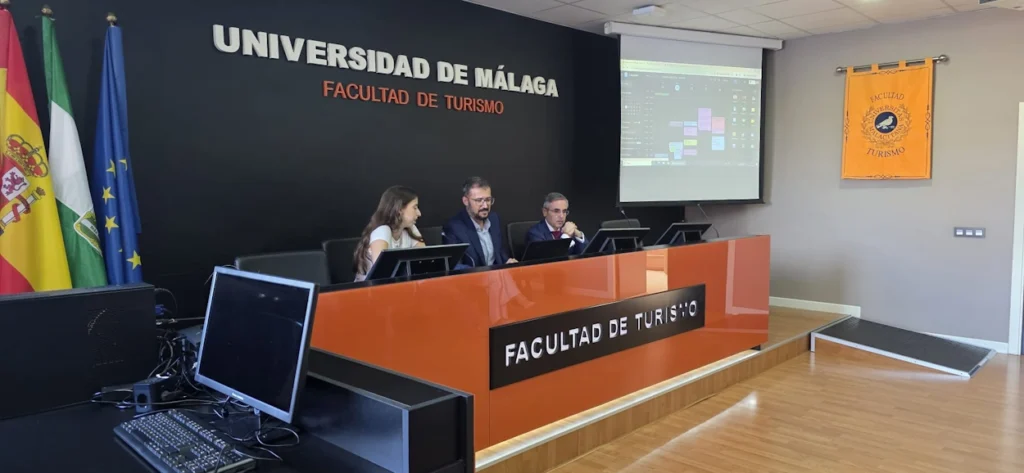
This is a collaboration that benefits both parties and, ultimately, the tourism sector itself. And it is precisely from this idea that the Tourism Talent Network – Tourism Talent Development Program was born, a project I launched through Skål Málaga-Costa del Sol that we want to develop together with the University and the students themselves.
How can Skål attract new generations and strengthen Young Skål through projects like the Tourism Talent Network?
I believe that to attract new generations we need to make them see from the beginning the value and advantages that being part of Young Skål can bring them: integrating into a network of tourism professionals from all over the world, making contacts, sharing experiences and getting closer to the working world while they are still training.
That idea was precisely my starting point for Tourism Talent Network – Tourism Talent Development Program, a project with which I want to create a link between future professionals, current professionals and companies and, at the same time, bring students closer to the Skål world in a natural way.
We are starting this journey with the University of Malaga, but the idea is for the project to grow progressively, reach other educational institutions, and contribute to generational renewal and the growth of Young Skål.
To conclude, in a tourism industry that is evolving so rapidly, what do you think we should never lose sight of, both those who are starting out and those of us who have been in the sector for years?
I believe we should never lose our curiosity and desire to keep learning. Those starting out have a lot to learn from the experience of those who have been in the industry for years, and those of us who have been here for years also have a lot to learn from the new generations, from their worldview and the tools they bring with them.
Technology is transforming our profession, and we must evolve with it, but tourism remains a profoundly human experience. We travel to discover other places, other cultures, other ways of life, and above all, to connect with other people.
We can change the tools and the way we work, but that essence is what we should never lose.