

Wine tourism, territory and Muscat of Alexandria overlooking the Mediterranean
NILVA WINE TOURISM It was born with an objective that goes far beyond making wine: to recover the old Muscat of Alexandria vineyards of Manilva and turn that viticultural heritage into an experience that unites landscape, culture, wine, gastronomy and tourism.
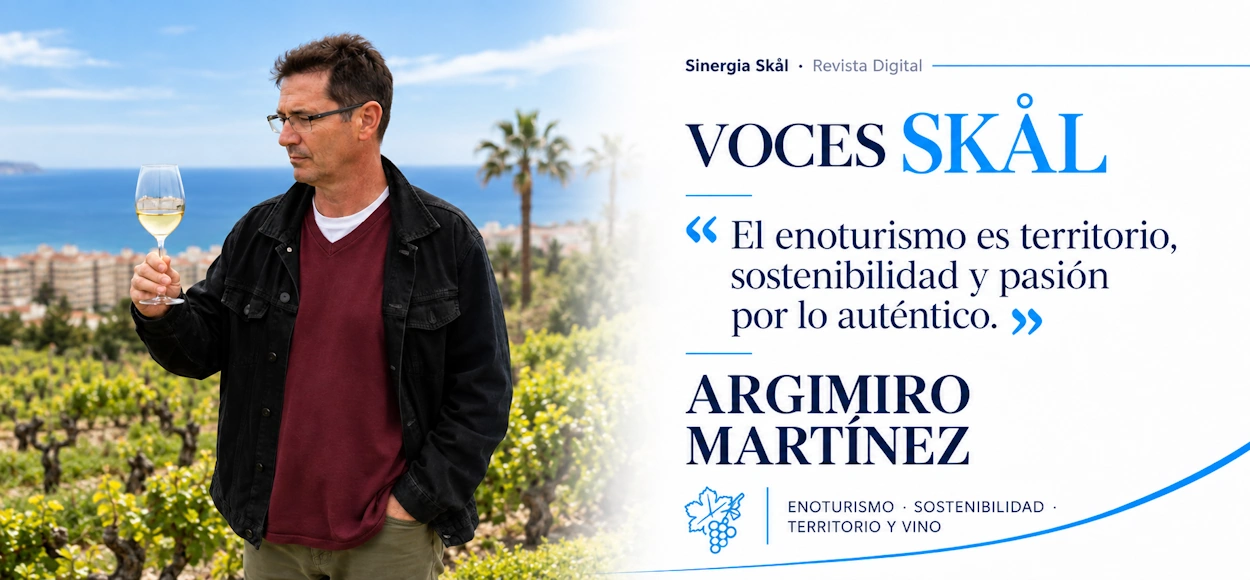
In Voces Skål we talked with Argimiro Martínez about a project that demonstrates how the conservation of the territory can also become an opportunity for the destination and how wine tourism in Manilva can contribute to keeping alive a landscape that is part of the identity of Manilva.
Manilva has historically been linked to vineyards. What does Muscat grape really represent for this region?
Muscat of Alexandria is an integral part of Manilva’s identity. For generations, vineyards have shaped our landscape and have been closely tied to the economy and way of life of many families. So when we talk about preserving the vineyards, we are not just talking about agriculture or wine: we are talking about preserving part of our history and heritage.
NILVA points out that a very significant portion of the vineyards have disappeared in recent decades. How did this situation arise?
The lack of generational succession and the development pressure experienced in this part of the Costa del Sol have led to a major transformation of the landscape. The two real estate booms, one in the 1990s and the other between 2001 and 2006, led to the disappearance of approximately 70% of the vineyards.
Maintaining a vineyard requires effort and time, and its profitability for farmers is low. With the real estate boom, vineyards came to be seen as potential building plots. Land prices soared: from around 4–5 euros per square metre for agricultural land to 50–60 euros due to the prospect of urban development.
We currently estimate that around 80% of the vineyards have disappeared, and those that still survive are at serious risk. Precisely for this reason, they have even greater value, and we believe it is worthwhile to fight to preserve them.
At what point did you decide that something had to be done and the NILVA project was born?
I'm originally from Hellín, in Albacete, and I came to the Costa del Sol in 2004. In the aftermath of the 2008 economic crisis, I lost my job. In 2011, thanks to my training as an agricultural engineer, I was hired by the Andalusian Regional Government as a teacher at the Viñas de Manilva Training Workshop School, where I trained a group of unemployed young people in viticulture.
During the two years of the course, I was able to get to know the region in depth and became aware of the rich heritage, history, and landscape that the vineyards of Manilva represent. I was particularly struck by the fact that the local people spoke proudly of their vineyards, but always in terms of the past. No one spoke of their future; they seemed to have given them up for lost.
When the Vocational Training School ended, I decided we couldn't give up on the sector. There were still enough vineyards to try to revive it, and it was worth fighting to preserve this agricultural treasure: Muscat vines growing on chalky soils overlooking the Mediterranean. In 2013, a proposal was submitted to Manilva Town Council for a concession to operate the CIVIMA winery, the micro-winery and the Peñoncillo vineyard. In 2014, I founded NILVA ENOTURISMO SL, which was awarded the concession.
Your project combines vineyard restoration, winemaking, and wine tourism. Why was it important to unite these three dimensions?
NILVA ENOTURISMO was founded with a focus on tourism and the goal of saving Manilva’s vineyards. When we studied the market, we saw that Spain already had an enormous range of wines and that competing in such a crowded market with a new wine would be difficult.
But Manilva is in full swing Costa del Sol. Wine tourism can provide an alternative to sun and beach tourism, help to deseasonalize the offer and offer new experiences by understanding the vineyard and wine as part of a territory.
A bottle can be tasted, but the experience takes on a whole new dimension when you learn where it comes from, stroll through the vineyard, appreciate the landscape, and discover the story behind that glass. And if you can do all this amidst vines overlooking the Mediterranean, the experience becomes truly unforgettable.
What can visitors expect when they visit NILVA and CIVIMA?
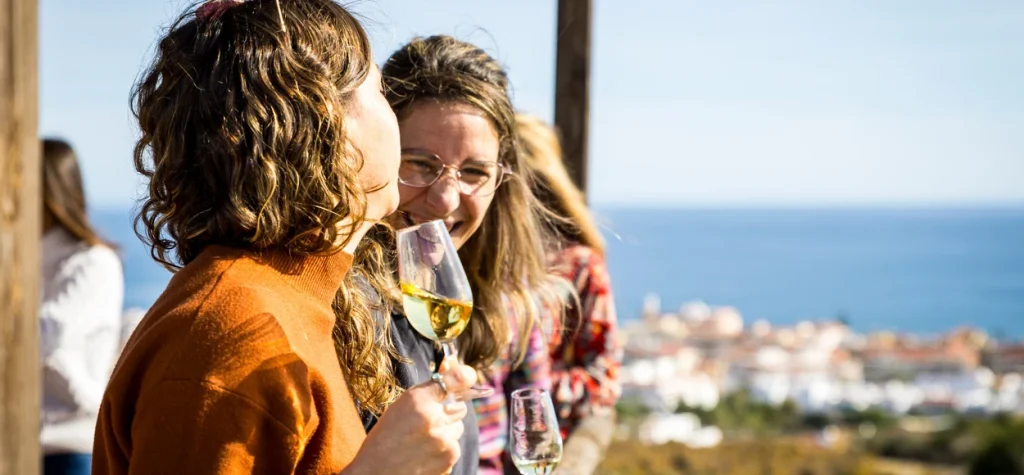
We want visitors to fully understand the project and the relationship between Manilva, its landscape and the Muscat grape. At CIVIMA, visitors can discover the past, present and future of winemaking in Manilva through exhibits dedicated to viticulture, oenology and the grape harvest.
The NILVA micro-winery is located in the same building, where we produce dry white wines from Muscat of Alexandria grapes. The visit concludes at the Peñoncillo vineyard, where we taste the wines paired with tapas while enjoying views of the Mediterranean.
We're on the Costa del Sol, one of the world's top tourist destinations. Can wine tourism help us discover a different side of the Costa del Sol?
Undoubtedly. The Costa del Sol is especially known for its sun-and-beach tourism, but it also boasts a rich landscape, agricultural traditions, charming villages and customs that form part of its identity. Wine tourism allows visitors to explore this other side of the destination and offers an experience deeply connected to the local culture.
Furthermore, it can be enjoyed for much of the year and perfectly complements other tourism products. Manilva offers the unique opportunity to experience both a sun and beach destination and, at the same time, wine tourism experiences more traditionally associated with inland areas.
Can tourism truly become a tool to help conserve vineyards?
We are absolutely convinced that it is. To preserve a productive landscape, it is also necessary to have an economic activity capable of sustaining it. When visitors get to know the vineyard, taste its wines, and understand the effort required to maintain this heritage, we are generating value around it.
Tourism can make vineyard preservation worthwhile not only culturally and environmentally, but also economically. This idea—that tourism can help save Manilva’s vineyards—is at the heart of our project. For this concept, NILVA ENOTURISMO received the Skål International Sustainable Tourism Award in 2019.
We're talking right now during the grape harvest. What does this time of year mean to you?
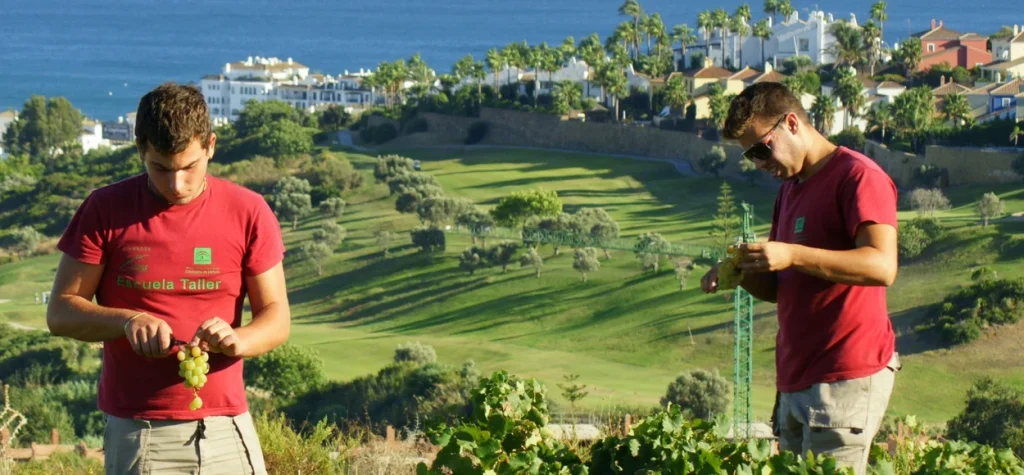
Life as a farmer is hard, sometimes quite thankless, generally unprofitable and at the mercy of variables beyond our control, such as the weather. But if you love the land, it is incredibly rewarding to see the new bunches of grapes grow and develop each year. The harvest represents the culmination of all the effort put in over many months.
When you look at the vineyards that still survive in Manilva, are you optimistic about their future?
What is happening in Manilva is somewhat contradictory. NILVA was founded in 2014 and, although winegrowing had been practised here for centuries, it was the first winery in Manilva’s history to be officially registered. Since then, new wineries have been established, some of them by students from training courses I have taught. Today, there are four wineries, with a fifth currently being developed. From this perspective, the future of winemaking looks promising.
However, vineyards continue to be abandoned, and several are lost each year. There is no generational succession, and many plots have significant heritage value or real estate potential for their owners. Vineyards are disappearing at a much faster rate than new wineries are able to recover them.
A study carried out in collaboration with the University of Córdoba and the Regulatory Council of the Málaga, Sierras de Málaga and Pasas de Málaga Designations of Origin has identified the soils associated with these vineyards as albariza soils, a very special type of soil also found in wine-growing areas such as Jerez and Montilla-Moriles.
To guarantee the preservation of Manilva’s vineyards, I believe these albariza soils need legal protection to safeguard them from urban development. Even if some old vines were to disappear, protecting the land would make it possible to plant new vines and maintain its agricultural use.
In twenty years, I would like to see Manilva as a small white village set among the hills and surrounded by vineyards gently sloping down towards the Mediterranean; vines cultivated by a new, well-trained generation combining viticulture, the production of exclusive wines and wine tourism, proud to preserve the historical, natural and scenic heritage passed down by their ancestors.
And finally: someone arrives in Manilva for the first time and visits NILVA. What would you like them to remember when they return home?
The vast majority of our visitors are international and are unfamiliar with Manilva’s winegrowing heritage. After about two hours, their perception of the area changes completely.
I would like them to remember our authenticity, honesty and passion for what we do. We are a very small company, made up of just two people, trying to carry out a project that will help save Manilva’s vineyards.
We cannot change the past, but we still have time to preserve an important part of the remaining heritage. That is why we also try to involve visitors. Through initiatives such as sponsoring a vine in the Peñoncillo vineyard, many become active participants in the project.
What motivates us most is the idea that each visitor can return to their country as an ambassador for NILVA and, in some way, help contribute to the future of Manilva’s vineyards.