

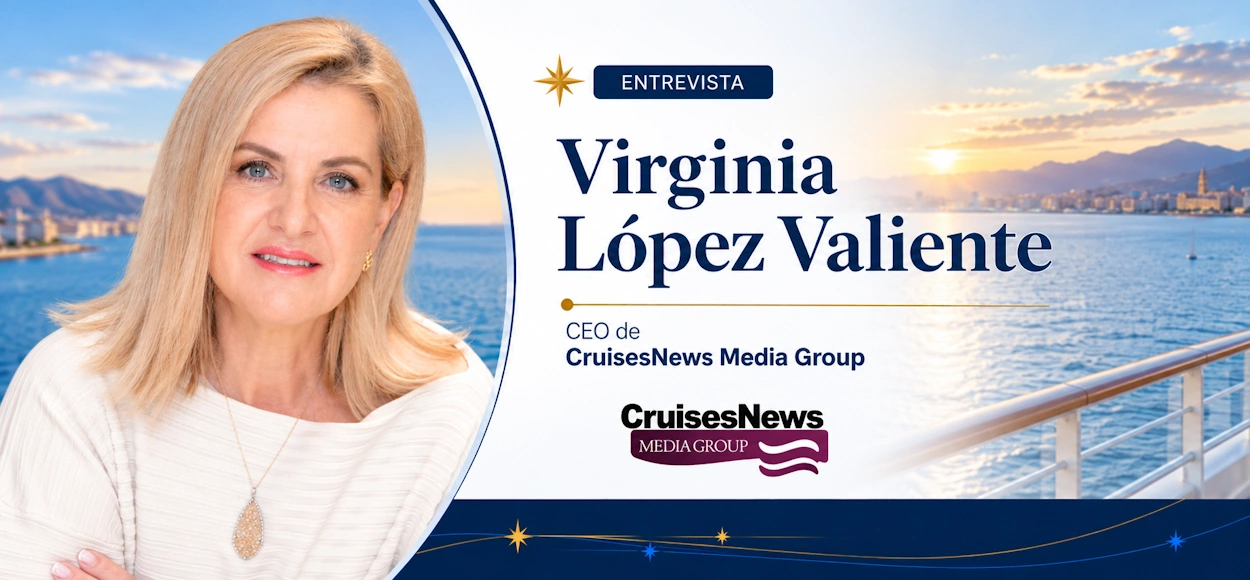
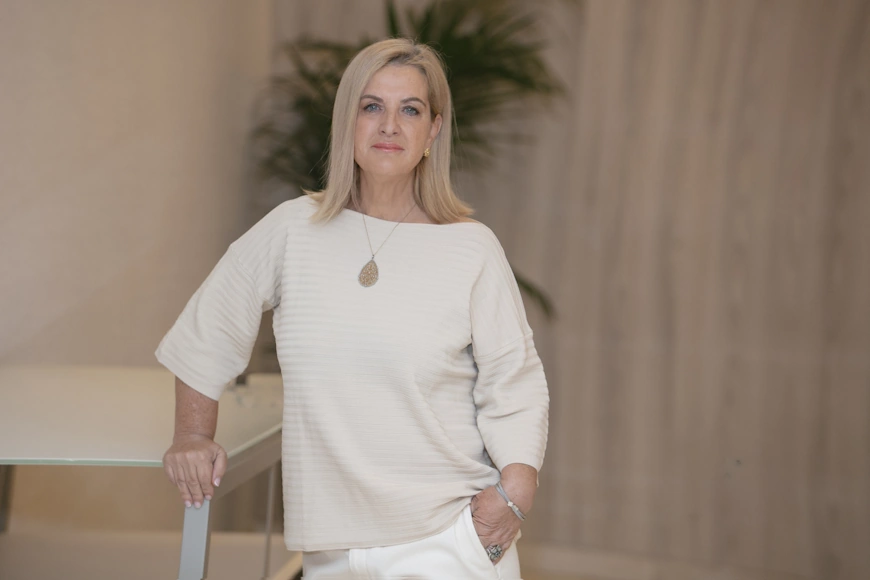
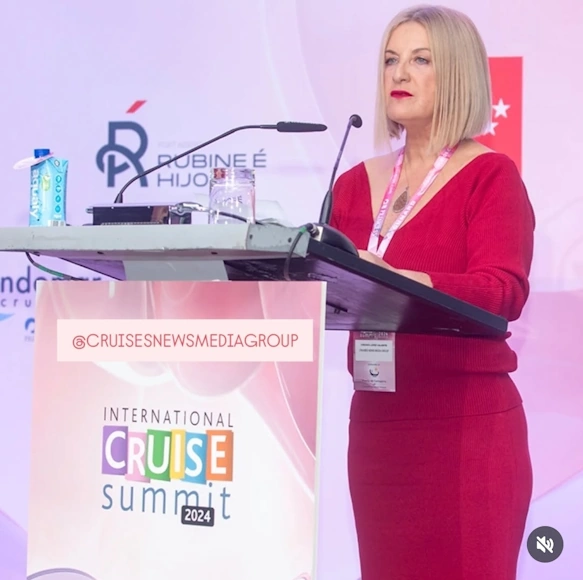
Virginia López Valiente has spent years observing, analysing and bringing together some of the key players in the international cruise industry. At the helm of Cruises News Media Group and from International Cruise Summitshe has witnessed the profound transformation of a sector that today faces new traveller profiles, sustainability, technology and an increasingly diverse range of offerings.
In this conversation with Sinergia Skål, she analyses the evolution of the industry, the role of specialised media, the impact of artificial intelligence and the enduring value of personal relationships in tourism. She also focuses on Málaga, a destination that, in her view, has the potential to grow not only in volume, but above all in quality and added value.
Virginia López Valiente
Cruises News Media Group CEO
Director of the International Cruise Summit
“There was a need for specialised communication and for a way to connect those who were part of this industry.”
Virginia, before becoming one of the most recognisable voices in the cruise industry, you built your career across very different professional fields. How did you enter this industry, and what did you find in it that led you to make it your professional focus?
My entry into the cruise industry was, in fact, quite unplanned. Before creating Cruises News Media Group, I had built my career across very different sectors, mainly international transport, hospitality and consulting, holding positions in operations, marketing and sales management. In other words, I came from a business environment quite far removed from the media.
It was my husband, a journalist and editor, who decided to create a magazine about the cruise industry and eventually convinced me to take charge of international development and other products.
When I came into contact with the cruise industry and, especially, began attending international events in the sector, I discovered an industry that particularly appealed to me: it was growing and changing very quickly, yet remained relatively unknown to a significant part of society, especially in Spain, and even within the tourism sector itself.
I was particularly interested in that combination of industry and tourism, of business and traveller experience. I also realised there was a need for specialised communication, to generate knowledge and connect those who were part of the industry.
At first, the project did not have the scope it has today. But little by little, I came to understand that there was a much greater opportunity: not only to provide information about cruises, but also to help raise the industry's profile, enable its key players to engage in dialogue, and give the sector its own space for analysis and debate in Spain.
Creating a specialised media outlet means investing in a sector and, in a way, growing alongside it. What do you remember about the early years of CruisesNews, and at what point did you feel that the project had truly found its place within the industry?
If you're referring to the magazine, what I remember most is that, in the early days, we constantly had to explain why a publication specialising in cruises was necessary. The sector was still relatively small in Spain and was often seen as a very specific niche within tourism, when in reality every cruise is supported by a vast network of companies, professionals, ports, destinations, travel agents, tour operators and suppliers.
I think the project really found its place when we stopped being simply a media outlet reporting on what was happening in the industry and began to become a meeting point for the sector as well.
Specialised media outlets only make sense when they have in-depth knowledge of their subject matter. In our case, that specialisation has grown alongside the industry itself. Today, Cruises News Media Group is not simply a magazine or a digital platform. It is part of a broader project encompassing communication, knowledge sharing, training and professional networking.
“The sector's major challenges require collaboration.”
You've gone from reporting on the sector to bringing together many of its key players at events like the International Cruise Summit. After so many years listening to cruise lines, ports, destinations, and suppliers, what have you learned about how this industry really works that might not be apparent from the outside?
I've learned that the cruise industry is far more complex than it appears from the outside. A ship is merely the most visible part of a vast chain involving countless players, all of whom depend, to a greater or lesser degree, on one another.
I've also learned that it is an extraordinarily interconnected industry. In a single conversation, you might have a shipping company, a port authority, a destination, an airline, a tour operator, a travel agent or a technology company, all talking about the same product from completely different perspectives.
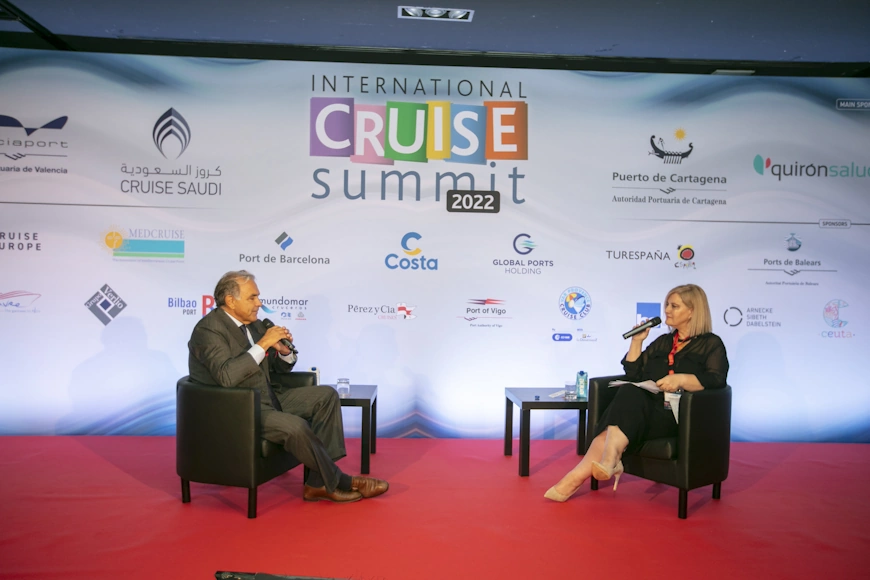
And perhaps most importantly, I've seen that the industry's biggest challenges often cannot be solved by a single company or public authority. They require collaboration. That's precisely what we're trying to achieve with the International Cruise Summit: bringing together people with different, even conflicting, interests who need to listen to one another.
At the ICS, the aim is also to educate, train and inform—call it what you will—but above all, to broaden people's knowledge in areas beyond their own expertise. This puts them in a stronger position when making decisions.
For a port to understand why a ship is designed in a certain way, for commercial departments to understand why particular market segments are targeted, or for a travel agent to understand the key principles of itinerary planning provides invaluable knowledge for their day-to-day work.
You've seen the cruise passenger evolve profoundly. What are passengers looking for today that they weren't looking for ten or fifteen years ago, and where do you think the cruise experience is headed?
If there's one thing I've learned over the years, it's that there are many different types of cruise passengers, with all kinds of tastes. Today's cruise passenger is much more diverse and, above all, much better informed. A cruise is no longer simply a product you buy because you want to visit several destinations on the same trip. Today, passengers compare options, do their research, learn about the brands, look at the ship, the food, the experiences and the service, and have an increasingly clear idea of the kind of trip they want.
The importance of the experience has also changed. For some passengers, the ship itself is key, while for others, what happens on land remains paramount. Some seek entertainment, while others seek tranquility, gastronomy, well-being, culture, or adventure.
There are large, very large, medium-sized and small cruise ships; family cruises, luxury cruises, expedition cruises, yacht-style cruises and sailing ships... But above all, there is enormous potential for growth.
That's why I believe the future lies not in a single cruise model, but in a huge capacity for segmentation. And that's precisely what's interesting: there will be more and more options for different types of travelers.
The growth of the premium, luxury, and expedition segments is transforming a significant part of the market. Are we witnessing a structural evolution of the sector or a diversification that will allow increasingly different cruise models to coexist?
I think we're seeing both. There's clear diversification, but also a structural change in how we understand the cruise product.
The growth of luxury, premium and expedition cruises demonstrates that cruising can appeal to entirely different travel motivations. We're no longer talking simply about capacity or ship size. We're talking about the product, service, gastronomy, destinations, exclusivity, knowledge and experiences.
And that doesn't mean that more traditional or large-capacity cruises are going to decline. On the contrary, I think we're moving towards the coexistence of increasingly differentiated models. What matters is that each product has a very clear value proposition and reaches its target customer.
In this sense, the growth of luxury and expedition travel is not a threat to the rest of the market; it expands the industry's possibilities. Travel agents play a fundamental role here, constantly working to deepen their knowledge of both the products and their clients.
Sustainability: “The sector has important challenges ahead and must be transparent about them.”
Cruises are the subject of intense debate regarding sustainability, overcrowding and coexistence with cities. Do you think there is a gap between the reality of the transformation taking place within the industry and the perception that some members of society still have?
Yes, I think there is a gap, although I also believe the industry has to accept that part of this perception stems from the fact that, for a long time, it has not explained clearly enough what it is doing.
The technological and environmental transformation of ships is enormous and continues to advance. But sustainability isn't just about changing fuel or introducing a particular technology. It also involves how port calls are managed, how passengers are distributed, how ships interact with destinations, and the economic and social impact they have on the places they visit.
The truth is that, even in cities where high visitor numbers create problems of coexistence, the focus is often placed solely on the port and the ships that call there. As long as the debate fails to involve all stakeholders and analyse the real data, the discussion will remain incomplete and biased.
At the same time, I also don't believe the industry should fall into the trap of thinking everything is resolved. It isn't. The sector faces significant challenges and must be transparent about them.
Ports and destinations compete to attract cruise ship calls, but there is increasing debate about the value that cruises bring to a destination. What distinguishes a destination that simply receives cruise ships from one that has successfully developed a genuine cruise tourism strategy?
The difference lies in understanding that receiving cruise ships is not a strategy in itself. A destination that truly commits to cruise tourism needs to know what it wants to achieve with it, what type of passenger it wants to attract, how it wants to integrate it with the rest of its tourism offerings, and what it wants to happen when that passenger disembarks.
Coordination between the port, public authorities, the destination, tourism businesses and cruise lines is also essential. If each works separately, it is very difficult to build a coherent strategy, and that is when complaints about becoming a victim of your own success begin to emerge—and that is the best-case scenario.
And there is another aspect that I consider increasingly important: success should not be measured solely by passenger numbers or port calls. We must also analyse profitability, length of stay, repeat business, the conversion of cruise passengers into long-stay visitors and, above all, how the destination itself is perceived, not only by residents but also by its business community, however small.
Malaga: competing on quality and added value
You know the Spanish port and tourism ecosystem well. What position does Malaga currently occupy on the cruise map, and what would it need to do to continue growing, especially in homeport operations and higher-value segments?
Málaga has a very attractive location and conditions that few destinations can offer. It has an international airport, a city with a strong tourism sector, excellent connectivity and a port that is perfectly integrated into the destination. Its climate also allows it to operate year-round.
But precisely because it has so many strengths, I think the challenge now is to decide what Malaga wants to be within the cruise market.
Homeport operations are particularly interesting because they generate a different kind of impact. They involve flights, hotels, restaurants, transport, shopping and other services before and after the cruise. Málaga has excellent conditions for further development in this area.
I also believe Málaga has considerable potential for further growth in premium segments, where the relationship between volume and value is different, without ruling out day calls, while also promoting overnight stays that allow travellers to experience the city at night.
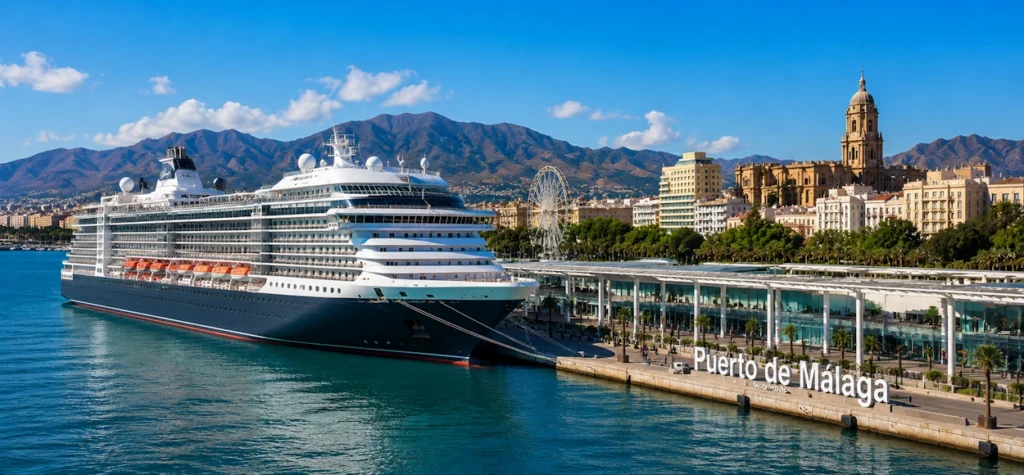
Málaga doesn't need to compete solely on quantity. It has the capacity to compete on quality, experience and added value. Moreover, it has something very important: a city that travellers want to visit.
“Specialised journalism makes more sense than ever.”
You lead a specialised communications group at a time when companies can speak directly to their customers through social media, their own channels and influencers. What role do journalism and the specialised press still play in an industry like tourism?
We started out primarily as a B2B publication, meaning that we were geared towards professionals, although specialisation has also opened us up to the general public and we have adapted accordingly. But we have never stopped working for industry professionals or for those seeking information that goes a little deeper or is not easily found elsewhere.
Precisely because anyone can publish information today, including false information, specialised journalism is more relevant than ever. A company can announce its latest news directly, an influencer can share their experience and any user can express an opinion. All of that has value, but it isn't necessarily journalism.
The role of a specialised media outlet is to provide context, knowledge, different perspectives and critical analysis. We also give a voice to those without a wider platform; in other words, we cover international news, stories from lesser-known sources and events taking place in remote locations that may ultimately affect us all.
Furthermore, in a sector as complex as the cruise industry, specialisation is essential. There is a vast amount of information and very little time to analyse it. I believe the media have an enormous responsibility in this regard.
Promotional content is essential to our own survival, but we must clearly distinguish between promotion, opinion and information.
Artificial intelligence and credibility
Everyone's talking about artificial intelligence now. Given your dual role as a businesswoman and editor, do you see it primarily as a tool to improve our work, or also as a challenge to credibility, specialised knowledge and the value of content?
I see it as both things. Artificial intelligence is going to change many tasks and, used correctly, can help us work better, faster, and handle an amount of information that would be impossible to process otherwise.
But that's precisely why I believe specialised knowledge will become more valuable, not less. AI can generate text, summarise information or help us find specific data, but it cannot replace the judgement of someone who has spent years following an industry, knows its key players, understands how it works and recognises when something doesn't fit.
The biggest challenge will be credibility. The more automatically generated content there is, the more important it will be to know who is behind that content, where the information comes from, and who has verified it.
For me, technology is a tool, but judgement, for the time being, remains human.
“Personal relationships remain fundamental in tourism.”
After so many years organising professional events, you've had the opportunity to bring together people who sometimes compete and sometimes need to collaborate. Are personal relationships and trust still among the driving forces behind the growth of tourism?
Without a doubt. You can have the best technology, the best data, and the best communication tools, but in tourism, personal relationships, I want to believe, remain fundamental.
It's a people-based industry with a very broad value chain. You have to trust a partner, a supplier, a destination or a cruise line. You have to be able to sit down with someone you may be competing with and find common ground.
The final decision will not be based solely on a personal relationship, but that relationship is often where the negotiation begins.
After so many years organising the International Cruise Summit, I have often seen how a conversation that begins on stage or over coffee ends up leading to a project, a collaboration or simply a better understanding between two parties.
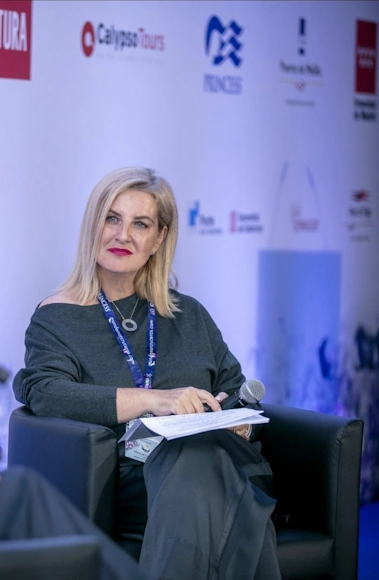
«"It has given me strength, independence, people, and experiences."»
Finally, behind Cruises News Media Group, CruisesNews, and the International Cruise Summit is Virginia. What has this entrepreneurial venture given you personally, and what continues to excite you after so many years of reporting on and experiencing the world of cruises?
“It has given me strength, independence, people and experiences.”
It has also allowed me to see the project grow alongside an industry that has changed radically and demonstrated remarkable resilience. But personally, it has given me something that is even more important to me: strength, independence, people and experiences.
It has given me so much. Professionally, it has allowed me to develop and grow a project that many thought had little future. I am very proud to have been able to lead it alongside a trusted team, overcoming serious personal challenges, global economic crises and a pandemic that paralysed the world.
Cruises have changed a great deal since I started and will continue to change. New destinations, new ships, new technologies, new types of travellers and new challenges emerge, but every year new people also enter the industry, with whom professional and, in some cases, personal relationships begin.
So yes, I'm still excited about the cruise I'm going on in a few weeks, choosing the city where we'll hold the next edition of the Excellence Awards, preparing the next Cruise and Sailing Forum, the upcoming meeting with a potential speaker for the International Cruise Summit, which is just around the corner, the meetings I'll be having at next week's cruise show, and working on the new projects currently in development.