

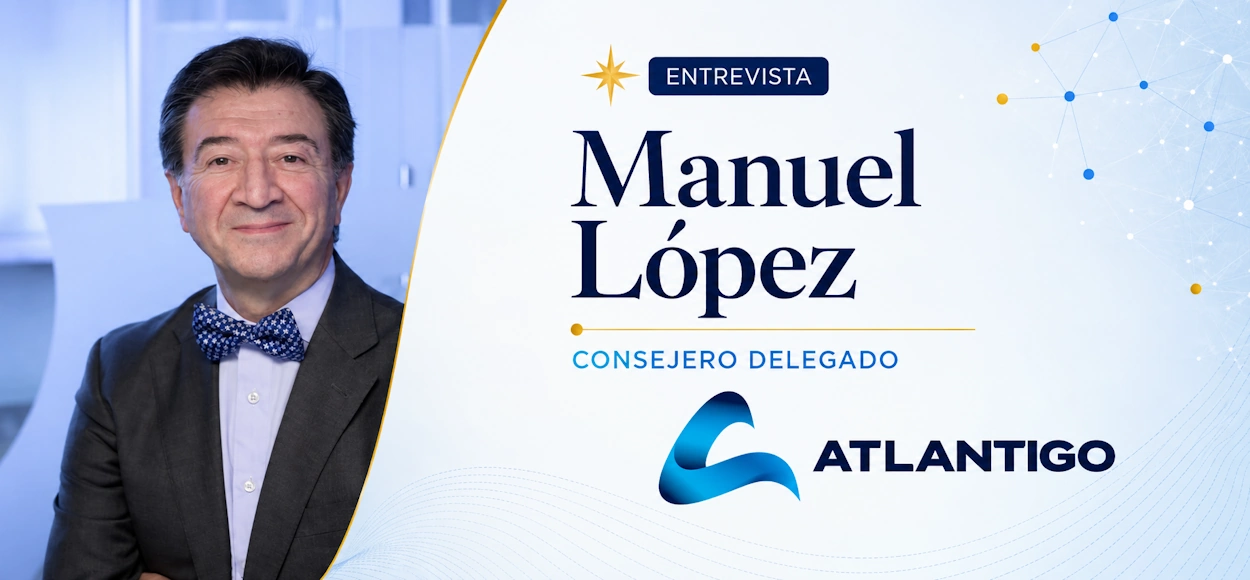
Manuel López Muñoz
Chief Executive Officer of Atlantigo
En 1993, Manuel López Muñoz puso en marcha InterMundial con la visión de especializarse en un ámbito que entonces apenas ocupaba espacio en la conversación turística: la protección y la gestión de los riesgos asociados a los viajes. Más de tres décadas después, aquel proyecto se ha convertido en una referencia dentro del sector turístico español.
An entrepreneur, business leader and expert in the tourism distribution sector, Manuel has spent much of his career working closely with travel agencies and professionals in the sector. Over the years, he has been actively involved in the tourism sector’s associations and has witnessed how technology, economic crises and changing traveller habits have radically transformed the industry.
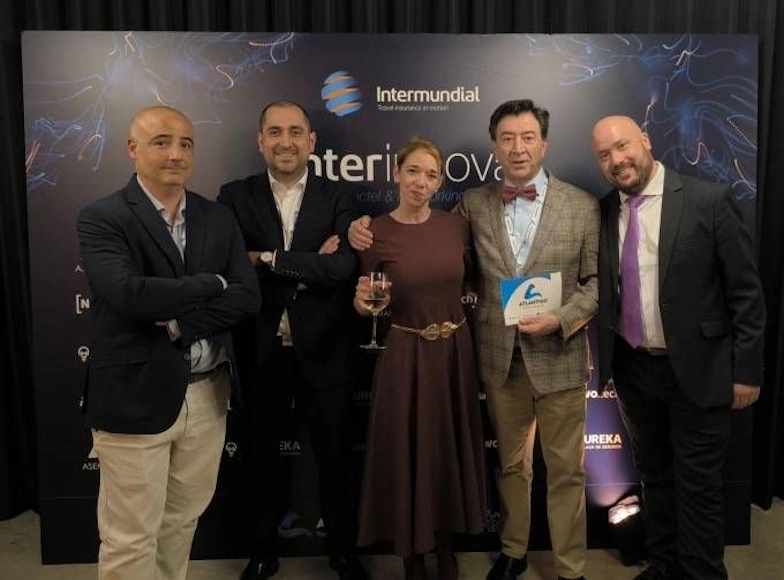
Conozco a Manuel López desde hace muchos años. Nuestras trayectorias profesionales se han cruzado muchas veces dentro del turismo y, con el tiempo, a la relación profesional se sumó también la amistad.
Por eso esta entrevista tiene inevitablemente algo de conversación entre dos personas que han vivido desde posiciones diferentes buena parte de la transformación del sector turístico durante las últimas décadas. Hablamos de emprendimiento, agencias de viajes, tecnología, relaciones profesionales y futuro del turismo, pero también de una forma de entender esta industria en la que, después de más de treinta años, las personas siguen ocupando el centro.
Manuel, in 1993 you decided to set up InterMundial. Looking back now, what did you see in the sector at the time that made you think there was scope to build a business specialising in tourism and insurance?
The EU Directive on package holidays, 90/314/EEC, which was set to radically professionalise the Spanish and European tourism sectors.
I realised that this change was going to create new needs in a sector that was rapidly becoming more professional, and I thought there was an opportunity there to build something different and highly specialised.
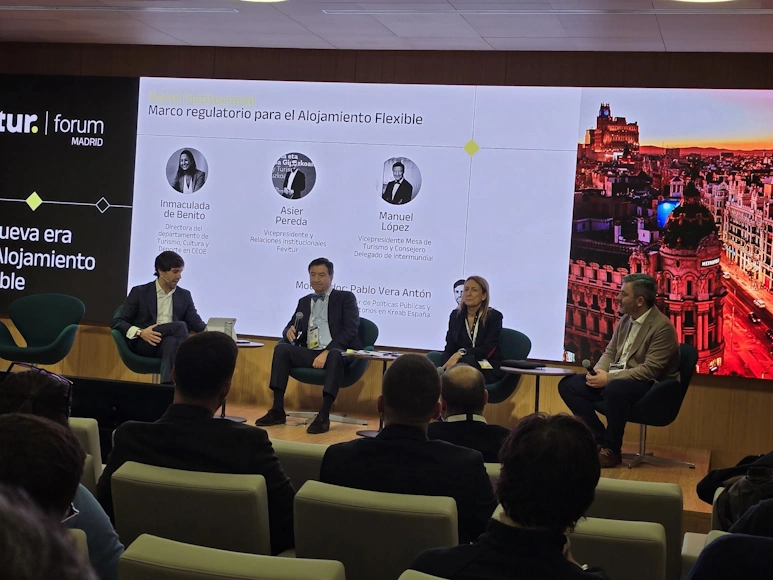
It’s true that starting a business is a real struggle. There are tough times, uncertainty and a huge amount of work. But when you think you’ve spotted an opportunity and you’re clear about where you want to go, it’s worth following that path. Thirty-two years have passed and we’re still refining that project, learning and evolving. We’re still going strong.
Over thirty years is long enough for successes, mistakes, crises and plenty of decisions. What moments do you think have been crucial in turning that initial project into the company it is today?
First and foremost, innovation. Not doing what the then fledgling travel insurance, risk and services market was doing at the time, but striving to innovate right from the start. Innovation, innovation and innovation.
La segunda decisión ha sido escuchar, escuchar y escuchar al profesional del sector turístico. Y aquí tengo que acordarme de Juanjo Oliván, agente de viajes y creador de Ilusiones, creador, por tanto, de viajes. Había que escuchar al señor Oliván, como a tantos otros profesionales del sector. Muchas de las decisiones que hemos tomado durante estos años han nacido precisamente de escuchar a quienes están cada día delante del viajero.
And the third decision I’d highlight was the one we made in 2016, when we decided to spend all our money on technology. There were times when we thought we’d made a mistake, but that decision transformed us completely. It enabled us to dive headfirst into digital distribution, work with OTAs and support the first groups that were beginning to develop new forms of digital sales.
I believe that these three things — innovating, listening and embracing technology — have shaped much of our history.
You have spent your entire professional life in the tourism industry and are well known amongst agencies, associations and professionals in the sector. To what extent is InterMundial’s success down to the product itself, and to what extent is it down to the personal relationships and trust built up over all these years?
Spot on, Juanjo, you’ve hit the nail on the head. As far as I’m concerned, our success story can be explained by three key players.
The first is the product itself. And here I come back to the same point: innovation, innovation and innovation. Having a good product, knowing how to adapt it and develop it further has been crucial over all these years.
The second is our staff. Our staff have played a central role in our day-to-day operations, in our growth and also in the personal relationships we have built within the sector. Ultimately, it is people who foster a sense of closeness and trust.
And thirdly, there are our customers. It is you who have placed your trust in us over all these years and who have enabled that project to become what it is today.
That’s why I find it hard to separate one thing from the other. You can have a great product, but you need people behind it and, above all, you need customers who trust you. I believe our story has been built precisely on these three key elements.
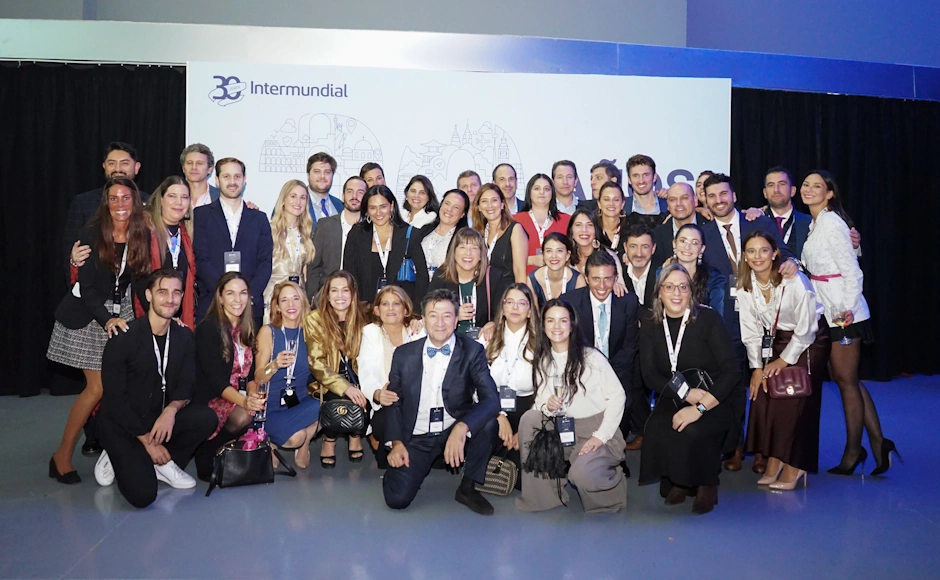
InterMundial has received numerous accolades from the sector, some of which are specifically based on feedback from travel agents themselves. What does it mean to you that it is precisely the professionals with whom you have grown that recognise your work?
It is a source of pride and an honour that our contribution to the sector has been recognised by travel agents. You know me – we’ve given loads of presentations together, and you know that I consider myself a travel agent too.
We have always felt that we are part of the tourism sector itself. Many of our staff come from that sector, and that has shaped the way we understand the business and interact with professionals in the industry.
We work in tourism. That is why it means so much to me that it is travel agents, of all people, who recognise our work. It is recognition from the professionals with whom we have grown and with whom we have been working side by side for so many years.
And it is that recognition which has always brought us back to the same point: to being, and seeing ourselves as, travel agents.
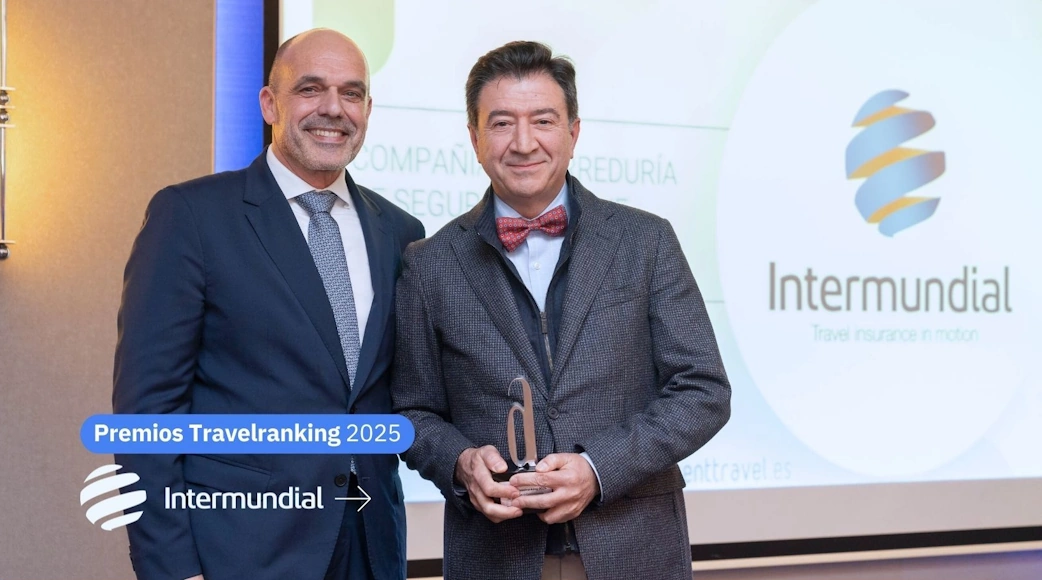
You have experienced some of the biggest transformations in Spanish tourism first-hand: the internet, online sales, corporate consolidation, new generations of travellers, the pandemic, digitalisation… Which of these changes has surprised you the most, and which do you think we have not yet fully understood?
Each of these developments, as they have taken place, has represented a minor revolution for our sector. They have all forced us, to a greater or lesser extent, to change, learn and adapt.
If I had to single out one thing, perhaps what continues to surprise me most is the speed at which changes are now taking place: just when you think you’ve got to grips with one transformation, the next one is already upon you.
But I would say that we still need to improve and empower travel agents and industry professionals even further, and increasingly turn them into genuine advisers to travellers.
I think there’s still room for improvement in that area. Digital advice and sales aren’t at odds with one another – quite the opposite, in fact. Technology needs to support professionals, providing them with more tools, more information and greater capacity to advise their clients effectively.
To me, advice and digitalisation go hand in hand.
Starting a business in tourism thirty years ago and doing so today are very different experiences. What advice would you give to a young professional who has a good idea but is unsure whether to take the plunge and set up their own business?
I have always encouraged entrepreneurship. There is an opportunity to bring a project to fruition if it is underpinned by a good idea, hard work and the determination to see it through.
I even believe it should be almost compulsory in our tourism schools for every student to start their own project from the very first year and to develop it over the course of their studies. Not necessarily so that everyone ends up setting up a business, but so that they learn to spot opportunities and think about how to turn them into reality.
I’ve always liked the image of young entrepreneurs who start out practically in a garage, with an idea and very few resources, and one day end up making their mark on an industry. In tourism, too, we need this to keep happening.
So I’d encourage all young people reading this who have a good idea to work on it, develop it and have the courage to give it a go.
In an industry accustomed to talking about sales, margins and growth, there is far less discussion of risks. Why should a tourism company view insurance and risk management as part of its strategy, rather than simply as an additional cost?
I always find myself thinking the same thing: my biggest rival isn’t the competition. My biggest rival is the tourism professional within the company who hasn’t yet realised that many of the risks we face in our sector can be transferred.
And that is precisely the concept behind insurance and risk management. I sit down with the professional, they explain their risk to me, we analyse it and see what part of that risk we can transfer.
When you carry out that exercise, insurance ceases to be merely a cost. What you are doing is turning an uncertain risk – one that could turn out to be very high – into a known and controlled cost.
Over the years, I have seen some exceptionally well-run companies that devote a great deal of attention to selling, growing or improving their margins, but do not always give the same consideration to what might jeopardise everything they have built. And that is where we still have a great deal of work to do.
Because an adverse situation can cause difficulties for a tourism business and even bring it down. Effective risk management means planning ahead so that, should such a situation arise, you have a response ready.
Travel agencies, tour operators, accommodation providers and other tourism businesses operate whilst being exposed to cancellations, liabilities, incidents, extraordinary events and situations that could seriously affect their operations. Do you think the sector is sufficiently protected today and aware of the risks it faces?
We are a very dynamic and daring sector, and we provide services that represent dreams and journeys. We are therefore highly exposed to geopolitical and geostrategic situations, natural phenomena and many other circumstances beyond our control.
I always say the same thing: we still have a world to protect. Whether it’s natural disasters, global warming, cyber security or any of the many other circumstances that could throw a spanner in the works of everything we’d planned.
And it doesn’t always have to be a major disaster. A beach being inaccessible, a road closure or a specific incident can cause an entire project to fall apart.
We have undoubtedly made progress, but we still have a great deal to do. We are a very daring sector, and perhaps that is precisely why we must also be increasingly aware of the risks we take.
When an agency provides a traveller with sound advice on their cover, it is not just protecting the customer. To what extent does good insurance also help to protect the company itself, its reputation and the relationship of trust with that customer?
Juanjo, you know full well that we are extremely committed to protecting travellers. As you are well aware, whenever we have shared knowledge within the travel agency sector, we have always emphasised that protecting travel agents and safeguarding their liability is just as important as protecting travellers.
And over the years, I have come to see it increasingly as a matter of good professional advice: when an agency helps travellers to anticipate what might happen, it is also safeguarding the trust that client has placed in it.
When something goes wrong on a trip, the consequences are not limited to the incident experienced by the customer. They can also affect the travel agency, its liability, its reputation and, above all, the relationship of trust it has with that traveller.
That is why sound advice on protection is also part of a good professional service. You need to anticipate what might happen and be ready to respond when it really matters.
Technology and artificial intelligence are transforming virtually every aspect of the tourism sector. How are they also changing prevention, traveller assistance and the way we respond when an incident occurs?
We are in the midst of another revolution – the technological revolution – combined with artificial intelligence. And this is also changing the way we support and protect travellers.
For us, one thing is very important: first, to provide assistance and resolve the issue; and then, if appropriate, to offer compensation. The customer must feel protected, as if they have a guardian angel who is always by their side. They must be able to reach us and receive a response to any crisis or emergency they may face whilst travelling.
This is where technology and artificial intelligence have a great deal to offer, particularly in terms of accessibility, immediacy and responsiveness. Protection must go far beyond what is covered by insurance.
We always say the same thing: we sell solutions and services rather than compensation. Technology and artificial intelligence are there to help us do just that – to detect incidents earlier, make it easier to access support and provide a much more immediate response.
But there is one thing we mustn’t forget: tourism is still a people-centred industry. When someone encounters a problem thousands of kilometres from home, technology should enable us to be there for them and provide a quicker solution, not to distance ourselves from them.
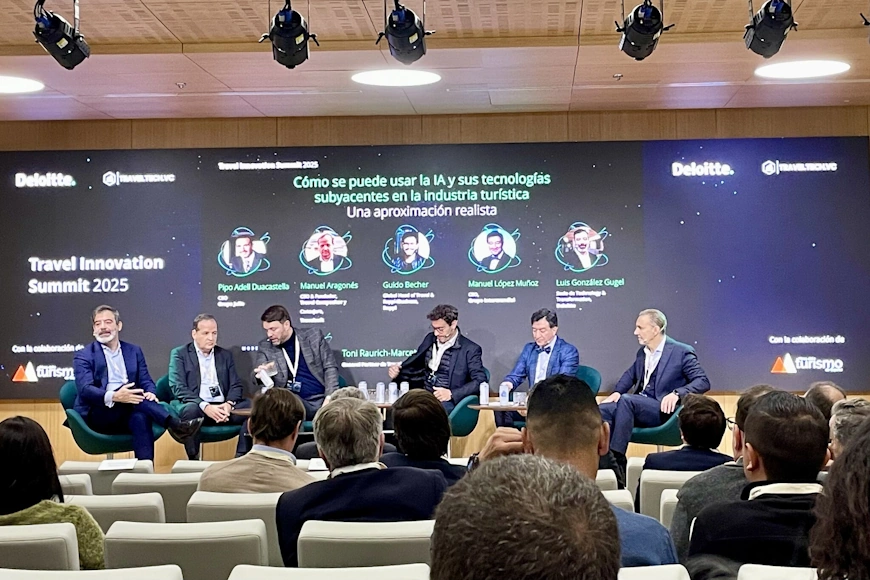
Your business career has also been linked to initiatives in social engagement and responsible tourism. In your opinion, what responsibility does a company that has grown thanks to tourism have when it comes to giving something back to society?
For us, it is a duty. If we have had the opportunity to grow thanks to tourism, I believe we also have a responsibility to give back some of what the sector itself and society have given us.
We originally launched the Ten Commandments of the Responsible Traveller, which we presented in collaboration with the World Tourism Organisation, and subsequently set up our Foundation, through which we have worked tirelessly to promote responsible and sustainable tourism.
We have also wanted to recognise the work of others. There are countless professionals and organisations in the sector who are doing an outstanding job within their social, economic and environmental contexts. We support some of these initiatives, sponsor others, and for others we simply try to highlight them and give them the visibility they deserve.
Since then, we have launched various initiatives, but for me the important thing is not to draw up a list of them, but to help ensure that tourism leaves a positive mark and also to recognise the professionals and businesses in the sector who are doing things right. There are so many people working with that commitment, and they deserve to be recognised.
Because, to me, giving back to tourism some of what tourism has given us is a duty.
After more than thirty years of starting businesses, growing them, weathering crises and seeing the industry undergo a complete transformation, what is it that still makes Manuel López enjoy working in tourism?
I enjoy my work, professionally speaking. I listen to my colleagues and other professionals in the sector, and as our industry is constantly changing, I try to keep coming up with solutions.
I think a large part of what I still enjoy after so many years is precisely that: listening. Finding out what they need, what worries them, what’s changing, and trying, based on my own experience, to make things easier for them and make their lives a little happier.
And then there’s the personal side. After so many years, many of those professionals have become friends. As you can imagine, if I’m in Marbella, I’ll certainly find time to see you, Juanjo, just as I’ve always done with so many other professionals in the sector. Spending time with them, chatting, listening and sharing is also my way of understanding this profession.
That’s what continues to give me pleasure: being close to the sector, being close to the people in it, keeping up to date with what they need and feeling that I still have something to offer.