



From Kind Holidays to Room for Kindness: when a spare room can become a memory to last a lifetime
Grant Peires · Head of Solidarity and Kindness at IDILIQ Group
Tourism has the power to create experiences, generate employment and transform destinations. But it can also become a powerful tool for solidarity when it puts its resources, its capacity and, above all, its people at the service of those going through particularly difficult times.
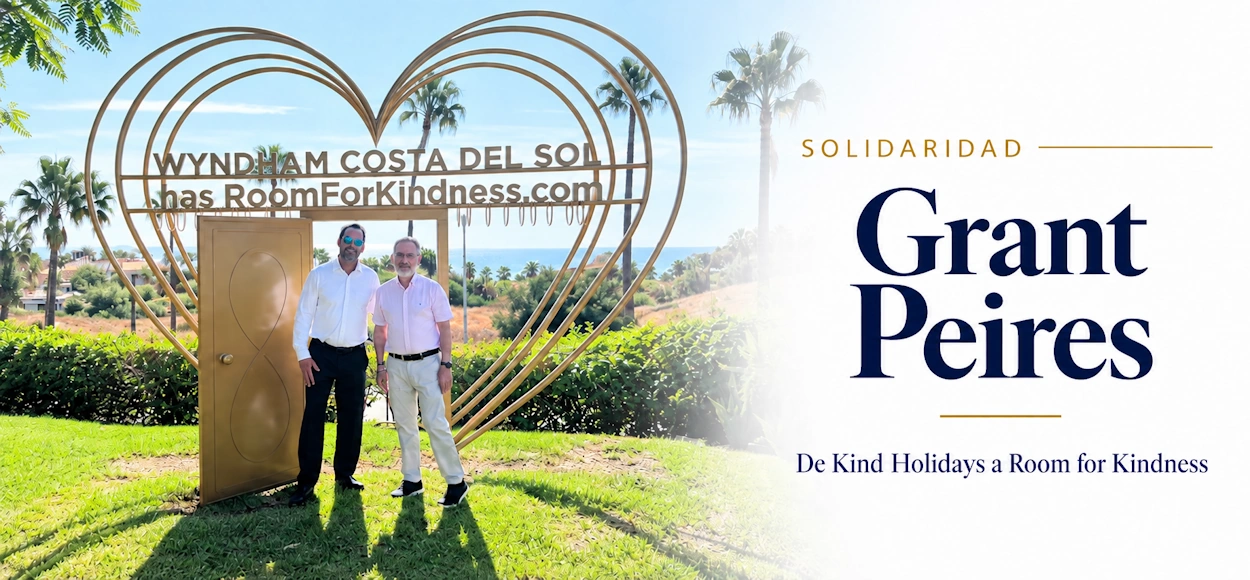
I went to visit Grant Peires at Wyndham Costa del Sol to find out more about Kind Holidays and Room for Kindness. During our conversation, I discovered not only two unique initiatives, but also a person deeply committed to them. Grant speaks of these projects with a passion that is difficult to convey solely through figures or results: behind every stay there are people, families and stories that explain the true meaning of what they are doing.
During that meeting, I realised that Kind Holidays had paved the way by offering holiday experiences to families who need a break in particularly difficult circumstances. Now, Room for Kindness aims to expand on that philosophy by involving the hotel industry itself and turning available rooms into opportunities to give the gift of time, rest and memories to those who may need them most.
I wanted to continue that conversation in At Sinergia Skål, I wanted to continue that conversation here at Sinergia Skål, to find out how these projects came about, the stories behind them, where they hope to go next and, above all, what drives Grant Peires to speak about solidarity with the same passion with which others speak about occupancy, destinations or results.
When a holiday becomes a lifeline
Grant, when we talk about Kind Holidays and Room for Kindness, you convey something that goes far beyond a professional responsibility. Where does that personal commitment to these projects come from?
It stems from seeing the incredible impact these holidays have on the families who have been able to enjoy them with us. It also stems from a visit to Noah’s Ark Children’s Hospice, on the outskirts of London, one of the organisations to which we donate stays at our hotels. Most of the children cared for there are in the final stages of their lives and, due to their deteriorating health, are usually unable to travel abroad — our resorts are in Spain and the United States. We offer holiday accommodation to their parents and siblings following their passing, as a way for them to find some comfort during what must be the most painful period a father, mother or sibling can go through.
Noah’s Ark is a beautiful, peaceful place that allows these families to spend what little time they have left together in a calm and caring environment. The visit ends in a small room, decorated with rainbows and teddy bears. It is the room where parents come to say their final goodbyes to their child.
It is a room that no parent should ever have to visit and which, as a parent, has left a lasting mark on my heart. I think of it every time this challenge I’ve set myself seems difficult or never-ending.
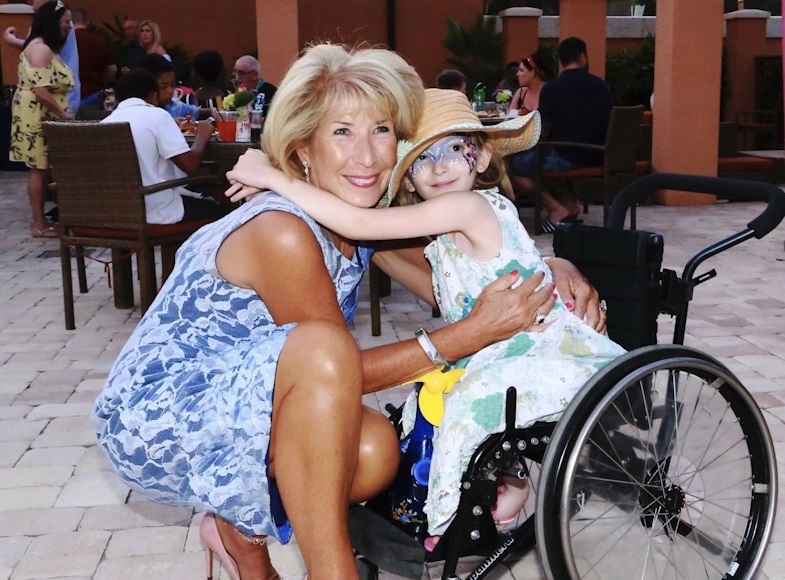
Kind Holidays is based on a seemingly simple idea: to offer a holiday to individuals and families who are going through some of the most difficult times of their lives. How did the project come about, and when did you realise that a stay could mean so much more than just a holiday?
In 2013, we were among the first to donate hotel stays to Give Us Time, the charity set up by Lord Liam Fox, the former Secretary of State for Defence of the United Kingdom, which supports service personnel and their families, many of whom are affected by post-traumatic stress and/or physical injuries. Three years later, in 2016, our group’s chairman asked me to identify organisations focusing on children with severe disabilities and illnesses that limit their life expectancy.
Shortly before Christmas 2023, IDILIQ Charity Holidays, as it was then known, was featured in a Forbes article entitled “Travel For Good: How Some Companies Are Giving Back This Season”. Another of the hotels mentioned, the NH Collection New York Madison Avenue, offers free accommodation to families of children receiving medical treatment at St. Jude Children’s Research Hospital in New York. Reading that article, I realised that, as an industry, we can do so many good things with spaces that, to a large extent, remain unused. Very few hotels operate at 100 per cent occupancy all year round, and we are in a unique position to help families create their most cherished memories, or to enable them to stay close to their children during hospital treatment when they live too far away to commute daily.
In April 2024, we launched KindHolidays.com as a guide so that other hoteliers could also start donating stays. It includes the contact details of some of the organisations we work with in the UK and guidance on finding a partner organisation anywhere in the world.
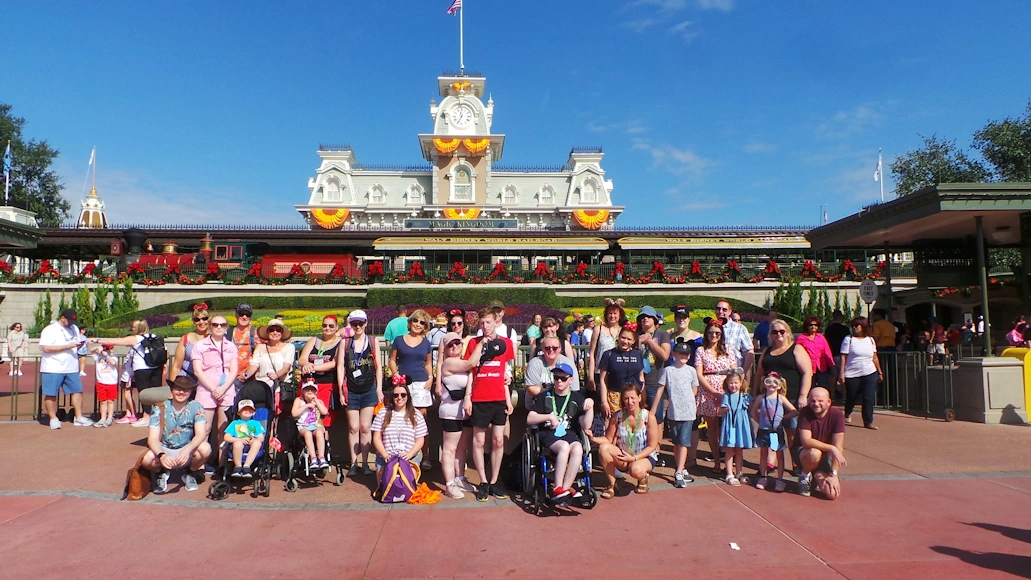
I realised that a stay could mean so much more than just a holiday when I first heard Scotty Darroch, a former soldier, speak at a Give Us Time fundraising event in 2015.
Scotty was diagnosed with hyperactivity at the age of 4 and was sent to hospital at weekends to give his parents a break. At the age of 12, he witnessed the aftermath of the Lockerbie air disaster. As a child, he was abused by a family friend, and after serving his country for almost 10 years in Northern Ireland, with missions in Bosnia and Kosovo, Scotty became addicted to heroin. Having witnessed “the worst that humanity can do to one another”, after his service, Scotty spent nine years experiencing episodes of self-harm and multiple suicide attempts “trying to make the images go away” before being diagnosed with Severe Post-Traumatic Stress Disorder and Major Depressive Disorder. Scotty is grateful for the holiday he spent with us in 2013, as it helped him regain his balance and set him on the path to recovery. He calls this holiday a “lifesaver”.
At Kind Holidays, you help families and individuals who need a break from particularly difficult circumstances. Is there a story that has made a particular impression on you and that explains why you remain so committed to this initiative?
Phoenix Sea was just ten years old when he passed away from infantile neuroaxonal dystrophy, a rare and degenerative neurological condition. His mother, Sarah, had spent years watching her son gradually lose the ability to walk, speak and, eventually, smile. When we offered the family a week at Wyndham Costa del Sol, it was never going to change Phoenix’s diagnosis, but it did change the way they spent those days together. Phoenix couldn’t swim or run, but he could feel the sun on his face.
Sarah and her other son, Rico, returned to the resort a few years later to scatter his ashes into the sea near the resort, the place where they had shared some of their most cherished memories, watching the sunrise together.
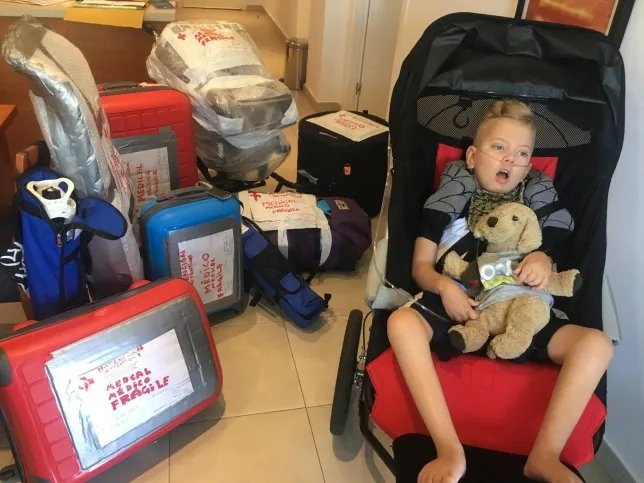
What happens from the moment a partner organisation identifies a family until that family is able to enjoy their stay? How do you ensure that the whole process is carried out with the sensitivity required in such sensitive situations?
Every September we contact all our partner charities and ask them how many weeks they would need at each of our resorts for the following year and which periods would be most suitable for them. The average is around ten weeks per organisation per year, usually in two-bedroom flats accommodating six people: approximately 40 per cent during peak season and 60 per cent during the off-season.
The organisation then decides which families to give the holidays to. They often work with healthcare professionals and social workers who put forward specific families. In many cases, these organisations also provide financial assistance, organise travel arrangements and even contribute money towards expenses. Our hope is that one day airlines, car hire companies, taxi firms, restaurants, cruise lines and other industry players will also get involved.
The organisations themselves take the lead in managing the holidays. They simply write to our bookings team, who have already reserved the weeks for them, and provide the families’ names. If a family has to cancel, we allow them to transfer the booking to another family’s name. We frequently use wheelchair-accessible accommodation, but apart from that, the process is very straightforward and quick for the bookings team. We’re in the hospitality business and our job is to help our guests enjoy a wonderful and memorable stay, but these families are our VIPs and we treat them as such.
The way in which we allocate rooms may not necessarily suit all hoteliers. I know of hotels that donate rooms at the last minute that have become available. Each operator can do so in the way that best suits their circumstances; there are no set rules.
From Kind Holidays to Room for Kindness
After years of developing Kind Holidays, Room for Kindness has arrived. What made you think the time had come to take a step further and turn your experience into a model that other hotels could join?
Kind Holidays is, in essence, a practical guide for fellow hoteliers. RoomForKindness.com goes one step further: as well as including links to our partner organisations in the UK and now also in Spain, it offers hotels templates for staff T-shirts, reception signs, and digital and print-ready logos that they can use freely, provided they commit to donating at least one week a year for the next ten years.
We donate more than 200 weeks each year and do not expect others to be quite so generous. However, we are convinced that, once they get started, they will see the enormous impact this has not only on the beneficiary families, but also on the morale of their own teams.
Altruism can even prove profitable for those who get involved. Room for Kindness includes a list of all participating hotels with direct links to their booking pages. The idea is that, by giving away just one week a year — which could be a week in the low season, with costs limited practically to supplies and cleaning — they also gain a free source of bookings. Many of us pay between 17 per cent and 25 per cent to OTAs, tour operators or direct marketing. Imagine how much more profitable a booking can be if securing it costs nothing.

Room for Kindness aims to transform available hotel capacity into opportunities for rest and recuperation for those who need it most. What would you say to a hotelier to convince them to make one of their rooms available for this project?
These families are some of the most grateful and kind guests one could hope to look after. Room for Kindness is consistently cited by housekeeping, reception and management staff as one of the greatest sources of pride in their work. In an industry known for its high staff turnover, teams that find a sense of purpose stay longer. Staff retention, pride and a sense of purpose more than make up for the cost of those rooms, and guests, too, take pride in staying at a hotel that gives something back to society.
A human responsibility
At Room for Kindness, you use a very powerful phrase: “This isn’t corporate social responsibility. This is a human responsibility.” What does that distinction mean to you?
For many hotels around the world, corporate social responsibility is largely dominated by sustainability. Climate change is important to us all and, judging by this year’s weather and the forecasts for El Niño in the coming years, it is a cause for concern. But this initiative touches the beneficiary families and members of our teams at the very core of their humanity. It allows us to give families the opportunity to create their most cherished memories, find some comfort after losing a loved one, or even save a life.
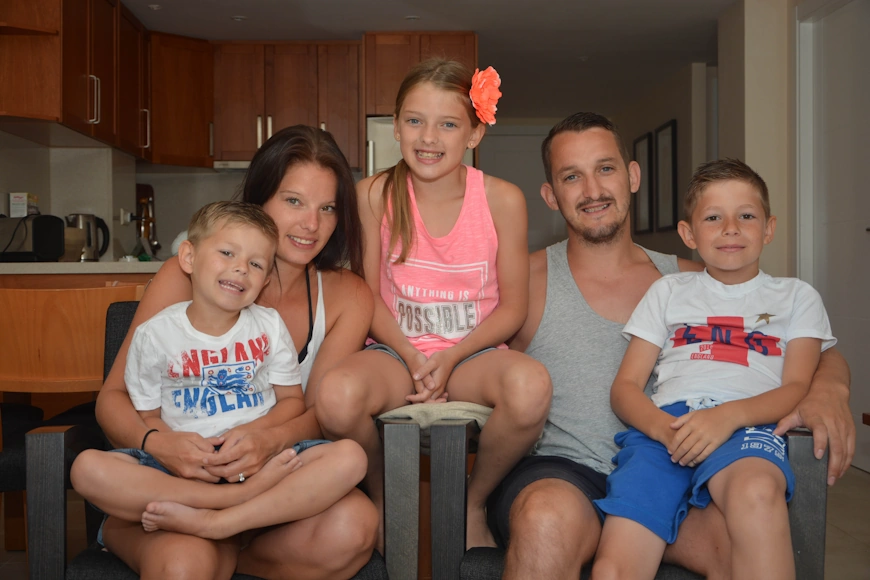
The name “Room for Kindness” itself plays on a very simple idea: a room can become an act of generosity. Rather than relying on standard industry indicators such as occupancy rates or revenue per room, you propose also measuring impact. Do you think the hotel sector needs to adopt this alternative way of measuring its success?
Absolutely. The impact can be seen in the smile of a child who had never been able to go on holiday and who has endured more physical and emotional pain than many people will experience in several lifetimes.
It is the doorman who, at six o’clock in the morning and without asking for any payment, accompanies a single mother and helps her push her son’s wheelchair down to the beach so that they can watch the sunrise together. It is that sense of pride and purpose that can save the Human Resources department a fortune and forge a bond with guests that is difficult to achieve in any other way.
A movement open to the entire tourism industry
Room for Kindness aims to involve establishments and professionals in various destinations. How far do you want to take the project? Is the aim to get other hotel chains, even those that compete with one another, to adopt the model?
We want every hotel that is able to do so to join us, regardless of its brand or how close it is to our own properties. We want hotels from all over the world. Personally, I won’t rest until more than 1,000 hotels are giving away tens, if not hundreds of thousands, of free weeks every year.
We’d also like airlines to get involved. Wizz Air currently donates more than 50 flights a year to When You Wish Upon a Star, one of the organisations we work with. If they can do it, so can the others. The same applies to taxis, trains, car hire companies, restaurants, cruise ships... anyone involved in the hospitality sector can get on board.
COVID put our industry in intensive care; fortunately, we’ve returned to 2019 levels. Now we’ve unleashed a “virus of kindness”. When you experience it, you pass it on to your friends and your competitors. Let’s make the world a kinder place, one holiday at a time.
What role can tourism professionals play on an individual basis? Not all of us have hotel rooms to donate, but many of us can help raise awareness, put organisations in touch with one another or open doors.
I would ask professionals to speak to their contacts within the sector – not just hotels – and to encourage them to find out about RoomForKindness.com. We are also asking our guests and the general public to tell their favourite hotels about the initiative. Tell them that you will become even more loyal customers if they start donating stays.
Furthermore, RoomForKindness.com/find-a-hotel/ offers a free listing for all hotels that commit to donating just one week a year to a charity. It is a commission-free marketing channel. Imagine if all the relevant hotels were listed there and it became a major source of bookings. The profitability of those taking part could increase dramatically.
What solidarity gives back
After so many years working in tourism, what have the families who have stayed with Kind Holidays taught you that you wouldn’t have learnt by working solely in the tourism industry?
They have taught me just how lucky I am to be able to enjoy regular holidays with my family and, above all, how lucky I am to have a wife and children in good health. They have also shown me just how strong and resilient human beings can be.
Whether it’s a former soldier trying to lay his demons to rest once and for all, or a mother who has lost one child and continues to care for the other despite a pain that is impossible to imagine. They are real-life heroes. They inspire me and my colleagues every day with their strength of spirit and their ability to remain kind despite everything.
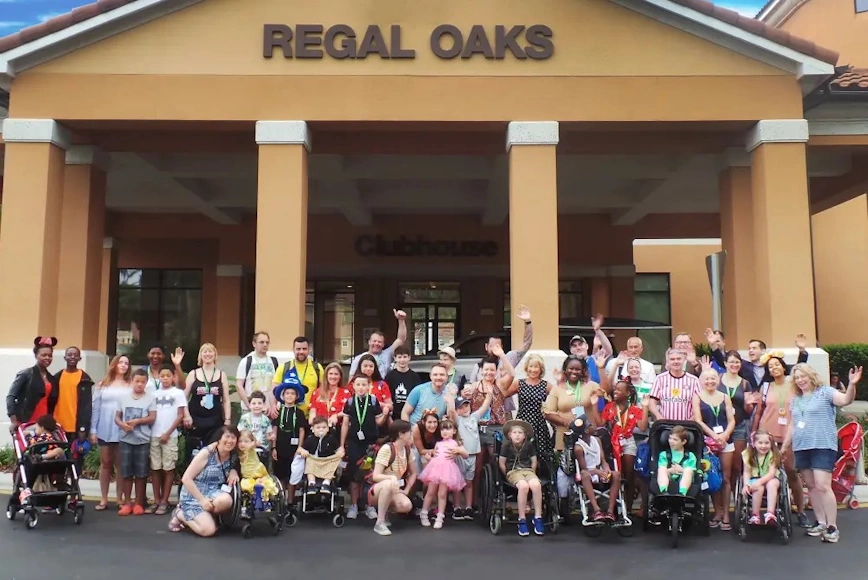
I’d like to finish on a personal note. Today, listening to you talk about these projects, it’s clear that there’s a very strong emotional connection behind them. What do you get out of all this? What keeps Grant Peires feeling inspired and keen to involve more people in this initiative?
I’m not a religious person, but I firmly believe that what you give eventually comes back to you. To tell you the truth, I’m a very selfish person and I’m in this for what I call “karmic points”.
Joking aside, as well as offering some of the most wonderful and courageous people I have ever met the chance to create their most cherished memories and/or find some comfort, I have seen the enormous impact that all of this has had on me and my colleagues. I want the rest of our industry to be able to feel it too.
On the Room for Kindness website, there is a six-minute video featuring some very moving interviews with some of our most special guests and members of staff. Having watched it, I can only ask that you join us and/or help us spread the word about the project. Thank you.