



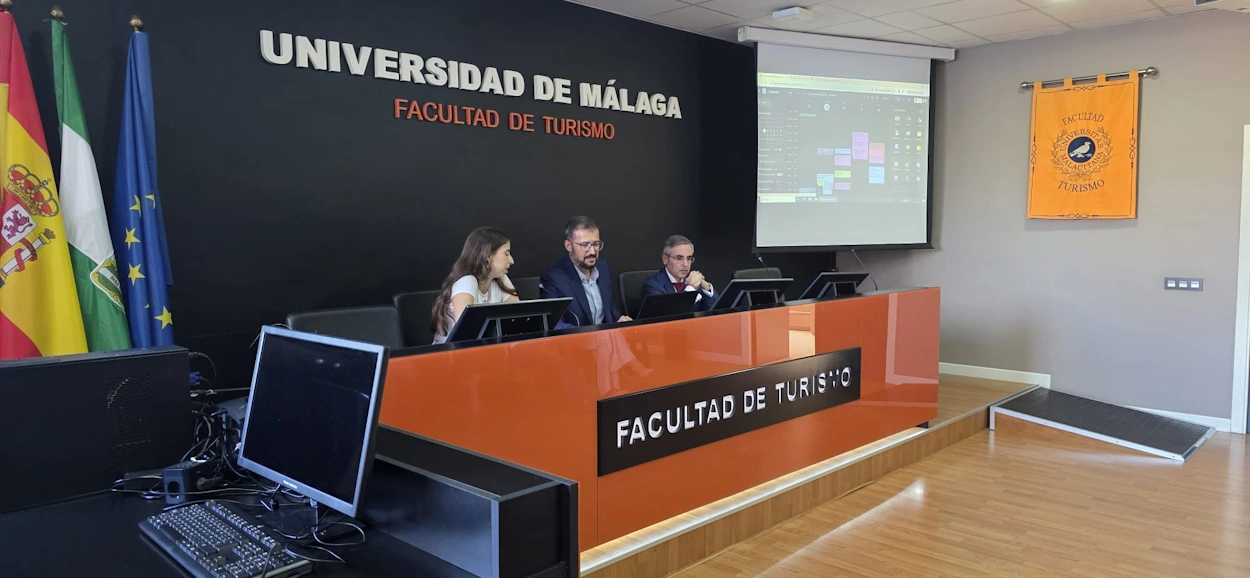
The president of Skål International Spain took part in the launch of the three Master’s degree programmes offered by the Faculty of Tourism at the University of Málaga, delivering a keynote lecture focusing on ethics, leadership and professional development.
The motivation in tourism was one of the key topics of the keynote lecture given during the presentation of the three master’s degree programmes offered by the Faculty of Tourism, University of Málaga at a meeting which highlighted the importance of specialised training and the link between the academic world and the business realities of the tourism sector.
The event was attended by Juan Vázquez, President of Skål International Spain, who gave a masterclass to the students, focusing on what motivates people and its influence on professional development.
The event was also attended by two members of the Board of Directors of Skål International Málaga-Costa del Sol: Arantxa Mérida, secretary, and Juan José Oliván, Head of Marketing and Communications.
Far from limiting his remarks to the employment opportunities offered by the tourism industry, Vázquez reflected on the principles and values that should guide future professionals throughout their careers.
Motivation in tourism: much more than just a financial reward
During his presentation, he explained that motivation provides the necessary impetus to undertake any activity, but that, on its own, it does not guarantee that objectives will be achieved. He identified four key elements for turning intentions into results: motivation, knowledge, determination and ethics.
One of the key themes was the distinction between three types of motivation, based on the model developed by Professor Juan Antonio Pérez López. The extrinsic motivation is linked to external rewards, such as pay and recognition. The intrinsic stems from a sense of fulfilment in one’s work, from learning and from overcoming challenges. The far-reaching is linked to the positive impact our actions have on other people.
Vázquez attached particular importance to this last aspect of tourism, a sector in which the work of professionals has a direct influence on travellers’ experiences, expectations and emotions. Striking a balance between these three motivations is essential for building a solid and fulfilling career.
Tourism is, above all, an activity involving people
Tourism professionals do more than simply market products or provide services. Their work helps to bring to life experiences which, in many cases, travellers have been planning for months or even years. From this perspective, excellence demands more than just technical knowledge: it requires empathy, responsibility, commitment and the ability to understand the needs of others.
Vázquez also emphasised the importance of teamwork and collaboration between businesses, pointing out that no individual professional or organisation can, on its own, carry out all the activities that make a tourist destination viable.
Transport, accommodation, catering, leisure and the range of services that make up the visitor experience form part of a chain in which cooperation is essential. This vision ties in with Skål’s philosophy and its principle of «Doing Business Among Friends».
Leadership also means preventing a loss of motivation
Another key message from the keynote lecture concerned the role of companies and those responsible for managing teams.
Vázquez argued that motivation must be cultivated by the individual themselves, whilst organisations and their leaders must take care not to undermine that drive through practices that generate frustration or mistrust.
He advocated for professional environments based on consistency, honouring commitments, trust and respect. He also emphasised the importance of focusing our efforts on what we can actually influence, learning from our mistakes and ensuring that day-to-day urgencies do not overshadow important decisions.
The ability to listen, understand different points of view and seek solutions that benefit all parties were among the other skills highlighted. To find out more about his vision for the organisation’s future, you can also read the Interview with Juan Vázquez published in Sinergia Skål.
International mobility: an opportunity for new professionals
During the talk held at the University of Málaga, the following person also spoke: Emilija Jaguljnjak, a German student at the University of Dublin who is undertaking their work placement at Loymer Travel.
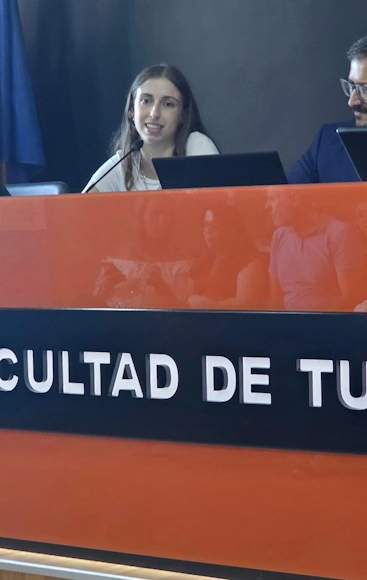
Jaguljnjak shared his experience of international mobility and his involvement in the tourism sector through the network of Skål International. His testimony highlighted the value of international placements as a bridge between academic education and the professional world, as well as the role of these networks in fostering cultural exchange, cooperation and development opportunities for the next generation of tourism professionals.
A reflection for the younger generations
The event had a strong educational focus, aimed at those preparing to enter the labour market or take on new responsibilities within the tourism industry.
The president of Skål Spain encouraged the students to build their careers on solid principles, to maintain an open attitude towards learning, and to understand that professional success cannot be measured solely by the position attained or the financial results achieved.
In his closing remarks, he emphasised an idea that sums up much of his message: Professional excellence must go hand in hand with personal qualities.
The presentation of the three Master’s degree programmes at the Faculty of Tourism, University of Málaga He once again highlighted the importance of building bridges between the university and professionals in the sector. This connection is particularly important in Andalusia and on the Costa del Sol, where training and human talent are fundamental to the future of tourism.