
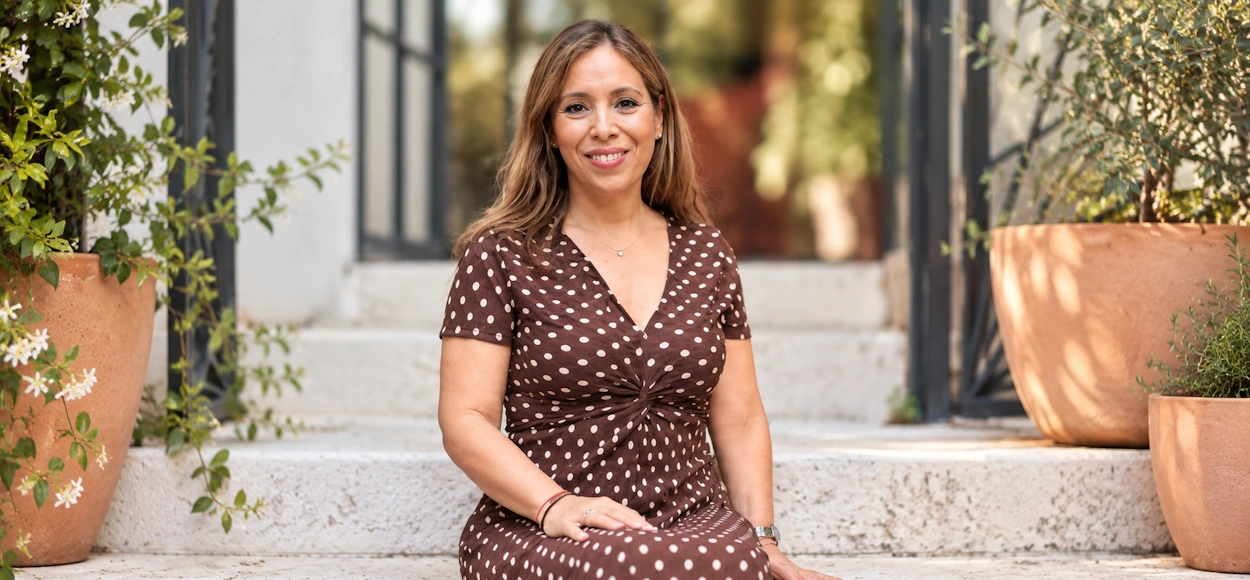
There are professionals whose careers can be summarised in terms of job titles, companies and years of experience. And there are others whose stories are best understood through the relationships they have built, the decisions they have made and the way in which they have managed to reinvent themselves.
I know Mar Sánchez Villalta for many years. I have followed much of her professional career closely and, above all, I have been fortunate enough to get to know the person behind it all. A dynamic, enterprising and forthright woman, passionate about tourism and with an extraordinary ability to start afresh whenever necessary.
Today, she is Founder and CEO of SBC International Services, where she specialises in sustainable and luxury tourism, as well as brand representation and promotion in various markets, and Chair of @MEET Spain, the Association of Women Entrepreneurs and Executives in Tourism. But this conversation, as part of The Guest's Gaze, is not simply intended to go through her CV.
I want to talk to Mar about choices, doubts, friendships, setbacks, dreams and everything that a professional life ultimately teaches you about yourself as well.
Interview with Juanjo Oliván
«Experience brings confidence, but it also teaches humility»
If you look back at that woman who was just starting out in the tourism industry and compare her to who you are today, what do you still recognise in her, and what has changed completely?
I recognise the enthusiasm, curiosity and eagerness to learn. I started out at Viajes CATAI, and that’s where I learnt the essentials of this profession: knowing the product inside out, understanding the customer and paying attention to detail. I’ve always been restless; I like meeting people, discovering destinations and spotting opportunities where others might not see them.
What has changed is the way we approach things. Over time, you learn that not everything depends on you, and that part of the experience is also knowing how to wait, listen and pick your battles.
These days I’m more discerning, I have a better understanding of my strengths and I value my time much more highly. Experience brings confidence, but it also teaches humility: there’s always something new to learn.
Thirty-one years that shaped a professional life
Which of all the stages of your career do you think has changed you the most as a person?
Without a doubt, my 31 years at the helm of Air Mauritius for Spain and Portugal. I took on that responsibility when I was just 23, and I very quickly learnt how to negotiate, make decisions and earn the trust of professionals with far more experience than me.
There is one phrase that has stayed with me forever. When Mr N. H. Dastur, the director for Europe and a leading figure in the aviation industry – who had hired me – retired, he spoke of three people he had worked with. Of me, he said that I had never called him with a problem, but always with a solution.
I’ve never forgotten it, because it sums up my outlook on life: when things get complicated, I look for solutions.
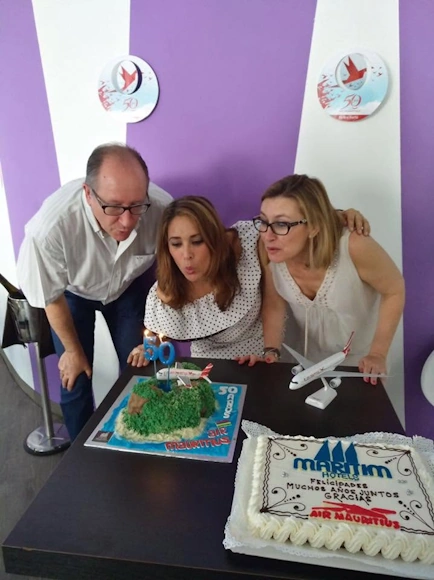
That period gave me a very comprehensive insight into the tourism industry and taught me the value of perseverance. It also showed me that our professional identity does not depend on a job title or a company, but on what we are capable of doing, on our values and on our ability to continue making a contribution.
“You never start completely from scratch”
Have you ever really felt as though you were starting all over again from scratch? What was that like for you?
Yes, although I’ve learnt that you never really start completely from scratch. You build on the experience and the relationships you’ve built up over the years.
When you bring such a long chapter to a close – especially at such a delicate time as the one following the pandemic – there is a great deal of uncertainty. You have to reposition yourself, explain who you are and demonstrate what you can offer. It was then that my son – and now my business partner – David Lenormand suggested we set up a company specialising in sustainable luxury tourism. It was a dream I’d had for years, but my first question was: “And who are we going to represent?”
Just then, Donald Payen turned up; I’d been working with him practically since I started at Air Mauritius, and he was then chairman of the Mauritius Tourist Board. He offered me the chance to represent the destination in Spain and Portugal.
I was absolutely delighted that someone who had known me from the very beginning continued to place their trust in me. That’s how SBC International Services came into being, in 2023.
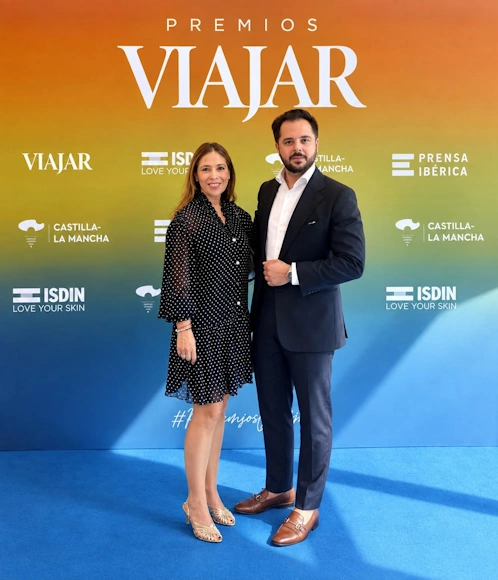
It wasn’t a case of starting from scratch, but rather building on everything I’d learnt and on the relationships I’d forged over a lifetime. And, for the first time, I was able to build something of my own, choose who to work with and decide what value I wanted to bring.
The fact that, in 2025, Marriott International entrusted us with the representation of three of its most iconic resorts in Mauritius was the best confirmation that we were on the right track.
Hesitation is also part of the decision-making process
Behind that confidence and determination, there are also doubts. What have you had to learn to cope with?
I have learnt to live with uncertainty and not to confuse certainty with always having all the answers.
When you have responsibilities, you’re expected to make decisions quickly. But important decisions rarely come with guarantees: you analyse the situation, listen to different opinions and, in the end, take the risk of making a choice. I’ve also learnt not to waste energy on things that are beyond my control, and to distinguish more clearly between what I can change and what I have to accept.
Doubt is not a weakness; it is often a form of prudence. The important thing is that your doubts do not paralyse you or cause you to lose confidence in your own judgement.
The freedom to create your own project
When did you feel that you needed to work differently – with more freedom and on your own terms?
After so many years, there comes a time when you need to put all that experience to use on a project that reflects your own approach to work.
I have gained experience of the sector from almost every angle: tour operators, airlines, destinations, travel agencies, trade associations and hotels. This broad perspective enabled me to offer much more than a traditional sales role.
With SBC International Services, which I founded alongside David Lenormand and Jaime Sánchez Artacho, that is precisely what I set out to build. Today we represent sustainable luxury hotels and DMCs in Spain, Portugal, Italy and Latin America: from the Marriott resorts in Mauritius to Creative Travel in India, Travco in Jordan, Regency in Qatar and the UAE, and Zahara Tours in Oman.
Our approach is very hands-on and focused on the long term: we analyse each product, design a strategy for it, act as their local representative and measure results. We only work with partners who share our values and market vision.
Freedom does not mean working without commitments. It means choosing how to carry out a project and maintaining independence of judgement. And it entails greater responsibility, because every decision rests with you.
“True luxury lies in the details”
What does luxury really mean to you? Is it still about exclusivity, or is it increasingly about time, authenticity and experience?
For me, luxury is still about excellence, but it has long since ceased to mean merely exclusivity, large resorts or sophisticated service.
True luxury lies in the details: in anticipating the guest’s needs, in personalised service, in having time and privacy, in discovering a place in an authentic way and feeling that you are not having a standardised experience.
And today, it cannot be understood without sustainability. It is an issue that has always been close to my heart. At Air Mauritius, I experienced the “One Take-off, One Tree” programme at first hand; since 2007, in partnership with the Mauritian Wildlife Foundation, one native tree has been planted for every take-off. That taught me that sustainability isn’t just talk, but an action repeated every day.
To me, Mauritius is a prime example of how a small destination can protect what makes it unique. I see this at The St. Regis Le Morne, a hotel I feel particularly close to: it stands at the foot of Le Morne Brabant, a World Heritage Site; it holds Green Key certification; it operates plastic-free; and its kitchen prioritises locally sourced produce. That is the kind of luxury that appeals to me: the kind that looks after the place that welcomes you.
At SBC, we put this into practice in a very concrete way: we choose partners who are genuinely committed to their local communities and advise them on how to measure, reduce and offset their carbon footprint, and on how to obtain sustainable tourism certifications. Today’s luxury traveller seeks excellence, but also authenticity and consistency: not just what they receive, but how they experience it and what they leave behind.
What tourism has gained… and what it may have lost
We used to experience tourism very differently from how we do today. What have we gained and what have we lost?
We have made enormous strides in connectivity, information and professionalisation. Today, we reach destinations, cultures and markets that seemed out of reach just decades ago, and we work with far more efficient tools.
But we have lost the time to build relationships and the ability to enjoy the process. Everything seems urgent, measurable and immediate. We are so focused on data and on responding quickly that we forget the value of a conversation, a face-to-face visit or really getting to know the person we are talking to.
Tourism has always been a people-centred business, even though we deal with aeroplanes, hotels, contracts and technology. Let’s hope we can preserve the best of that way of working – based on trust – without giving up everything the present has to offer.
“Consistency is not something you claim; it is something you demonstrate”
How much of this is genuine progress, and how much is simply new terminology used to explain what good professionals already knew?
There has been real progress, but the sector also has a tendency to give new names to things that good professionals have been doing all their lives. Personalised service, hospitality and customer understanding are not new concepts: they have always been the foundation.
What has changed, however, is the scale of some of the challenges. Sustainability can no longer be merely a statement of intent; it demands decisions, investment, measurement and results. And technology provides us with the tools to understand our customers better and manage our resources more effectively.
Words have value when they are backed up by actions. Consistency is not something you simply claim: it is something you demonstrate. For me, moving forward means doing our job better and taking responsibility for our operations, the people involved and local communities.
There are plenty of contacts. Relationships, far fewer.
Over the years, how important have personal relationships become compared to purely professional contacts?
A great deal. Over time, you realise that an address book full of contacts isn’t the same as having a good network of relationships.
I have been fortunate enough to work with extraordinary professionals and to maintain relationships that have endured changes of company, role and life stage. The most valuable of these are based on trust, respect and reciprocity: you don’t have to agree on everything, but you do need to know that you can speak honestly.
Relationships need to be nurtured. You can’t just think of someone when you need them; they’re built over time, through being there for one another and small gestures. Projects come and go and roles disappear, but some people stay. I have some great friends in this sector, and that’s one of the greatest rewards tourism has given me.
The price of a degree
What price have you paid for your career, and what things would you never sacrifice again?
A long career with a lot of responsibility demands time, energy and many sacrifices. It isn’t always easy to strike a balance between work, family, friends and oneself.
I don’t regret that path, because it has given me independence, learning and enormous satisfaction. But if there’s one thing I can see with particular clarity today, it’s that I would have liked to have been more present at certain moments during my son’s childhood. There are moments that never come back, and as the years go by, you learn to value them in a different way.
Success cannot be measured solely by professional achievements. These days, I prioritise my time, my peace of mind and the relationships that really matter. This doesn’t mean working with any less enthusiasm or giving up on ambition, but rather understanding that a career can be a very important part of life, but it shouldn’t take up all of it.
Learning to say no
Have you learnt to say no? Has it been harder for you in a professional or personal context?
Yes, although you learn from experience. When you’re passionate about your work and want everything to go well, you tend to take on more than you can handle. Saying ‘yes’ seems like the easy thing to do at the time, but afterwards you have to follow through on every commitment.
Nowadays, I’m better able to assess where I can make a real contribution, which projects align with my goals, and what’s worth my time. Saying ‘no’ to something that doesn’t make sense is a way of making room for what does.
On a personal level, it’s harder, because the feelings and expectations of the people you care about come into play. But I’ve learnt that you can say no politely, respectfully and clearly, without causing conflict or giving endless explanations.
Disappointments, trust and opportunities
What have you learnt from the people who have let you down, and what have you learnt from those who turned up at just the right moment?
Disappointments are part and parcel of any long-term career. They teach you that not everyone understands commitment in the same way, to focus on the facts, and not to confuse professional closeness with a trust that has not yet been established.
But I have also come across people who trusted me, supported me or opened doors for me at crucial moments. Some of them may not even realise what their gesture meant to me.
I don’t think disappointments should make you distrustful. They help you get to know yourself, set boundaries and appreciate more those who do deserve your trust. And tourism has taught me that you never know where an opportunity might come from, or which professional relationship might end up turning into a true friendship.
Being a woman and holding positions of responsibility
As a woman who has held positions of responsibility for many years, have you ever felt that you had to prove yourself more? What has changed, and what still needs to be done?
Yes. At first, when I’d turn up for a meeting with a managing director, I was sometimes asked where my boss was or whether I had decision-making authority. At times like that, you have to go the extra mile to demonstrate your ability, your knowledge and your assertiveness, so that your judgement carries the same weight as that of any other participant.
Not all difficulties can be explained by gender, but neither can we ignore barriers that are not always visible. Women account for 54% of those working in tourism; yet, according to Women Leading Tourism, we hold only around 5% of the top-level positions and seats on the executive committees of the sector’s major companies.
We have come a long way, and today there are extraordinary women at the helm of companies, destinations and associations. But there is still some way to go in terms of equal opportunities, recognition, access to decision-making roles and work-life balance. And we women have a responsibility: to support one another, share our experiences and pave the way for future generations.
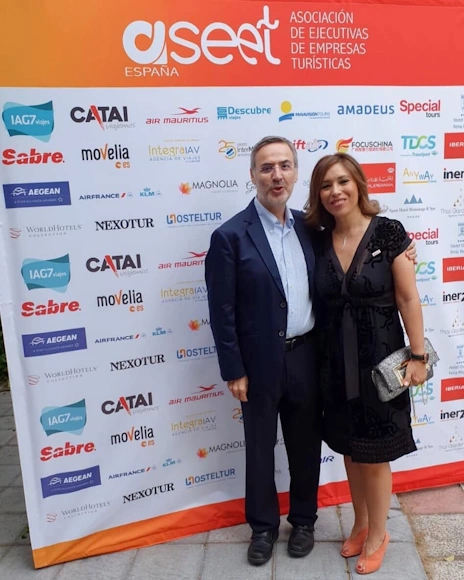
It is because of this conviction that I chair MEET España, the Association of Women Entrepreneurs and Executives in Tourism in Spain. We are part of FIASEET, the federation that brings together associations of women in tourism from Spain, Mexico and Latin America, and we are a founding member of FAMECAM, the Federation of Associations of Women Entrepreneurs and Executives of the Community of Madrid. I firmly believe in building networks, creating opportunities and raising the profile of women’s leadership in our industry.
The aim is not to hold a position simply because we are women, but for our work, our talent and our results to be assessed using the same criteria.
Technology can help. Trust remains a human trait.
What part of our profession do you think no technology will ever be able to replace?
Artificial intelligence is set to profoundly transform the way we work, and we must make the most of it. Rejecting technology makes no sense; the important thing is to know how to use it properly. It can help us analyse information, optimise processes and tailor our proposals. I know you’re passionate about new technologies and are always on the lookout for the possibilities they offer.
But there is an aspect that goes beyond the data: trust, the intuition that comes from experience, empathy and the ability to understand what a person needs, even when they cannot put it into words. In tourism, we deal with emotions and life’s important moments. A honeymoon in Mauritius, a family holiday to Jordan or that trip to India that someone has been dreaming of for years – these are not simply bookings.
Technology can help us to design and manage those journeys more effectively, but the empathy needed to understand the customer, and the responsibility to respond when things do not go to plan, still require human input. I do not see this as a threat, but rather as an opportunity to free up time and devote it to what truly sets us apart.
“I’d like to be remembered as someone who was a pleasure to work with”
When you look back on your entire career from a distance, how would you like to be remembered?
As a committed and passionate tourism professional, but above all as someone who was a pleasure to work with. Someone who kept their word, treated others with respect, knew how to build relationships and strove to add value.
It would make me happy if those who have shared these years with me felt that they had learnt something, that they found support when they needed it, or that together we have built projects of which we can be proud.
Tourism has given me a career, plenty of opportunities and some extraordinary people.
If there is one thing I would like to leave as my legacy, it is the conviction that experience is of great value, but only when it is accompanied by curiosity, generosity and a desire to keep moving forward.