
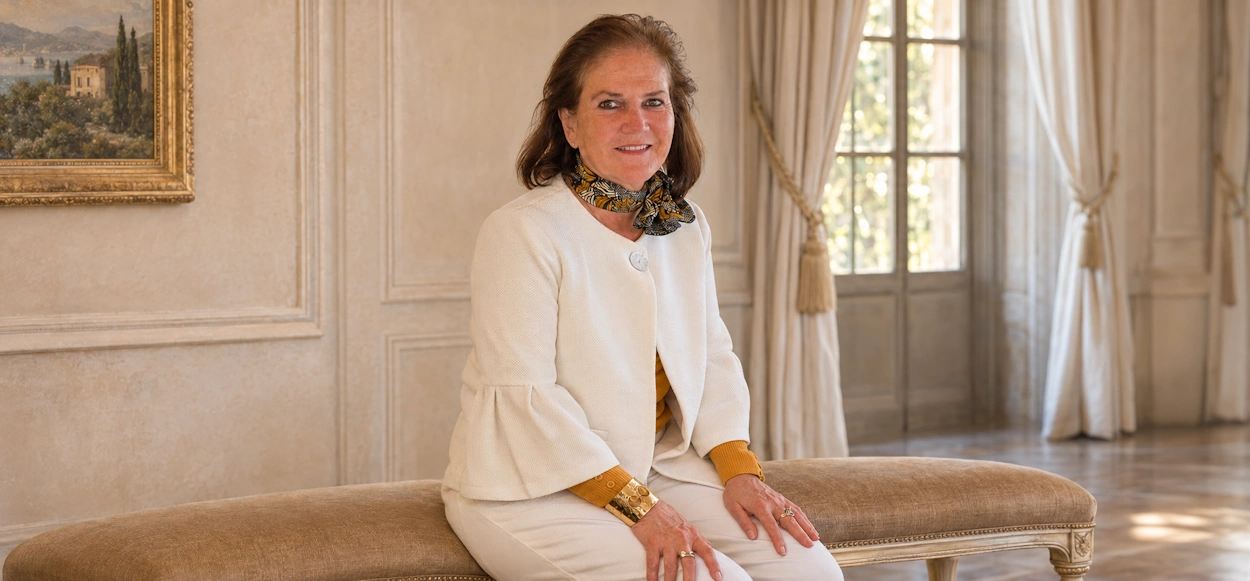
With a professional career spanning more than four decades, María del Carmen Salazar advocates for the inclusion of women in decision-making roles, the importance of international networks and the need to combine technological innovation with a human touch.
Her reflections on women’s leadership in tourism tie in with other professional cooperation initiatives. At Sinergia Tourism, we also address this debate in the article @MEET Spain: leadership, talent and a vision for the future of tourism.
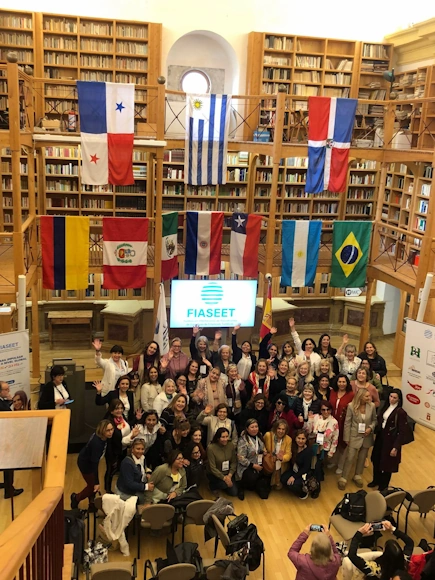
You’ve just returned from the 42nd CongressThe FIASEET International Conference in Peru, which brought together 118 women from the Ibero-American tourism sector. What are your personal and professional takeaways from this event?
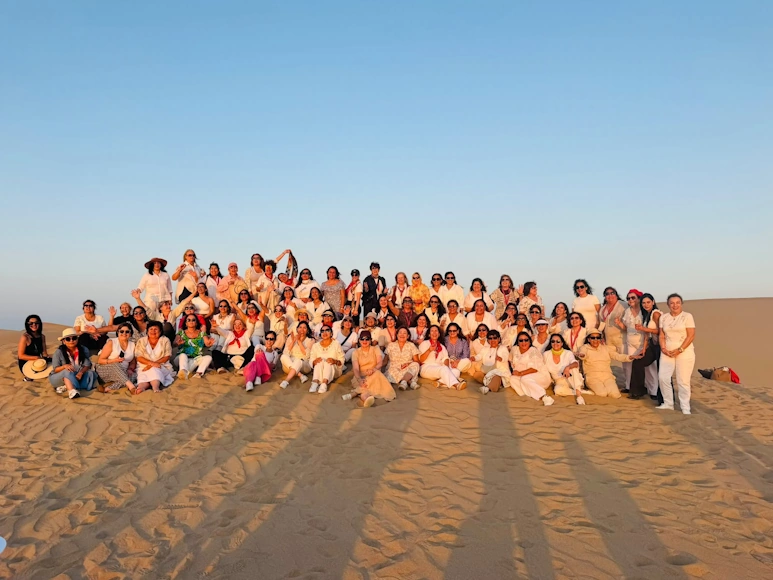
We met in Peru to hold our 42nd FIASEET congress.
We had the opportunity to visit the city of Lima, where we were welcomed by the mayor’s office at Miraflores Town Hall on the first day of the conference with a sumptuous cocktail reception hosted by the renowned Peruvian chef Adolfo Perret, featuring a full range of traditional Peruvian dishes.
The following day we set off for Ica, where we stayed for a further three nights. It was a wonderful experience, as we spent time with female entrepreneurs and tourism executives from nine Ibero-American countries, accompanied at all times by Promperú’s MICE Director, Ms Elva Yáñez
From a professional point of view, the event was a resounding success thanks to the superb presentations and the excellent speakers who joined us for our keynote speeches and training sessions.
We also had a great networking session, a meeting where we exchanged ideas not only on business matters but also on synergies in soft skills amongst ourselves – aspects that enriched us and helped to forge or strengthen business ties between our companies
It was a success thanks to the places we visited, such as the various Anis Najar and Pisco Tacama wineries in the area, as well as the training sessions and tastings we took part in, led by expert winegrowers and oenologists. And I cannot fail to mention our visit to the ICA Desert, a place unrivalled anywhere in the world with its hundreds of square kilometres of dunes, and of course, in keeping with its surroundings, the wonderful LAS DUNAS hotel, which was the ideal venue for our conference thanks to its magnificent facilities, function rooms and guest rooms, as well as Peruvian cuisine of the highest standard. I must mention that the owner of this marvellous hotel, Las Dunas, Doña Liliana Picasso, is a member of FIASEET.
Personally, I felt very proud to be the chair of this large group of women in the Ibero-American tourism sector and to see how we are all working to achieve a more inclusive and ethical form of tourism, with greater equality and a woman’s perspective.
This year’s conference has placed a special focus on MICE tourism. What opportunities do you see in this sector for Latin American destinations, and what role can women play in its development and management?
MICE tourism, is a segment of the tourism industry that brings significant value to Latin America, both because of the average expenditure it generates in destinations and because every MICE tourist is the first to promote the destination by bringing their family or friends there and sharing their experiences on social media; furthermore, this type of tourism helps to reduce seasonal fluctuations in visitor numbers.
Women play a very important role, as we are the promoters and organisers of this type of tourism; we make up the majority of event organisers; we run travel agencies; and in many cases we head up conference organisers and incentive travel companies. Furthermore, at the destinations themselves, we are also involved in businesses or micro-enterprises providing catering and decoration services, as well as craft businesses, alongside companies that collaborate by providing translation services, audiovisual equipment and so on, who in this way help to ensure that the conference or event is a success, whilst also generating strong local support for MICE tourism.
We also play a significant role in ensuring gender parity amongst speakers, an aspect that is gradually positioning us to break through the glass ceiling.
FIASEET brings together hundreds of female entrepreneurs and executives from different countries. What does an international network of this kind offer today that would be difficult to achieve by working in isolation?
A network of more than 400 female entrepreneurs and executives is also a network of opportunities. Within FIASEET, we have a programme called FIASEET Conecta, through which we aim to transform our FIASEET Federation into a B2B business ecosystem amongst our members, supporting one another and facilitating quick and reliable connections with clear rules, because we are all committed to our own code of business ethics. How simple it is, for example, to ask an agency in Lima to sell a product from a tour operator in Madrid, for a hotelier in Panama to find a partner in Montevideo, or for one of our clients travelling abroad to encounter a problem and have a helping hand – a member who can resolve any unforeseen issue “on the spot”.
María del Carmen Salazar and women’s leadership in tourism
Throughout your career, you have seen how the role of women in tourism has changed. In which areas do you think real progress has been made, and where do barriers to reaching decision-making positions still exist?
In my working life spanning more than 40 years, I have, of course, seen progress in terms of overcoming barriers. I must say that these barriers today are not due to a lack of training, education or talent, but rather to a 20-century-old tradition that has meant women have been excluded from all forms of recognition and access to professional roles. Today, women are on an equal footing with men in terms of working and professional conditions, so we seek the same opportunities as men and, of course, take on the same responsibilities. We believe in meritocracy, in training and in hard work.
Significant progress has indeed been made in institutional tourism; currently, according to UNWTO, the number of senior management positions in the political sphere of tourism is quite high worldwide. Indeed, more than 23% of ministers are currently women, with the percentage rising sharply when it comes to secretaries of state or tourism posts in local authorities or regional governments. It is therefore not unreasonable to begin to believe that the long-awaited equality has now been achieved. There has also been progress in tourism entrepreneurship, particularly in rural tourism, small-scale accommodation and gastronomy – areas in which women have excelled, especially in setting up their own businesses. We must not overlook the growth in the airline sector, where there has been a significant increase in the number of female pilots, and indeed in rail and road transport as well.
Where barriers still remain is in board positions at major hotel chains, in the wage gap that still prevails – areas where it is clear that pay equality has not yet been fully achieved – and we must not forget the significant disparity in access to credit between the financing granted to women and that granted to men, and this hinders equal growth when it comes to investing and expanding in the tourism sector.
You have described the members of FIASEET as ‘RIS Women’: Risk, Innovation and Sustainability. What does this approach to leadership mean to you, and why are these three concepts particularly important today?
These three concepts: RISK – women are more cautious when it comes to taking risks and are less likely to take the plunge; they think more carefully than men before taking a step that might involve risk, which is why, in companies run by women, their launch and growth are slower, but more than 80 % of new companies led by women always succeed.
The next concept: INNOVATION: according to studies, women today are more inclined towards innovation, not only in terms of communications, networking and technology, but also when it comes to implementing new procedures and methods designed to attract more customers to their businesses.
And the concept of SUSTAINABILITY: women take a longer-term view and therefore ensure the sustainability of the business; they do not want a business to sell off after three years, but rather seek a means of livelihood, wealth creation and a business that will last for decades.
That is why we at FIASEET want to be RIS women, and our businesses will also be RIS businesses.
The federation is strengthening partnerships with organisations and bodies in the international tourism sector. To what extent can institutional cooperation open up new professional and business opportunities for women in tourism?
International organisations such as UNWTO, UN Women and GARA are the driving force behind many new concepts and studies; they are familiar with global statistics and develop PROJECTS which, although they never fund them, do help to secure information, training and relationships between different countries; We work very closely with these three multilateral organisations, which invite us to develop initiatives with them to help our federation and our members grow. For example, we have signed an agreement with UNWTO to Global Code of Ethics for Tourism, being one of just 450 private companies, associations or federations worldwide that have signed it since 2012. This year (2025/2026), we have collaborated extensively on the “study of women in the transport sector” – covering air, land and sea transport – with some results as expected and others not.
There are also other organisations, such as the IDB (Inter-American Development Bank) and the AECID, which offer loans or microloans, as well as training in digitalisation and sustainability – opportunities that many women entrepreneurs are unable to access locally.
It is important to maintain a good relationship with these organisations
FIASEET works across a wide range of areas: sustainability, training, cultural and religious tourism, inclusion, and the prevention of child sexual exploitation in travel and tourism. What priorities do you consider to be the most urgent for the sector at the moment?
At FIASEET, we have four key areas of focus
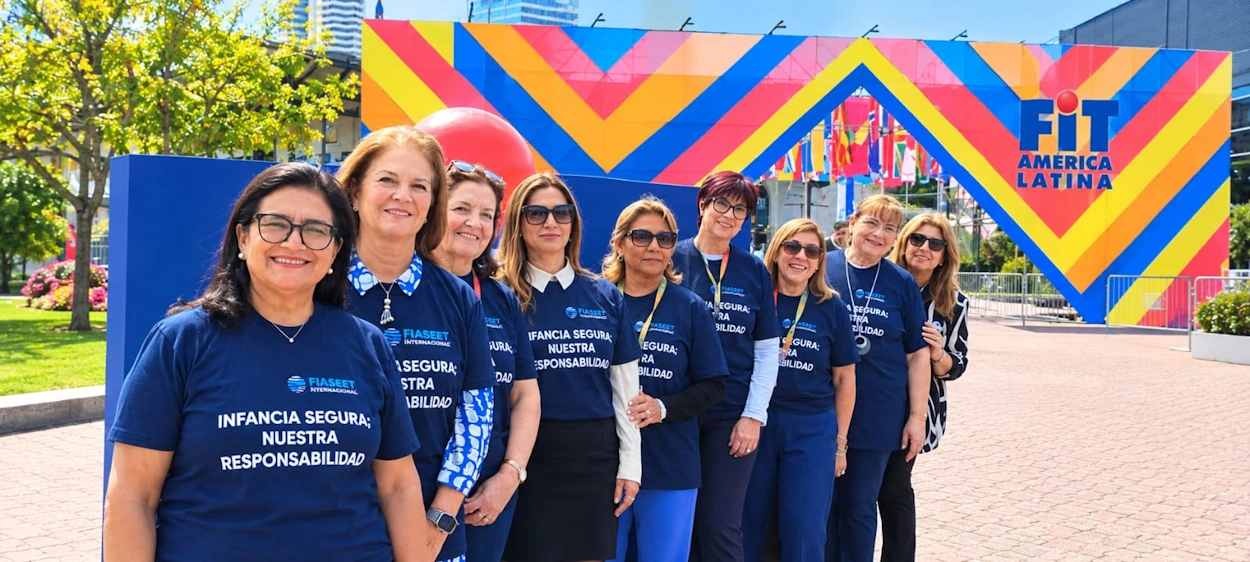
Protecting children. We work to prevent the sexual exploitation of children and young people in the travel and tourism sectors; in 2026, we promoted a campaign to mark the Football World Cup, created by ECPAT International and FIFA. (photos 3 and 4)
Equity and inclusion. We promote the professional development of women in tourism in partnership with UN Women and UN World Tourism Organisation, and support inclusion campaigns such as ‘Hidden Disabilities Sunflower’.
Sustainable tourism. We organise the FIASEET Competition for Good Sustainable Practices in Tourism and are building a repository of experiences.
Cultural and religious tourism. We promote and help to market the cultural and spiritual wealth of Latin America.
I would say that they are all equally important when it comes to providing support and fostering growth; we must have a form of tourism based on inclusion and equality, where anyone can work, grow, travel or enjoy experiences regardless of gender, religion or race, so that we can all enjoy a form of tourism that is always free from prejudice. Furthermore, we must ensure tourism remains sustainable so that our companies and businesses can continue to operate and we do not over-exploit our destinations; likewise, we must work hard to eradicate the sexual exploitation of children and adolescents (ESNNA), as unscrupulous individuals exploit the tourism sector for purposes that are entirely at odds with what is ethical when it comes to discovering new destinations and travelling to different regions; We must eradicate this scourge and adopt a zero-tolerance approach to ESNNA.
Furthermore, cultural and religious development is of great importance to our sector, as we must pass on and immerse ourselves in the different cultures that have been created by various peoples over the centuries and which form part of the heritage of all our countries, as is the development of religious tourism, which helps us to learn about and understand other religions, opening our minds and hearts to understand the world at large, rather than merely looking at what is around us and what we are familiar with—
Innovation and artificial intelligence are transforming processes, business models and the relationship with travellers. How do you think women entrepreneurs and executives in the tourism sector should tackle this transformation without losing sight of the human element?
The best response to the challenge of innovation and AI must focus on providing our women with better training and on ensuring we do not lose what machines cannot provide: a human touch, specialist knowledge and experience of the destination and the customer. To this end, rather than working against technology, we must develop our skills further, foster a culture of new AI within our teams, and learn to use the information we receive judiciously and ethically; We must collaborate and make extensive use of social media to identify the new desires and experiences our customers are seeking – whether in terms of travel, destinations or even what they expect from the hotels where they stay.
It is very important to prioritise the sustainability of the tourism sector – encompassing the destination, our cultural heritage and our natural heritage – a highly topical issue and a key consideration for today’s travellers, who seek to enjoy themselves without causing harm; this also makes a difference when it comes to booking a trip and choosing an experience.
One of the major challenges facing the sector is attracting new generations. What does the tourism industry need to offer today to ensure that young female professionals see it as a place for personal development, leadership and entrepreneurship?
In order to attract and retain talented young people, so that they may go on to lead tourism businesses in the future, we must offer them innovation, professional development and good working conditions.
Initially, many young people are drawn to the opportunity to connect with and learn about different cultures, places and people, to discover new destinations and to learn different languages; indeed, tourism is a highly attractive sector for young people who are always looking for new experiences and a chance to get away from their own surroundings.
Another factor that is of great importance in attracting talent to our sector is the prospect of being able, within a few years, to secure a role offering significant responsibility and opportunities for professional development – and, of course, a salary well above that offered in other sectors.
Furthermore, tourism makes it possible to set up new businesses and realise one’s own projects and dreams – something that is more difficult in other sectors, or which requires a huge investment of money or years of experience.
Spain occupies a natural position as a bridge between Europe and Latin America. Are we making sufficient use of this potential to generate tourism projects, knowledge and shared business opportunities on both sides of the Atlantic?
I think we’re not making the most of the potential here; there are very strong blood ties between Spain and Latin America, and we share the same language and a common culture across these nations.
Spain has invested heavily in Latin America – just look at the number of Spanish hotel chains operating throughout the Americas – providing employment for people in the various destinations and generating wealth; however, I believe that this wealth should be distributed a little more equitably amongst the countries that have allowed us to grow and enabled our companies to prosper. We must work to ensure that the destination itself benefits more and that the governments of the various countries make better use of the revenue generated through the taxes paid by these companies for operating within their territories, so that the benefits generated truly reach the local population.
I believe we should strive not only to invest in destinations across Ibero-America, but also to seek to employ local labour and work with companies and micro-enterprises in Ibero-America, thereby creating dual benefits for local destinations.
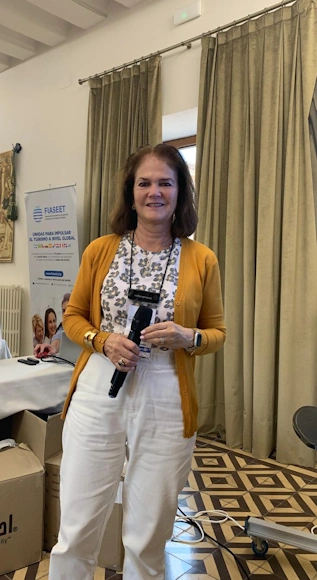
After more than three decades working in the tourism sector and based on your experience at the helm of FIASEET, what qualities do you think will be essential for tourism leaders in the coming years?
To lead the tourism businesses of the future, in a sector as ever-changing as tourism – one that is dependent on global tensions and crises of all kinds, whether economic, climatic or, as we have seen during the COVID-19 pandemic, health-related – we must work to adapt to every situation and trend, train ourselves in new technologies, know how to manage teams, and always strive to work with a genuine commitment to sustainability, whilst constantly focusing on making long-term decisions that ensure our businesses are sustainable and viable. We must also strengthen our commitment to satisfying our customers, who are becoming increasingly clear every day about what they want and are looking for in destinations. We are challenged to learn how to manage all of this in times of crisis, and, of course, to maintain an ethical approach to growth whilst respecting our destinations and their inhabitants.
As you look back on the end of your current term as head of FIASEET, what would you have liked to have achieved, and what legacy would you like to leave for the women who will continue to drive the federation forward?
I have been at the helm of FIASEET for two years and, in this final year of my term, I would like to continue expanding the number of countries and associations involved, so that we can promote our vision of a more ethical, inclusive and equitable form of tourism, with a focus on women’s perspectives.
We are managing to grow in partnership with multilateral organisations, such as UN World Tourism Organisation and UN Women, by establishing a federation that seeks to empower women and recognise the value and talent of women within our tourism sector
I could share a phrase that sums us up if we work together for and on behalf of women in tourism: ALONE WE ARE JUST A DROP, TOGETHER WE ARE A TSUNAMI