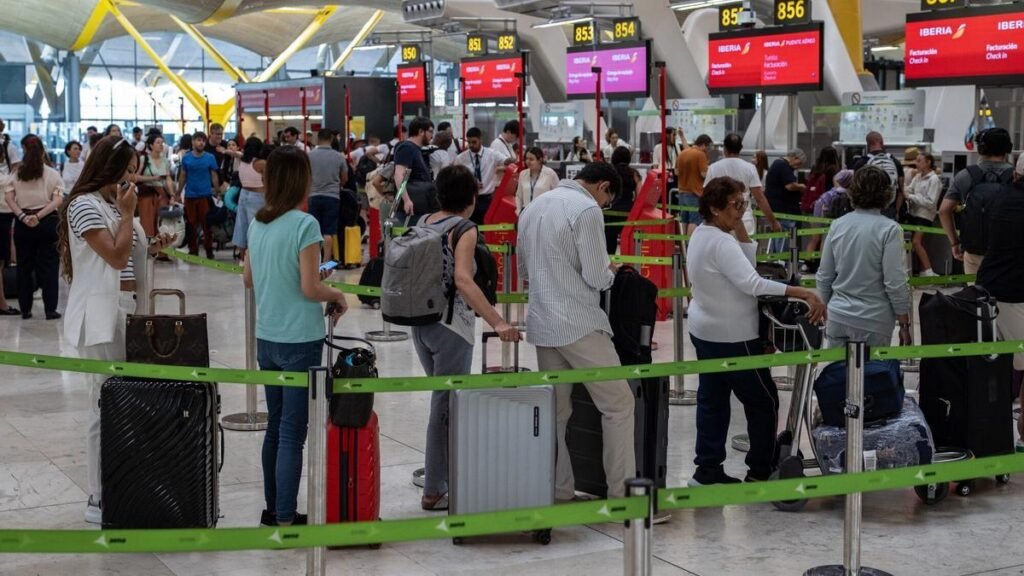




The travel distribution sector is undergoing a new phase of transformation. Direct sales, major digital platforms, changes in travellers’ habits and the emergence of the artificial intelligence They are once again raising a question that the sector has been answering for years: what is the true value of a travel agency today?
Sergio García Ferreira understands this reality from two perspectives: the day-to-day management of a travel agency and his role as a representative of the sector. Through Viajes Saldumar and his responsibilities at AEDAV Andalusia and the FAAV has closely followed developments within the agencies, their business challenges and the need to strengthen their position within the tourism sector.
In this interview for Sinergia Skål, we spoke to him about the future of distribution, independent agencies, specialisation, professional associations, technology, relations with public authorities, and the generational handover in a profession that continues to evolve without compromising its greatest asset: knowledge and trust.
Sergio García Ferreira and the challenges facing travel agencies
You’ve been involved in the sector for many years and have witnessed some profound changes in the travel industry. What would you say has been the most significant transformation in travel agencies in recent years?
We are an industry in constant flux, and from when I started until now we have seen many changes, particularly in the way sales are conducted. But without a doubt, the most radical change was the advent of the internet, and for the past twenty years or so we have noticed a significant shift in the way bookings and services are distributed. It is true that we travel agents have adapted perfectly to the changing times; we have been pioneers in the use of and sales via electronic booking systems (Amadeus, Renfe, etc.), which we have been using since the early 1980s to manage our customers’ bookings. It has often been said that travel agents would disappear with the advent of the internet; it is now 2026 and some 9,500 travel agents are still in business. It is true that in recent years many that failed to adapt have gone out of business; before the 2008 crisis there were around 13,500 of us, but this happens in any sector. It is fair to acknowledge that many of those that have closed or are in the process of doing so have done so due to a lack of a new generation to take over.
In a market where travellers can book flights, hotels and experiences directly, where does the real value of a travel agency lie today?
There are several reasons why many customers prefer to book and make purchases through a travel agency. The following are particularly worth noting:
• Knowledge. We estate agents have more and better information than an online agency
• Tools. We have the most advanced professional tools available
• Transaction security. Unlike e-commerce, which in many cases fails to guarantee the basic principles of authenticity, privacy and integrity, thereby generating a great deal of mistrust amongst consumers.
• Quality assurance. We offer a high-quality product, backed by experienced suppliers and the expertise and knowledge of the travel agent or adviser.
• Handling incidents and unforeseen events. Agencies highlight their efficiency in dealing with incidents during the trip as one of their greatest strengths; without the support of an agency, the customer would find themselves caught up in lengthy and cumbersome processes that do not always yield satisfactory results.
• Cost control and management. Customers who book through a travel agency know exactly how much they are spending on a trip or holiday package. There is no small print or last-minute surprises. Nor is it true that booking through an agency is more expensive. In the case of corporate travel, companies demand a higher standard of service and a detailed invoice.
• Personalised, high-quality service. In most cases, we provide a 24-hour service, seven days a week.
• Specialisation. An increasing number of travel agencies are specialising in specific markets, which results in a better service for their customers.
• Travel insurance. We offer our customers insurance tailored to the type of service booked, covering any incidents that may occur during their journey.
What future do you see for independent agencies? What characteristics will the agencies that manage to grow and remain competitive in the coming years have?
It’s true that independent travel agencies have a tougher time of it these days; the only way to survive in this jungle is by offering great value, whether by organising bespoke trips for small groups with shared interests or by specialising in certain sectors. There are many business niches that an agency can develop, such as holidays for singles, sports holidays, holidays based on shared interests, and so on.
Based on your experience within the sector, what role should the sector’s association play today, and what benefits can an agency gain from being part of strong professional organisations?
I believe that the sector’s unity is also bringing considerable value to the neighbourhood associations. We act as the link between the needs of our sector and the public authorities. The authorities want a united sector and a single point of contact. This is the primary advantage of forming associations: they succeed in representing business interests, and we are the legitimate and recognised point of contact for both public authorities and private organisations. In this way, we are able to defend the general interests of the sector, achieving unity in the defence of those interests.
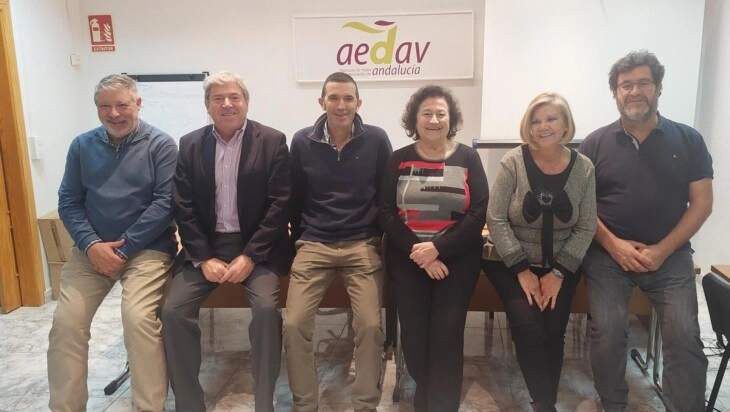
Specialisation, in-house products, knowledge of the destination, personalised service… Where do you think the real difference lies today between a travel agency and the major platforms and direct sales?
It is clear that the only way to survive in this jungle is to specialise in certain market niches or to have your own product. Personalised service is essential and a must. That is what really sets a small agency apart from the large platforms and direct sales.
Technology and artificial intelligence are rapidly making their way into travel planning and marketing. Which tasks do you think they will truly transform, and where will a professional’s judgement remain essential?
It’s true that AI is making a big impact, organising everything for you – from travel itineraries, flights and accommodation to services and so on. But I think we need to be careful with this; whilst it’s likely to be 100 per cent reliable in the near future, we’ve already spotted many faults and errors in AI. I also think it’s very dangerous; it can provide you with biased and self-serving information. We travel agents use it every day to organise and plan, but always under professional supervision. We must see it as an ally rather than an enemy; it’s simply another tool for the day-to-day running of our business.
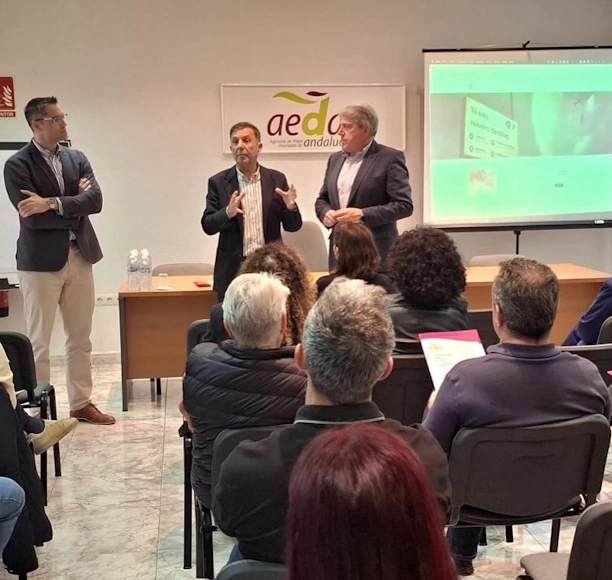
Is the agency’s business model evolving as well? Do you think clients are ready to recognise and pay for the value of professional advice in a more transparent way?
All our customers know that there are no additional costs to them for products included in holiday packages and other such offers, unlike with flight tickets, for which we do charge a service fee – a fee which is, of course, optional, and each agency charges whatever it sees fit. It is true that many people prefer to book their own flights to save on these handling fees. Everyone is free to do as they please.
Companies, however, do recognise the value we bring to their business travel and trips; they appreciate the service and advice we provide and are willing to pay for it.
From your perspective as president of AEDAV Andalucía and vice-president of FAAV, what are the main specific challenges facing Andalusian agencies today, and what opportunities does Andalusia offer the sector?
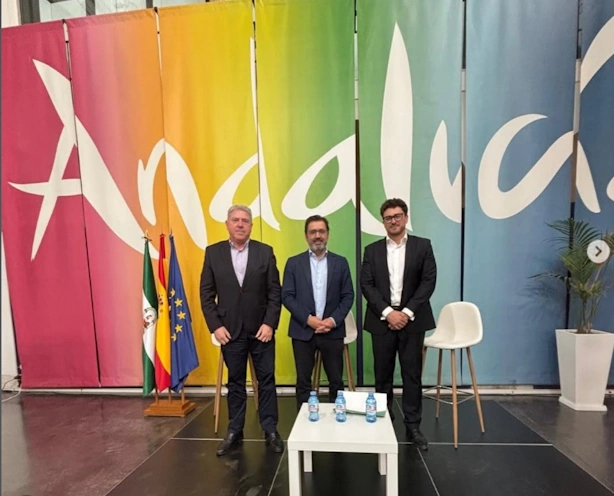
Our main challenge – and the reason we continue to fight – is to be recognised as professionals who bring value to our autonomous community in every sense. We are still in negotiations with Andalusian heritage sites to ensure they distinguish between an agency that brings in foreign groups and a walk-in customer. In this regard, I am referring specifically to the Alhambra Trust which, although it has improved and—thanks to the changes made—it is now easier to sell its services, there are still areas for improvement, and we are working on this to raise the profile of our sector and ensure we are taken seriously.
What needs to be improved in the relationship between travel agencies and public authorities? If you could identify one priority for the coming years, what would it be?
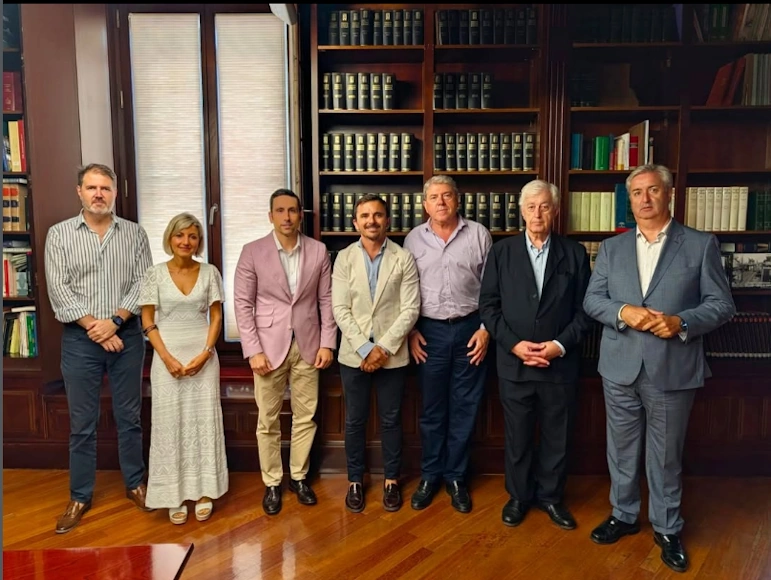
I think this is a good time for us; thanks to the associations, we have a direct line of communication with the tourism authorities in this case. A few weeks ago, we had the opportunity to meet with the new Secretary-General for Tourism, Manuel Lara, to whom we submitted our demands in a dossier in which, amongst other things, we asked for his support in the fight against unauthorised practice, for a new tourism law and for improvements to the sale of tickets for visits to monuments; he has promised to work on these issues. I believe this is our top priority at the moment.
There is also talk of a generational shift and difficulties in recruiting professionals. Does the sector have a problem attracting new talent? What needs to be done to make a career in an agency appealing to the younger generations?
That’s a difficult question to answer. First and foremost, this job is very much a calling; you can make a living from it, but it can sometimes be very thankless. Regrettably – and understandably – young people prefer jobs that allow them more free time, even if the pay is lower.
What would it take to make a career in an agency attractive to the younger generation? To be honest, I don’t know. Recognition from clients and suppliers, better financial conditions… I don’t know, and the latter is, unfortunately, difficult to achieve.
After so many years at the helm of Viajes Saldumar and representing the sector, how do you envisage the travel agency in five or ten years’ time, and what would you like to see remain the same forever?
I envisage a modern travel agency that keeps up to date with all the tools available to carry out its work, and which is recognised by suppliers, customers and public authorities alike. This is what I would never want to see change: recognition of our work, and the fact that when problems arise, we’re there to sort them out. As I always say, we are our customers“ ”guardian angels’ on their journeys.
To continue reading
At Sinergia Skål, we have also addressed how artificial intelligence is changing travel agencies and we have spoken to Estrella Díaz Sánchez on public management of tourism.