

Another way to discover the province, step by step
Beyond its beaches and major coastal destinations, Málaga hides a territory of mountains, forests, white villages, rivers, and natural spaces that offer a completely different way to travel. The Great Málaga Path has become one of the main routes for discovering this inland province and connecting nature, active tourism, heritage, and sustainability.
When Málaga looks inward
For decades, Málaga's international image was inevitably associated with the Mediterranean.
The Costa del Sol has built one of Europe's major tourist destinations around its beaches, climate, hotels, and leisure activities. This extraordinary development has placed the province firmly on the international tourism map.
But Málaga doesn't end where the beach ends.
Going just a few kilometres inland reveals a completely different landscape. Mountain ranges, valleys, forests, rivers, small towns, and agricultural areas define a province whose diversity is difficult to imagine for those who only know its coastal strip.
This territory represents one of the great opportunities to further diversify the tourism offering.
And the Great Málaga Path A allows you to explore a good part of it.
More than 850 kilometers to discover a province
The Great Path is much more than a trail.
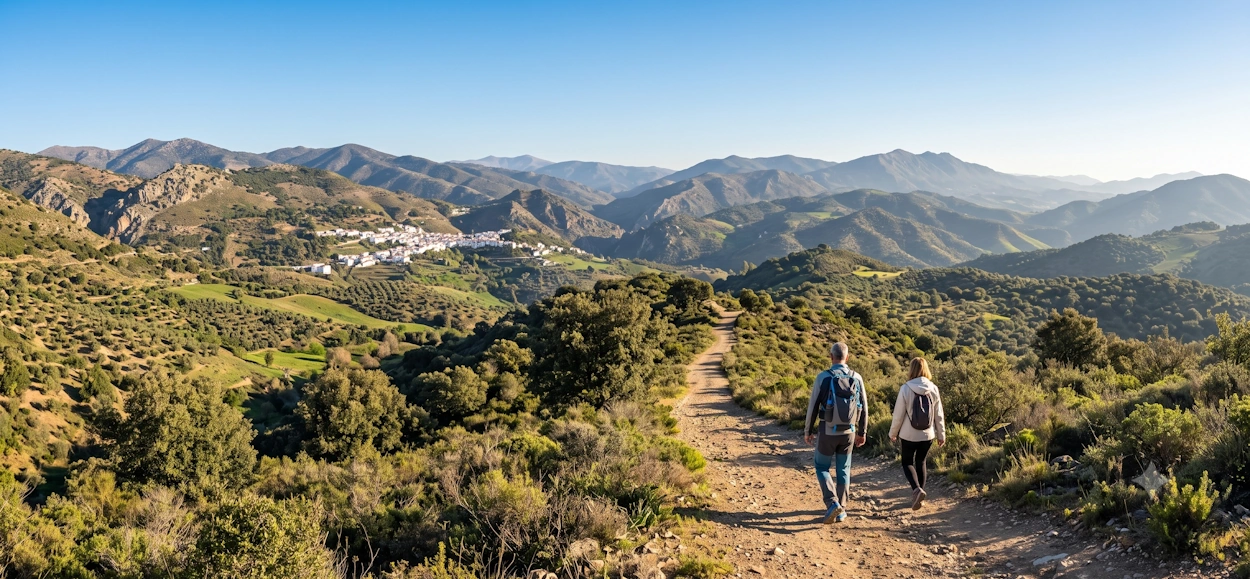
With more than 850 kilometres spread over 35 stages,it constitutes an extensive network that runs through a large part of the province and connects very different landscapes, municipalities and natural spaces.
Its route allows you to go from the coast to the mountains, cross agricultural areas, approach protected natural spaces and discover towns that are usually outside the major tourist circuits.
And therein probably lies one of its greatest values.
The journey no longer has a single destination. The territory itself becomes the experience.
Walking, observing the landscape, stopping in a town, trying its gastronomy or learning the stories of those who live there transforms the way you relate to Málaga.
It's not necessarily about covering hundreds of kilometres. Each traveller can choose stages, routes, and experiences tailored to their interests and abilities.
The Great Path thus functions as a gateway to a province that invites you to discover it at a more leisurely pace.
A territory of extraordinary landscapes
Málaga's natural diversity allows for surprisingly different scenarios to be found within a relatively short distance.
One of his great role models is the Sierra de las Nieves National Park,a territory of extraordinary environmental value in which the Spanish fir is one of its most characteristic natural elements.
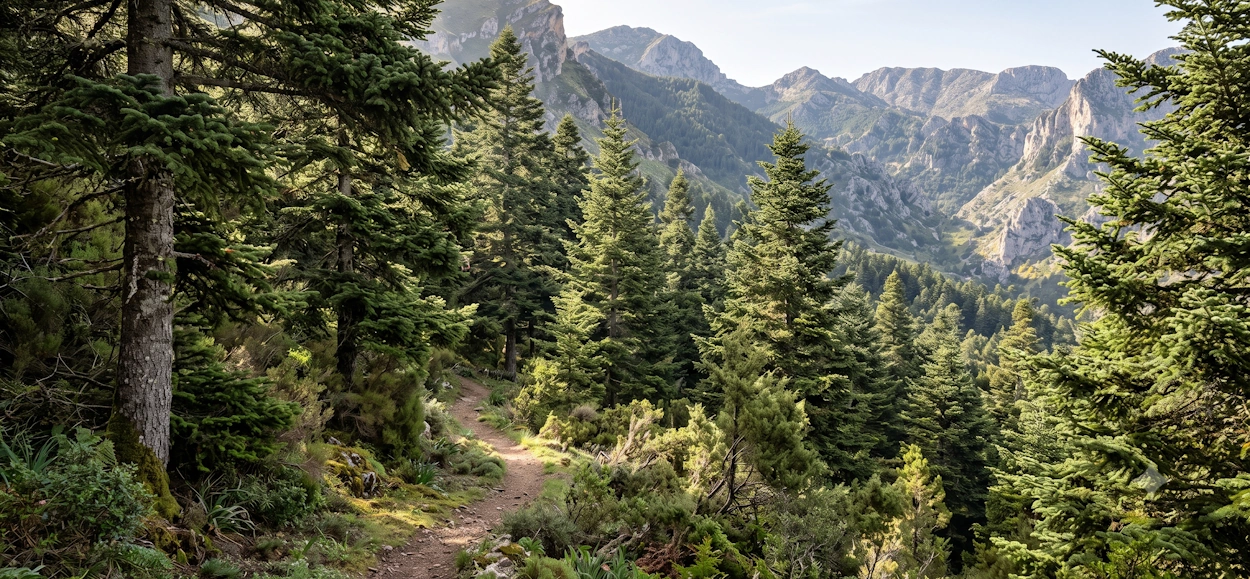
In addition to it, places like El Torcal de Antequera,with its spectacular karst landscape; the inland mountain ranges; the Montes de Málaga; the Axarquía; or numerous natural spaces distributed throughout the province.
The provincial tourism dossier also includes experiences such as Saltillo, in Canillas de Aceituno, within that offer of nature and active tourism.
These are landscapes that allow you to discover another dimension of the destination.
A Málaga where silence, contact with nature and the feeling of open space replace for a few hours the rhythm of the large tourist centres.
The Caminito del Rey: when nature becomes an icon
If there is one example that can demonstrate the tourism potential of inland Málaga, it is probably the Caminito del Rey.
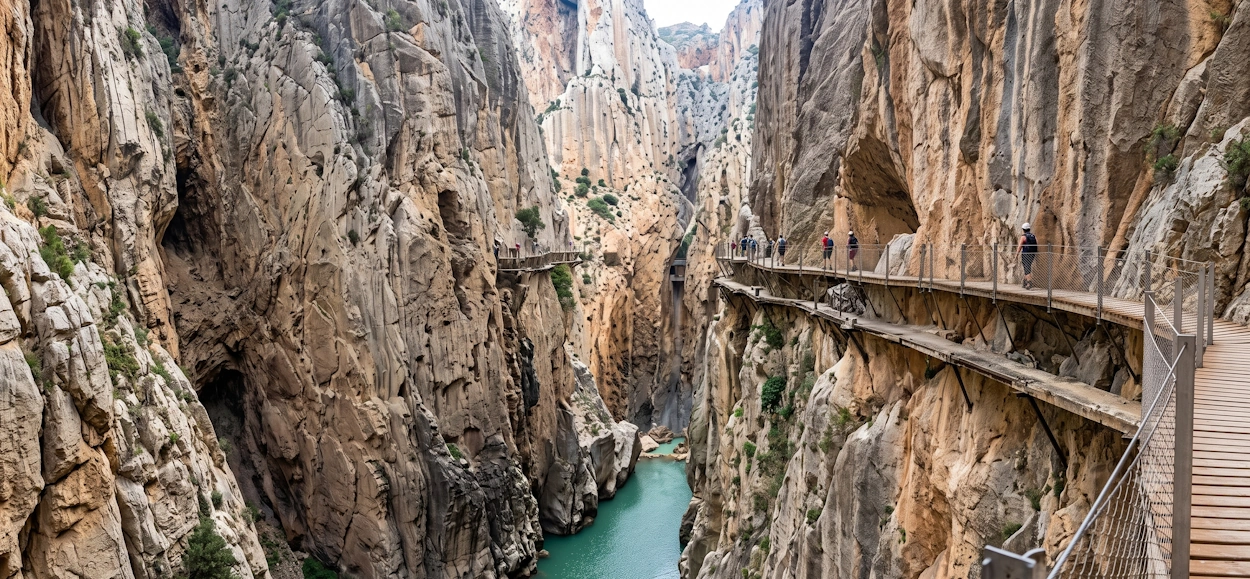
Its spectacular route through the Gaitanes Gorge has made it one of the most recognisable active tourism experiences in the province.
But its importance goes beyond the spectacular nature of its catwalks.
El Caminito demonstrates that a resource linked to the landscape, properly restored and managed, can become a powerful element of tourist attraction and generate opportunities for its surroundings.
The visitor does not come just to take a tour.
They need accommodation, food, transportation, and other services. And some of these travellers also take advantage of their stay to explore other nearby towns and attractions.
In this way, a natural resource can act as a driver for distributing tourist activity throughout the territory..
Active tourism for a different kind of traveller
Hiking, cycling, climbing, via ferratas, water activities and nature-related experiences are part of a growing tourism segment.
The traveller who seeks this type of experience also tends to have a different relationship with the destination.
He wants to explore it, get to know it, and connect with the territory.
This opens up opportunities for small accommodation establishments, restaurants, active tourism companies, guides, local producers and shops located away from the areas with the highest concentration of tourists.
Nature tourism also has another strategic advantage: It does not depend exclusively on summer.
In fact, the milder temperatures of autumn, winter, and spring can be especially suitable for many outdoor activities.
Nature and active tourism thus also become tools to promote deseasonalisation.
The towns are also part of the journey
But discovering inland Málaga doesn't just mean exploring natural spaces.
It also means discovering its villages.
Small municipalities preserve heritage, architecture, gastronomy, festivals, traditions and ways of life that bring authenticity to the tourist experience.
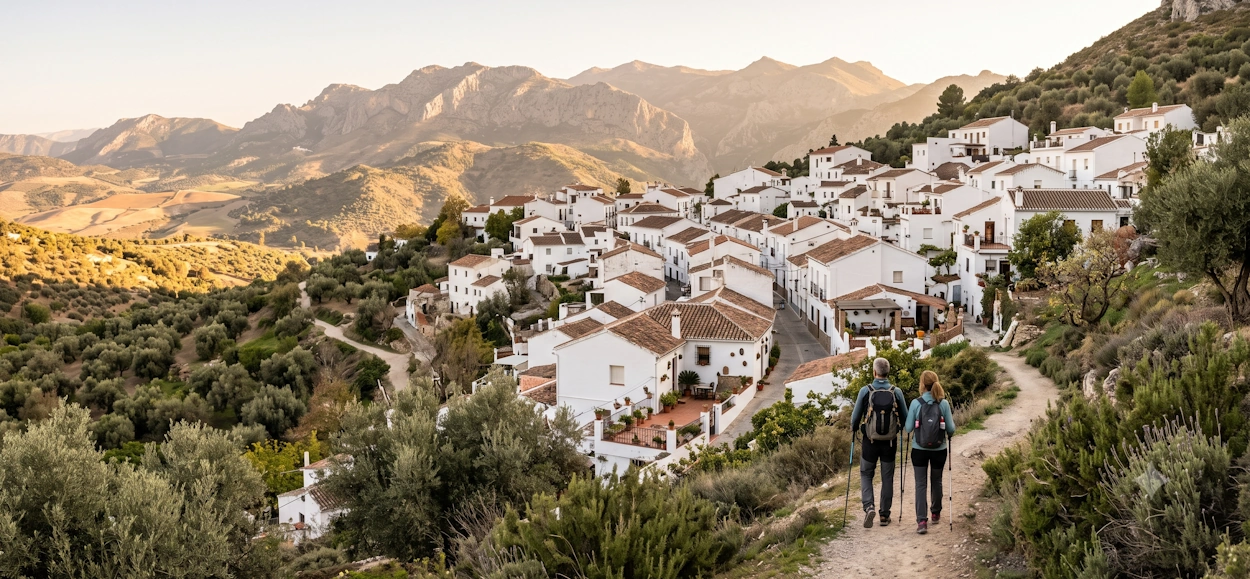
There is a huge opportunity here.
A traveller who completes a hiking stage may end up eating at a local restaurant, buying local products, or staying in a small rural establishment.
Each of these decisions allows a portion of the value generated by tourism to remain in the territory.
And it contributes to something even more important: :to give visibility to a Málaga that normally receives much less attention than the coast..
That very philosophy is behind spaces like our section “The Málaga that is being discovered”: a look towards municipalities and territories that are an essential part of the province's identity, even though they do not always appear at the forefront of its tourism promotion.
Growing up protecting what makes us different
The development of nature tourism also entails responsibilities.
A natural space cannot be managed in the same way as an urban destination or a consolidated tourist area.
Conservation must be part of the model itself.
Controlling the capacity of certain spaces, maintaining the trails, properly managing waste, protecting biodiversity, and promoting responsible behaviour among visitors are essential elements to guarantee its future.
Because there is an apparent paradox that we must know how to resolve: the more attractive a natural space becomes, the greater the need, and the more important it is to protect it from the impact that its own success can generate..
Sustainability then ceases to be a promotional argument and becomes a necessity.
One Málaga which is well worth a visit
The Great Path ultimately represents something more than 850 kilometres of trails.
It represents a different way of understanding destiny.
It allows you to connect the coast and the interior, major attractions and small towns, physical activity and gastronomy, landscape and heritage.
And it helps to distribute visitors and opportunities across a much wider territory.
The Costa del Sol will continue to be one of Málaga's major tourist drivers. But its international strength offers an extraordinary opportunity to show visitors everything that lies just a few kilometers beyond the Mediterranean.
“Perhaps one of the great journeys still to be made in Málaga is not about going further afield. It's simply about looking inward.”