

The Costa del Sol faces a decisive decade. After years in which tourism success has been measured primarily in arrivals, overnight stays, and records, the debate is now shifting towards much more complex issues: profitability, competitiveness, sustainability, resources, housing, talent, and quality of life.
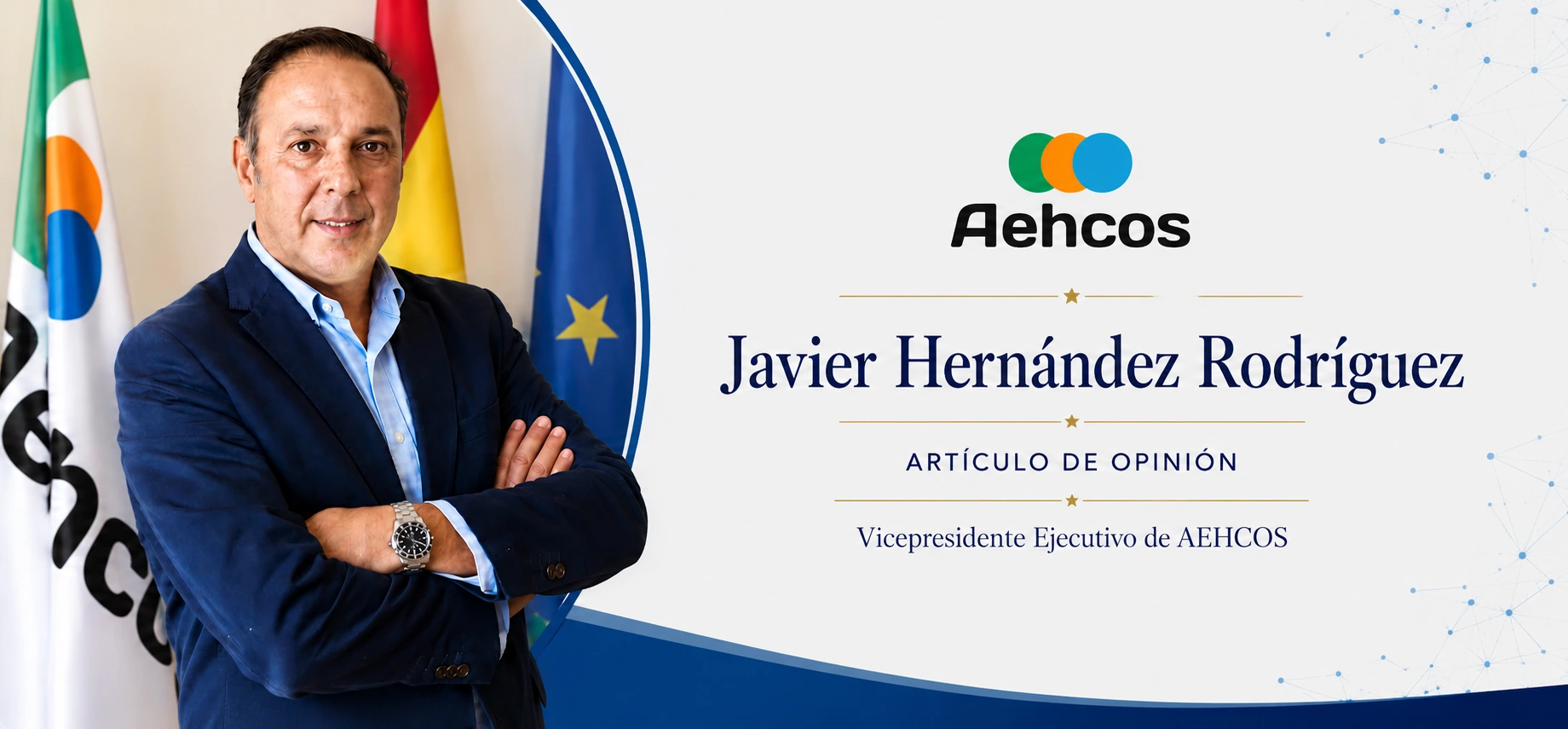
Javier Hernández Rodríguez, Executive Vice President of AEHCOS, It analyzes the main challenges of the hotel industry on the Costa del Sol and raises a fundamental question: how to manage the success achieved to guarantee the future of one of the great European tourist destinations.
For many years, the Costa del Sol's tourism sector measured its success in volume: more arrivals, more overnight stays, more records. I say this with self-criticism, because the hotel industry was part of that narrative. Today, volume is no longer the problem. The problem is more complex: the Costa del Sol is reaching its own physical limits, and how we overcome them will determine whether we remain one of Europe's major tourist destinations or whether we inadvertently consolidate our position as a high-quality destination.
Competitiveness: the Mediterranean is being reshaped
Our competitors have made strategic tourism management a top priority in public policy. They plan air connectivity with a multi-year vision, select markets based on value rather than volume, and have made sustainability a key selling point.
In this context, the risk for the Costa del Sol is not losing arrivals; it is losing ground in a market that is segmented by value, with an accommodation sector that needs constant renewal and faces increasing costs for water, energy, land, waste and staffing.
Demand has changed faster than we have.
The traveler arriving in Malaga today is not the same as twenty years ago. Traditional holiday tourism coexists with profiles that were recently marginal but are now strategic: the long-term European resident, the remote professional, the senior with spending power and availability to travel year-round, sports tourism, health and wellness tourism, nature tourism, and cultural and gastronomic tourism.
They are naturally drawn to travel outside the summer season, demand high standards of service, and are very sensitive to the quality of their surroundings. Even knowing that our greatest strength lies in the professionals of Malaga's tourism industry, historically guarantors of customer loyalty thanks to their attitude and character, providing qualified service is the most direct way to increase the value per visitor and, at the same time, promote a better distribution of tourist demand throughout the year and across the region.
Profitability: margins are determined beyond the front desk
Hotel profitability is under pressure from two sides. On the one hand, global digital intermediaries are taking a growing share of the profit generated by hotels, particularly through the customer relationship. On the other, operating costs are rising due to factors largely beyond the company's control.
Added to this is the seasonality: more than sixty establishments on the Costa del Sol are forced to close during the autumn and winter. It's not just a problem with the bottom line; it's the direct cause of job insecurity and the difficulty in retaining talent.
Physical constraints are now the main risk to competitiveness.
Water is the most severe constraint and the one that can erode value most quickly. I'm not just talking about occasional supply restrictions; I'm talking about the uncertainty they create, which discourages investment. No operator undertakes a complete renovation of a property without knowing whether sufficient water will be available over the period needed to recover the investment.
It is also essential to guarantee the province's water supply as a matter of urgency and for the long term. Regulated accommodation, as part of the urban water cycle, is one of the sectors with the greatest capacity to measure, control and reduce consumption.
It is also essential to guarantee the province's water supply as a matter of urgency and for the long term. Regulated accommodation, as part of the urban water cycle, is one of the sectors with the greatest capacity to measure, control and reduce consumption.
The second is housing. What was once seen as a social issue largely unrelated to businesses has now become a direct operational constraint: positions remain unfilled because workers cannot find affordable housing close to where they work.
No promotional campaign can compensate for supply restrictions, a licence that takes years to obtain, or a position that cannot be filled.
Talent: turning tourism into a career, not just a stepping stone
The availability of qualified personnel, along with water and housing, has become a real constraint on growth. The difficulty in filling positions now affects all categories, and its impact on service quality is immediate, which is precisely where a mature destination must compete.
Part of the solution lies with us: better working conditions, realistic career paths, dual vocational training, and staff retraining. But no company can single-handedly address issues such as vocational training, housing, public transport that meets the actual working hours of the hospitality industry, or recruitment from abroad.
Sustainability and innovation: from communication to market access
The sustainability It is no longer a communication argument, but a condition of access to the market: tour operators incorporate it into their contracting decisions and higher-spending customers into their purchasing decisions.
The obstacle is not a lack of investment or technology, but rather administrative delays, inconsistent support, and a proliferation of certifications that makes it more expensive to demonstrate what is already being done. We must also recognize that beaches, the coastline, and comprehensive wastewater management are critical tourism infrastructure.
In digitalization, the diagnosis is one of internal asymmetry. Large operators have advanced revenue management, analytics, and automation, and are already incorporating artificial intelligence into their operations; SMEs, which make up the majority of the destination's tourism sector, operate with basic tools and lack the capacity to make the leap.
Closing this profitability gap requires useful and comparable data, support for technological implementation, stronger direct sales channels, and cybersecurity understood as a destination-wide priority.
The opportunity is there, but the window is limited.

None of the above describes a destination in decline, but rather one with underutilized assets: a winter climate that is itself an attraction for northern European visitors, a world-class golf offering, an airport capable of opening up long-haul markets, a growing cultural and gastronomic scene, the ability to attract major events, and an inland region of enormous potential—Ronda, Antequera, the Axarquía and the Guadalhorce Valley—that currently functions more as a day-trip destination than as a place to stay.
Reducing seasonality is not about promoting winter; it's about giving people a reason to visit in January beyond price, ensuring there are flights available and making sure the destination remains active when hotels are open.
That's why the sector isn't just here to ask for things. We're here to co-finance, to contribute data, and to commit to verifiable indicators. What we demand is a structured approach: a stable forum where those who make decisions about water, housing, land use, energy, education, and mobility can all sit down together; clear rules and predictable timelines for investment; and a public dashboard that allows us to evaluate what has been achieved and what hasn't. What isn't measured can't be managed.
Residents' quality of life and the quality of the visitor experience are not opposing goals: in a destination like ours, they coexist in the same place.
The Costa del Sol has proven its strength many times. Now it faces its most demanding task: demonstrating that it can also manage its own success.
Javier Hernández Rodríguez
Executive Vice President of AEHCOS
Association of Hotel Business Owners of the Costa del Sol