

More than four decades of tourism, distribution and community involvement, viewed through the prism of experience, consistency and the value of personal relationships.
Interview with Juanjo Oliván
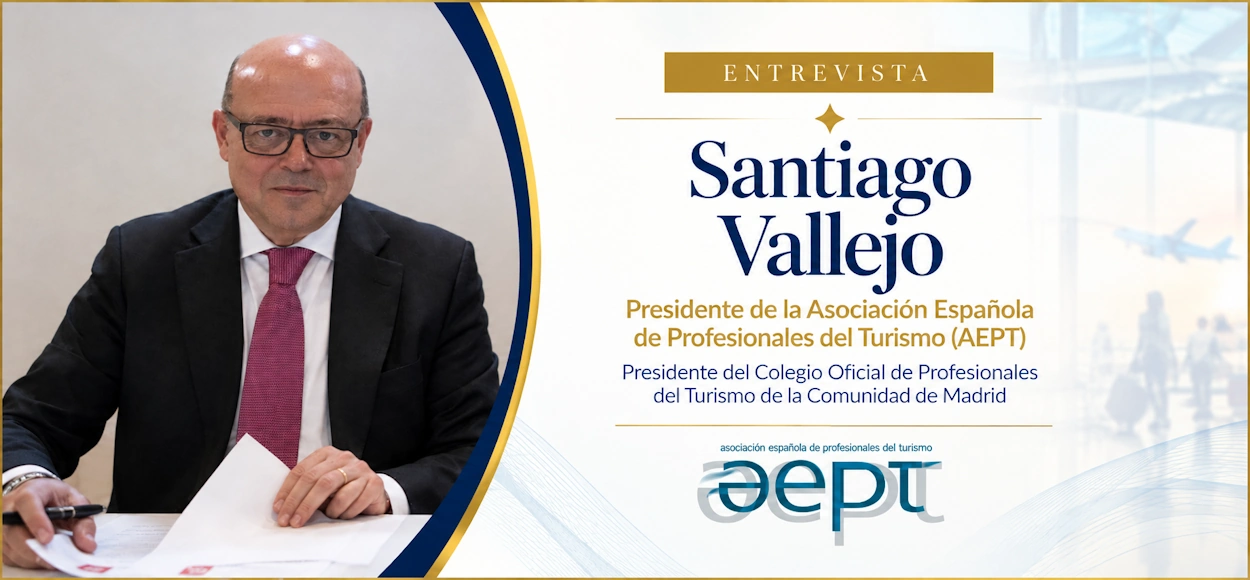
For me, interviewing Santiago Vallejo feels a bit like a chat between friends. We’ve known each other for many years and our paths have crossed in various ways. We’ve served on the Board of Directors at UNAV together, and we’ve been members of the Spanish Tourism Board, we have been on business trips together and it was he who, at the time, introduced me to the Spanish Association of Tourism Professionals. Even Talgo forms part of our respective professional histories, albeit at different times: I was there between 1977 and 1979, and Santiago went on to head up its Travel Division several years later.
His CV would fill many pages. Since 1981, he has held positions of responsibility in companies and organisations that have played a part in the recent history of Spanish tourism, and today he chairs AEPT and COPTURMAD. But this conversation is not intended to be a rundown of his roles. I am more interested in the Santiago I have come to know over the years: the professional, the friend and, above all, a person in whom I have always found a trait that is rare in the institutional world: consistency. When those who have placed their trust in him leave a project, Santiago understands that he, too, must make himself available. In times when it is difficult to step down from a post, this strikes me as a good way to begin talking about people.
Tourism as a school of life
Santiago, we’ve known each other for many years and have taken part in meetings, organised events and gone on work trips together. If you had to look back and explain what tourism has meant in your life, beyond your profession, what would you say?
Looking back, after so many years spent working in tourism, I find it hard to separate my professional career from my personal life. Tourism has played a very significant part in my journey and, in some way, has helped shape who I am.
I have been fortunate enough to experience tourism from many different angles: through my profession, through business and professional organisations, through conferences and meetings, and also through my travels. But, above all, I have been fortunate enough to experience it through the people involved.
Because if tourism has taught me one thing, it is that behind every destination, every hotel, every trade fair, every conference and every project, there are always people. People with whom you share a conversation, a meal, a journey, a concern or a dream. And many of those professional relationships end up turning into friendships that last for decades.
When you’ve been in this sector for so many years, you start to remember moments rather than figures. You remember that trip, that meeting that went on longer than expected, that conversation that opened up a new opportunity, those colleagues with whom you’ve travelled halfway round the world on business… These are experiences that form part of your personal heritage.
I have also learnt that travelling is not just about moving from one place to another. Travelling means discovering, observing, listening and understanding. And in a country like Spain, this takes on even greater significance, because we have built one of the world’s leading tourist destinations precisely on the strength of our ability to welcome, host and make visitors feel at home.
Over the years, I have also come to realise that tourism has a human dimension that we sometimes overlook when we talk solely about the economy, employment, statistics or millions of visitors. Tourism is about encounters. It is about culture. It is about knowledge. It is about living together. And it is also an extraordinary tool for bringing people closer together.
Perhaps that is why I am still just as enthusiastic about the sector as I was when I started out, although I now view it from a different perspective. I used to focus mainly on career opportunities; today, I place much greater value on the people, the experiences and everything I have learnt along the way.
And there’s one thing I’m particularly clear about: we can change technology, business models, the way we travel and even the way we book a hotel. But there’s one thing that will always remain essential: a person’s ability to welcome another person, understand them, help them and make them feel at home.
That’s why, when you ask me what tourism has meant in my life, I’d probably tell you that it’s been much more than just a job. It’s been a school of life, a constant source of learning and, above all, a way of meeting people and gaining a better understanding of the world.
And after all these years, if I had to choose again, I think I’d go for tourism once more.
Four decades of transformation
You began your career at Pullmantur in 1981 and have witnessed more than four decades of change in the sector from the inside. What change has impressed you the most, and which do you think has been least well understood by outsiders?
I think the change that has impressed me most has been the technological transformation. When I began my career at Pullmantur in 1981, the tourism industry operated in a completely different world: bookings, information, marketing and customer relations all followed timetables and procedures that would seem almost unimaginable to us today.
Over the past forty-odd years, we have moved from a largely analogue tourism industry to a fully digitalised sector, in which we can search for, compare, book and review virtually any tourism product from a mobile phone in a matter of seconds. The internet, social media, distribution platforms and, now, artificial intelligence are once again changing the rules of the game.
But there is one thing which, from the outside, I think has been poorly understood: the immense complexity that lies behind the tourist experience.
It is sometimes thought that tourism simply involves a person deciding to travel and buying a ticket or booking a hotel. But behind that journey lies a vast network of professionals, companies, infrastructure and services that must all work together in a coordinated manner: transport, accommodation, catering, agencies, tour operators, airports, destinations, guides, technology, security, public administration and thousands of workers.
And there is another issue that I consider fundamental: there has been a tendency to think that tourism is merely an economic activity. Of course it is, and it is of enormous importance, but it is much more than that. It is a social, cultural and human activity.
Tourism has profoundly changed Spain. It has transformed cities and regions, created jobs, enabled people to learn about other cultures, and helped millions of people develop a much more open-minded view of the world. But it has also forced us to tackle new challenges: sustainability, coexistence with local residents, destination management, housing, transport and the concentration of visitors.
After all these years, perhaps what continues to surprise me most is precisely tourism’s ability to reinvent itself. I have seen business models disappear, completely new ones emerge, and travellers’ habits change radically. And now we are entering another huge transformation, driven by artificial intelligence.
However, amidst all these changes, one thing remains the same: tourism is still an activity carried out by people for people. Technology may make travelling easier, faster and more efficient, but hospitality, empathy, the ability to solve a problem or to make someone feel welcome still depend on people.
And I think that is probably the most important lesson I have learnt over these four decades.
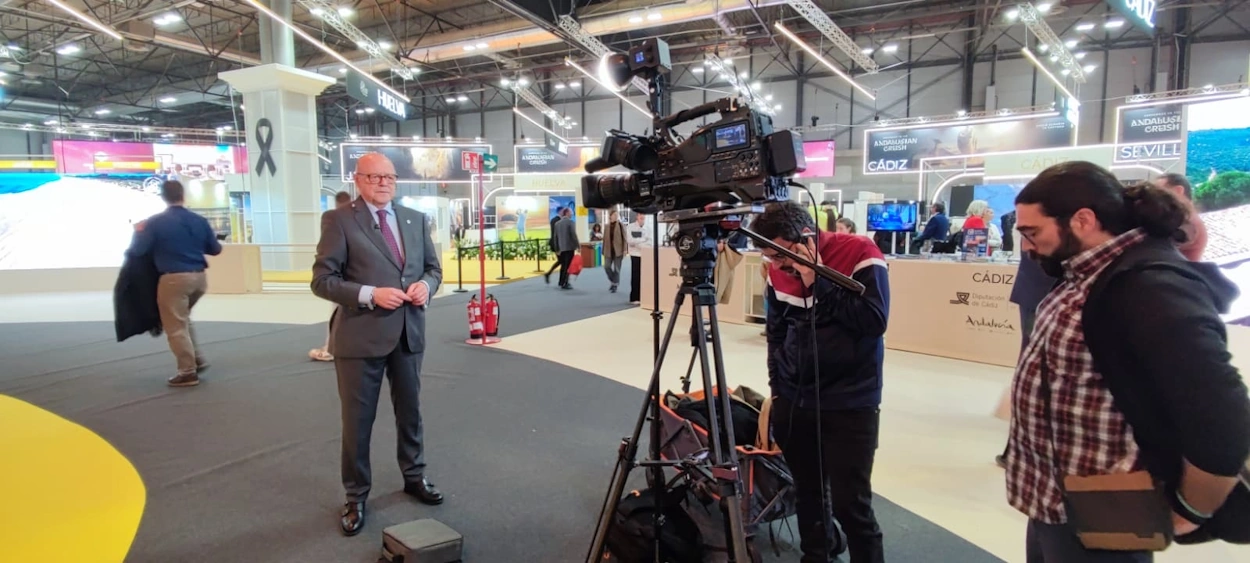
Talgo features in both our stories, although we didn’t overlap there. I was there between 1977 and 1979, and you went on to head up the Travel Division years later. What did that period mean to you, and what was it about that way of working that we may have lost today?
Talgo was a particularly important phase in my life, not only because of what it meant professionally, but also because of everything I learnt about a particular way of approaching work.
It was my first role as Chief Executive, at the age of 29. It also gave me the opportunity to join the Board of Iberrail, as we held a stake in that wholesale company. It was quite an experience for me to sit on the Board alongside the sector’s leading “heavyweights”.
By the time I took over as head of the Travel Division, Talgo was already a company with a very distinct identity and a highly distinctive professional culture. There was a strong emphasis on doing things properly, paying attention to detail and, above all, taking responsibility. It was a time when professional relationships carried a great deal of weight and when trust was built up over time.
I think that way of working had something that we may have partly lost today: the value of one’s word. A phone call could seal a deal, and a handshake had a significance that today, in a far more contractual and digitalised world, sometimes seems to have faded.
I also have very fond memories of the sense of belonging. People identified with the company and with the project. There were high expectations, of course, but there was also a real sense of camaraderie and a very close bond between people. You learnt a great deal by observing those with more experience and spending your day-to-day working alongside them.
And there was another feature that I consider very important: people used to think more in the long term. Decisions were not constantly dictated by the need for immediate results or by the pressure of the indicators that we now monitor practically in real time.
I don’t think everything back then was better – far from it. Today we have tools, information and opportunities that were unthinkable back then. But I do believe we should bring back certain things: a culture of hard work, commitment, personal responsibility, professional respect and, above all, the importance of human relationships.
Talgo was also an excellent learning experience that helped me realise that travelling is not simply about transporting people from one place to another. Behind every journey lies an experience, certain expectations and, above all, the need for everything to run smoothly.
Perhaps that is why, when I look back on that time, I don’t just think about the Travel Division or the projects we carried out. I think about the people I worked with and everything I learnt from them.
And after so many years in the sector, I still believe that one of the key differences between a merely efficient organisation and a truly good one lies in the people who make it up and the way they work together.
Technology, distribution and trust
You’ve worked for a wide variety of companies — CEA Viajes, Talgo, Iberrail, Marsans, Movelia and Gipsyy — and have experienced virtually every stage of modern travel distribution. What remains the same when technology, distribution channels and even travellers themselves change completely?
I’ve been fortunate enough to experience the tourism industry from virtually every angle of the supply chain: from Pullmantur, CEA Viajes and Talgo to Iberrail, Marsans, Movelia and Gipsyy. And if there’s one thing I’ve learnt after all these years, it’s that tools change much more quickly than people do.
Booking systems, distribution channels, the internet, platforms, mobile apps and now artificial intelligence have all changed. Travellers have changed too: they are much better informed, constantly compare options, have immediate access to thousands of choices and are far more demanding.
But there is one thing that remains exactly the same: the need for trust.
When someone books a holiday, they are buying much more than just a ticket, a hotel room or a package holiday. They are placing their trust in the fact that what they have chosen will live up to their expectations. And when a problem arises — a cancelled flight, a missed connection, an issue at a hotel — the importance of having someone to turn to becomes clear once again.
That hasn’t changed since I started. What has changed is the speed at which things happen.
It is also still important to know the customer. We may have millions of data points and algorithms capable of analysing behaviour in a matter of seconds, but truly understanding what a person is looking for, what concerns them or what they need at any given moment still requires sensitivity and experience.
And there is something even more important: the excitement of travelling.
We can digitise a booking, automate a process or use artificial intelligence to plan an itinerary, but we cannot fully digitise the excitement someone feels when they decide to explore a new place, reunite with their family, go on a dream holiday or simply switch off for a few days.
That is why I believe that tourism has an extraordinary capacity to adapt. Channels change, companies change, new business models emerge and others disappear, but the ultimate reason why we travel remains essentially human.
Having worked on such a wide variety of companies and projects, that is precisely the idea that has stuck with me: Technology is transforming the tourism sector, but it does not change the reasons why people travel.
And that, I believe, is where the true value of tourism professionals will continue to lie: in knowing how to use all that technology without ever forgetting who we are working for.
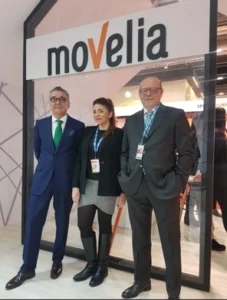
You and I have been hearing for many years that travel agencies were going to disappear. First the internet, then direct sales, and now artificial intelligence. Why do you think we keep hearing the same prediction, and why are travel agencies still around?
It’s funny, because I think travel agencies have been disappearing for over forty years. First it was direct sales by the airlines, then the internet, later the major distribution platforms, and now artificial intelligence. And yet, here we are, still talking about travel agencies.
I think the mistake lies in confusing the channel with the value that the professional brings.
Technology has indeed radically changed the way we book holidays. These days, anyone can search for a flight, compare hotels, read reviews and plan an itinerary all from their mobile phone. That’s fantastic, and it has forced travel agencies to adapt.
But when a trip is complicated, when there is a lot of money at stake, when there are several options to choose from, or simply when a problem arises, many people still want to speak to someone who has experience and who will take responsibility for helping them.
In many cases, travel agencies are no longer simply a place to buy a ticket. They have become travel advisers.
And I believe that is precisely the reason for their survival. Agencies that have realised that their value lies not in selling what the client can buy directly, but in providing expertise, trust, personalisation and responsiveness, have found their niche.
What’s more, there’s one thing that’s often overlooked from the outside: travelling isn’t always straightforward. A trip can involve flights, trains, hotels, transfers, insurance, paperwork, last-minute changes and liaising between different service providers. When everything goes smoothly, anyone might think that organising it is easy. When something goes wrong, the experience and contacts of a good professional become invaluable.
And now artificial intelligence is on the scene. I don’t think it’s going to spell the end for agencies. On the contrary, I believe it’s going to bring about another transformation. An agency that makes good use of AI will be able to work with more information, respond more quickly, personalise its services better and devote more time to what really adds value.
What may well disappear, however, is an agency that offers nothing more than what the client can obtain directly through an internet search or an artificial intelligence tool.
After so many years of hearing that agencies are going to disappear, I would almost go so far as to say that we should reframe the question. We shouldn’t be asking whether agencies will disappear, but rather what sort of agencies will be able to remain relevant.
Because one thing is quite clear to me: as long as people continue to travel, they will continue to need information, advice and, above all, someone they can trust when things don’t go to plan.
And that, however much technology we have, continues to be of immense value.
Consistency and accountability
There’s one thing about you that has always struck me in particular. When you take on a responsibility because certain people have placed their trust in you, and those people then leave the project, you realise that you too must step down from your post. I’ve seen you act in this way and have always regarded it as a matter of consistency. Where does this understanding of loyalty and institutional responsibilities stem from?
I believe it stems, fundamentally, from the upbringing I had and from a way of understanding professional relationships that I have tried to uphold throughout my life.
For me, accepting a responsibility does not simply mean taking up a post. It means making a commitment to the people who have placed their trust in you and to the project they represent.
That is why, when those people step down from leading the project for whatever reason, I have always asked myself whether it makes sense for me to continue in the role I took on precisely because they placed their trust in me. And, in certain circumstances, I have realised that the right thing to do was to tender my resignation as well.
I have never seen it as a dramatic gesture or as a personal matter. Quite the opposite. I believe that institutional responsibilities must take precedence over individuals. Positions come and go, but institutions endure.
For me, loyalty doesn’t mean agreeing with everything or standing by someone in all circumstances either. It means living up to the trust that has been placed in you, acting honestly and, when the time comes, knowing how to make a decision even if it isn’t necessarily the easiest one.
Over the years, I have learnt that in the professional world, you can lose many things and get them back: a job, an opportunity, even a project. What is much harder to regain, however, is credibility.
And I have always preferred to be able to look back and think that I remained true to my principles – even if a decision might have harmed my career – rather than hold on to a position at the cost of compromising those principles.
Perhaps that is why I have never really seen positions of office as belonging to the people who hold them. A position of office is a temporary responsibility entrusted to you by someone else. And when that trust changes, I think it is legitimate to ask oneself whether one should continue.
Ultimately, for me it all boils down to a word that you yourself have used: consistency. Trying to ensure that what you think, what you say and what you do are reasonably aligned.
It’s not always easy, of course. But after so many years, I think that’s one of the things that gives me the greatest peace of mind: knowing that I’ve tried to act in accordance with my convictions and with the respect due to the people who, at some point, placed their trust in me.
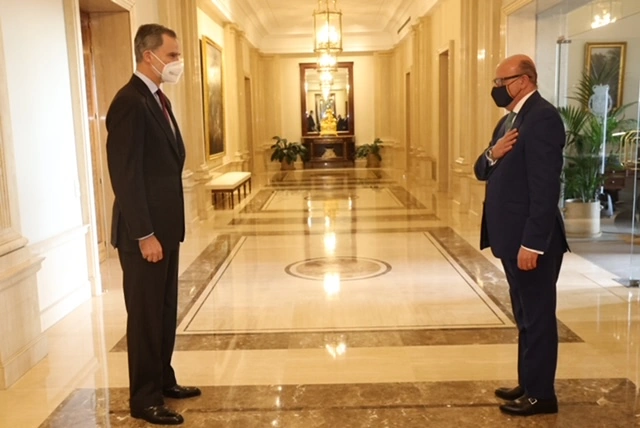
Associations and the sector’s voice
We have served on the Board of Directors at UNAV together, and we know that the life of a tourism association has a visible side and another that is almost never talked about. What should a professional association really offer to justify the time and effort its members devote to it?
I believe that a professional association makes sense when it manages to give back to its members, in the form of value, some of the time and effort that they themselves devote to it.
The visible side of an association consists of meetings, conferences, seminars, press releases and institutional representation. But there is another, far less visible side: the discussions, the search for consensus, the defence of interests, the hours of work and, in many cases, the generosity of professionals who devote their time to association-related responsibilities without expecting anything in return.
And that is precisely why I believe an organisation must hold itself to very high standards.
Firstly, it must genuinely represent the interests of its members. It must not merely be present, but must have the capacity to engage in dialogue and exert influence with public authorities, businesses and society as a whole.
Secondly, it must offer practical benefits. Information, training, knowledge, contacts, business opportunities, agreements, advice and, above all, the ability to anticipate changes affecting the profession.
But there is something I consider even more important: an association must be able to build a sense of community.
In a sector as broad and diverse as tourism, we often find ourselves competing with one another, but we also share common challenges and interests. A good association must create a space where individuals and businesses that are normally competing can sit down together, identify what unites them and work towards shared goals.
And there is a fourth role which, to me, is essential: upholding the profession’s reputation.
A professional association cannot limit itself to defending economic interests. It also has a responsibility to explain to society what our sector contributes, why it is important to have qualified professionals, and what role the tourism sector plays in the economy and in society.
After so many years of involvement in associations, it is clear to me that an association is not measured by the number of meetings it holds, but by what it achieves as a result of those meetings.
Nor do I believe that an organisation should exist simply so that its leaders can hold a position. It is exactly the opposite: those who take on a role within the organisation are there to serve their colleagues.
Ultimately, as far as I’m concerned, the question any association should ask itself from time to time is very simple: if we were to disappear tomorrow, would our members notice we were gone?
If the answer is yes, we’re doing our job. If the answer is no, we need to ask ourselves what we need to change.
Because the true success of a professional association does not lie in its leaders being visible, but in its members feeling that it is worthwhile to be part of it.
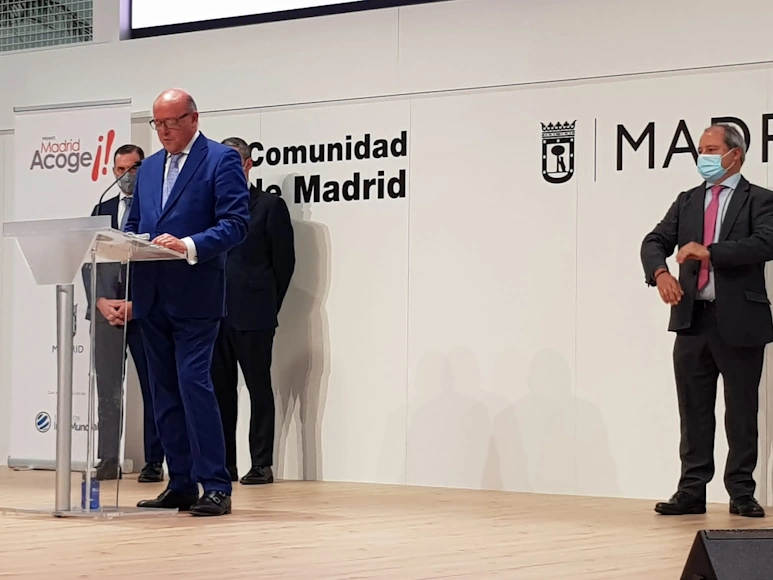
We’ve also met at the Spanish Tourism Board. After so many years of dealing with companies, associations and public authorities, do you think the Spanish tourism sector now speaks with a sufficiently united voice when it comes to defending its interests?
I believe that Spanish tourism has a very powerful voice, but it can still develop a more coordinated and, above all, more strategic voice.
Spain has an exceptionally broad tourism sector, comprising large and small businesses, destinations, business and professional associations, trade unions and public authorities. This diversity is a strength, but it also means that, on certain occasions, it can be difficult to convey a unified message.
After so many years of working with businesses, associations and public authorities, I have found that we often agree on the nature of the major problems, but we may disagree on the priorities or on how to tackle them.
And that, I believe, is where we still have some work to do: being able to identify those issues that transcend the particular interests of each sub-sector and forge a common position.
Because when the tourism sector speaks with one voice, its influence is enormous. We are not just talking about an economic activity. We are talking about employment, investment, the export of services, connectivity, regional development and a fundamental part of Spain’s international image.
But to have a truly strong voice, it is not enough simply to demand more attention. We must also be able to offer solutions and take our share of responsibility.
I believe the sector must adopt an attitude of ongoing dialogue with the authorities. It is not a question of businesses and the Government always having to agree. Disagreement is perfectly legitimate and, at times, necessary. But there must be a stable channel for dialogue and a genuine willingness to listen to one another.
And there’s something else: we need to talk more about the long term.
Tourism cannot be constantly dictated by political debate or the urgency of the moment. We must be able to set out what kind of tourism model we want for Spain in ten or fifteen years’ time: what infrastructure we will need, how we will tackle sustainability, training and employment, digitalisation, housing in tourist destinations, transport and coexistence with local residents.
That is why, after so many years, my impression is that we have everything we need to make our voice heard much more strongly. We have leading companies, outstanding professionals, representative organisations and a vast body of accumulated knowledge.
What we need to do is use that capacity in a more coordinated way.
And perhaps that is precisely one of the key responsibilities of organisations such as the Tourism Board: to create spaces where the various viewpoints within the sector can come together, discuss issues and, where possible, present a shared position to the public and the authorities.
Because when the tourism sector speaks from a position of division, many voices are heard. When it manages to agree on the essentials, the sector’s voice is heard.
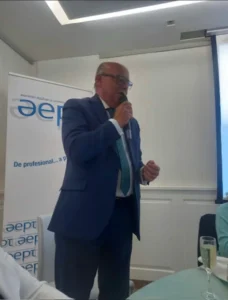
It was you who introduced me to AEPT, and today you are its president. What does the Spanish Association of Tourism Professionals mean to you, and what role should it play for the new generations entering the sector?
AEPT has a very special meaning for me, precisely because it represents one of the things I value most about tourism: the importance of people and the professional relationships that are built up over time.
And also because, as you’ll recall, it was I who introduced you to the Association. That’s why the fact that you’re asking me today about its significance carries significant personal weight for me.
In my view, the Spanish Association of Tourism Professionals should, above all, be a meeting place. A place where professionals from different generations, specialisms and areas of tourism can get to know one another, share experiences and learn from one another.
I believe that role is particularly important right now. The younger generations are entering the sector with extraordinary technological skills and an extraordinary ability to adapt. They use tools that we couldn’t even have imagined when we started out. But there is one thing you cannot learn solely from a screen: experience.
And that, I believe, is where we have a responsibility. Those of us who have been in the sector for many years must pass on our knowledge, but we must also be willing to listen to those coming up behind us. We cannot expect the younger generations to replicate our way of working exactly. The world has changed, and they need to build their own model.
AEPT should be precisely that bridge between generations.
A young professional entering the tourism sector should find in the Association not only activities and events, but also people they can turn to, professionals with whom to share their concerns, and a network that will help them to grow.
I also believe we need to raise the profile of the profession much more. Tourism is one of Spain’s major economic and social drivers, but there is still a certain tendency to view it simply as a leisure-related activity. Behind the scenes are highly qualified professionals in fields as diverse as business management, technology, marketing, destination planning, transport, the hospitality industry, tourism brokerage and sustainability.
AEPT must help raise awareness of this situation.
And it must do so by looking to the future. Artificial intelligence, digitalisation, sustainability, new distribution models and changes in travellers’ habits are set to profoundly transform our sector. The younger generations do not need us to explain to them what tourism was like forty years ago; they need us to help them understand where we have come from so that they can decide where they want to take it.
So, if I had to sum up what AEPT means to me, I would say it is a professional community based on knowledge, experience and friendship, but with a very clear purpose: to shape the future.
And perhaps one of the greatest sources of satisfaction for someone who has been in this profession for many years is precisely being able to help those just starting out, open a few doors for them and pass on some of what other professionals did for us in the past.
Because a true professional legacy is not about the positions you have held, but about the people you have helped to grow.
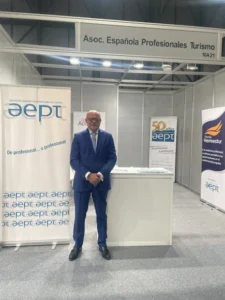
The legacy and future of the profession
You have been a lecturer and have held positions involving management, institutional representation and consultancy. When you see young professionals entering the tourism sector, what advice would you give them that they won’t find in any master’s degree programme or textbook?
I would tell them to learn as much as they can, to keep developing their skills and to make the most of technology, but never to forget that a career is not built solely by accumulating knowledge.
There are things that aren’t covered in any postgraduate course but which, nevertheless, end up being crucial: the way you speak, honesty, the ability to listen, hard work and the way you treat people.
I would also tell them not to be in too much of a hurry. We live in an age where it seems everything has to happen straight away: getting promoted, landing a particular job, being successful, achieving goals. But a career takes time. You have to be prepared to start at the bottom, to make mistakes, to learn from others and to take on more responsibility as you go along.
And I would advise you about something I consider essential: look after your professional relationships. In tourism, this is particularly important. This is a sector where people cross paths time and time again throughout their lives. The colleague you work with today could be your client, your business partner, your boss or the person who opens doors for you tomorrow.
That is why we must treat everyone with respect, regardless of the position they hold.
I would also tell them not to confuse visibility with prestige. These days, social media means that anyone can be highly visible, but a genuine reputation is built much more slowly: by delivering on your promises, responding when problems arise, and being someone others can trust.
And, above all, I would tell them not to be afraid of making mistakes. A career without mistakes is probably one in which not enough risks have been taken. The important thing is to learn from them and never lose your sense of humility.
Finally, I would like to share something I have learnt over the years: don’t work just to get a job; work to build a reputation.
Jobs come and go. Companies change. Projects come to an end. But the reputation you build through the way you work, the promises you keep and the way you treat people stays with you for life.
And if, at the end of your career, you can say that you’ve achieved results, but also that you’ve made friends, colleagues who respect you and young people whom you’ve helped to grow, then I think you’ve done your job well.
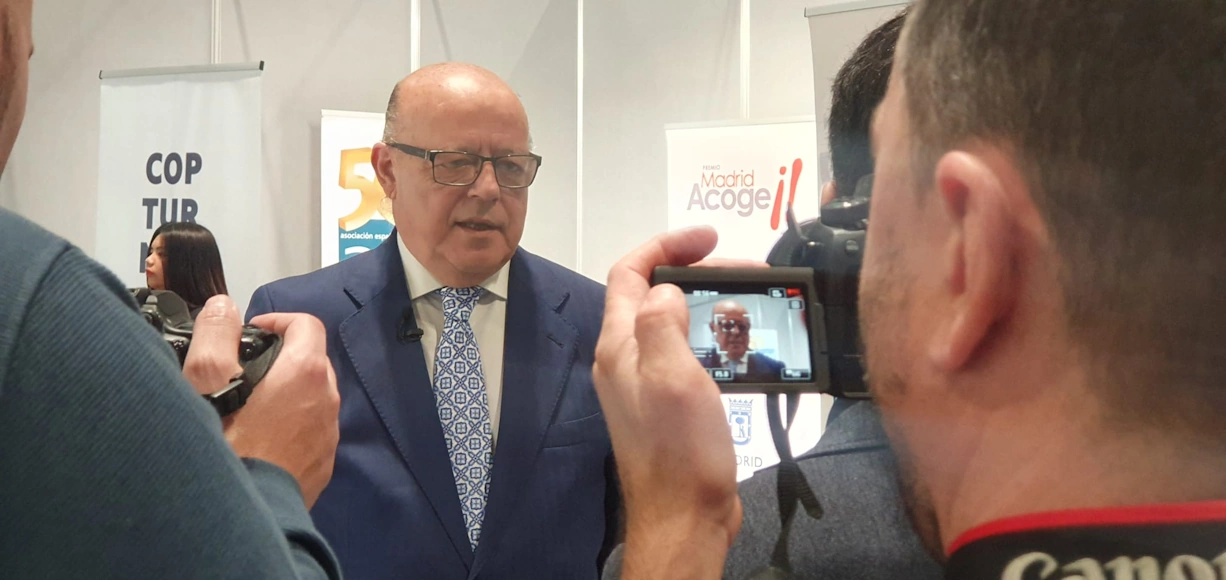
Technology and artificial intelligence are changing the way we work at an incredible pace. Having built a career largely on personal relationships and trust, what aspect of tourism do you think should never be delegated to a machine?
I believe there is one aspect of tourism that we should never entrust entirely to a machine: human interaction.
Artificial intelligence is set to radically change the way we work – and, in many respects, for the better. It will enable us to analyse vast amounts of data, anticipate travellers’ needs, personalise offers, automate processes and make decisions with a speed that was unimaginable until recently.
And I believe we should embrace that transformation, not fight it.
But it is one thing to use technology to become more efficient, and quite another to delegate to it the very essence of our profession.
When a person encounters a problem whilst travelling, when they need to make an important decision, when they are worried, or simply when they are looking for advice based on experience, there is something that a machine can hardly ever fully replicate: empathy.
A machine can know about thousands of hotels. It can compare prices, analyse reviews and put together the perfect itinerary. But it hasn’t experienced that destination first-hand, it hasn’t had a conversation with the hotelier, it doesn’t personally know the people who can sort out any issues, and it cannot fully understand what that particular trip means to a customer.
And that is particularly important in difficult situations.
When everything is running smoothly, technology can do practically anything. But it is when things go wrong that we discover the true value of a professional. A cancellation, an illness, lost luggage, a last-minute change or any other unforeseen circumstance requires more than just information: it requires sound judgement, a sense of responsibility and the ability to put oneself in someone else’s shoes.
That is why I believe that the future should not be seen as people versus machines, but as people using machines.
Tourism professionals who know how to make the most of artificial intelligence will probably have far more tools at their disposal than their counterparts do today. They will be able to spend less time on repetitive tasks and more time listening to customers, advising them, creating experiences and solving problems.
And that, in my view, is where the great opportunity lies.
After more than forty years in this sector, I have found that trust takes a long time to build and very little time to lose. And trust cannot be easily engineered.
That is why there is one thing that should never disappear: that behind every significant travel experience, there should be another person capable of listening to them, understanding them and looking out for them.
Artificial intelligence can help us get to know travellers better. But knowing a person is not the same as understanding them.
And that difference, however small it may seem, may well be precisely what keeps people at the heart of tourism.
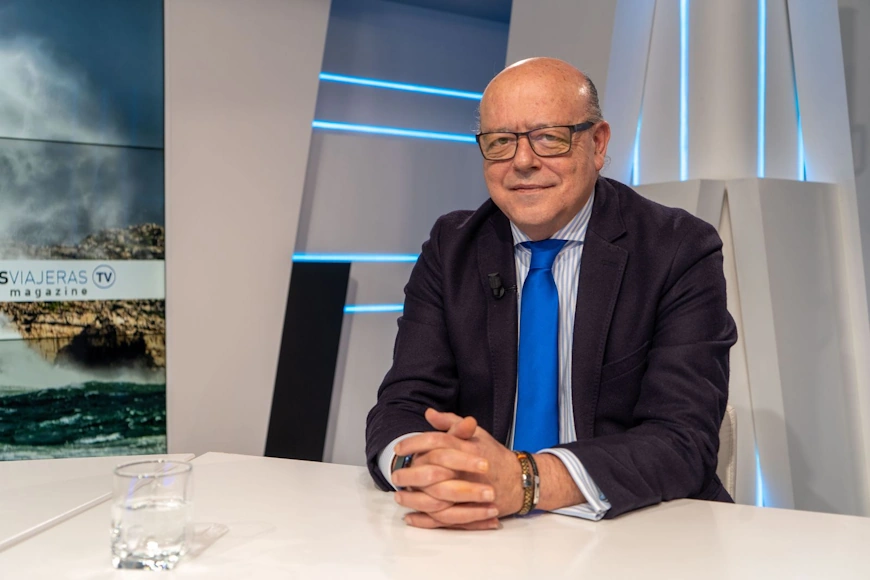
And I’ll conclude on a personal note, not by talking about my CV. After so many years, so many projects, trips, meetings, successes and also disappointments, what would you like those who have shared this journey with you to say about Santiago Vallejo?
If one day someone were to ask me what I would like the people who have shared this journey with me to say about me, I don’t think I would want them to talk about the roles I have held, the companies I have worked for or the projects I have been involved in.
I would simply like them to say that I was a good person and a good colleague.
That they could trust me. That when I gave my word, I tried to keep it. That I stood by them when things went well, but also when they went badly. And that, even when we had our differences, I always tried to maintain respect and friendship.
After so many years, you realise that professional achievements are important, but they eventually become a thing of the past. Projects begin and end, companies change, roles come and go, and professional circumstances change too.
What remains are the people.
The friends you made remain, as do the colleagues with whom you shared difficult times, the conversations after a meeting, the trips, the meals, the laughter and also those moments when you had to make difficult decisions.
And, of course, there have been disappointments too. Because they’re part and parcel of any journey. I’ve learnt that not everyone reacts the way you expect, that some relationships come to an end, and that sometimes the people you trust let you down. But I’ve also learnt that it’s not worth dwelling on resentment.
I’d rather focus on the positives.
To the people who were there for me. To those who trusted me. To those who taught me something. To those whom I was able to help at some point. And, above all, to the friendships that have stood the test of time and professional changes.
That is why, if many years from now someone remembers Santiago Vallejo and says: “He was someone you could trust; he worked hard, stood up for what he believed in and, above all, was a good friend”, I think I would feel completely satisfied.
Because, in the end, after so many trips, so many meetings, so many projects and so many years in tourism, you realise that the true legacy of a professional life is not the positions you have held, but the people who have chosen to continue walking alongside you even when those positions no longer exist.
And if you and I, after so many years and so many paths shared, are still here talking as friends, I think that, in itself, is a good answer.