
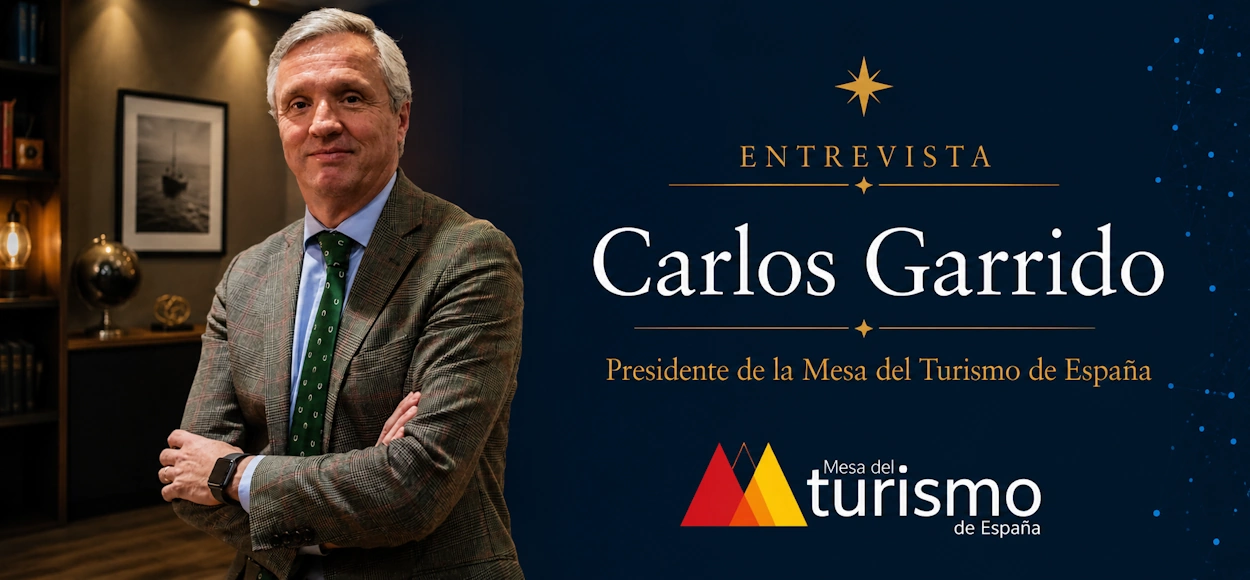
Speaking with Carlos Garrido de la Cierva offers an insight into the key aspects of Spanish tourism from one of the professionals who knows the tourism association sector best – and, in particular, the world of travel agencies. His career has seen him take on leadership roles at some of the sector’s leading trade organisations: he was president of UNAV (the Union of Travel Agencies), subsequently chaired CEAV (the Spanish Confederation of Travel Agencies), and is currently president of the Spanish Tourism Board.
This journey has allowed him to observe the evolution of tourism from a privileged position over the years, maintaining constant contact with companies, professionals, and institutions, and with a vision that transcends a single subsector. From this experience, he has witnessed profound changes in tourism distribution, travelers' habits, and the very way this industry is managed and understood.
At Sinergia Skål, we spoke to Carlos Garrido about the key factors behind Spanish tourism and what Spain has done well to become a leading tourist destination, but, above all, about what it will need to do to maintain that leadership. Competitiveness, quality, talent, innovation, artificial intelligence and the younger generation are all part of a conversation that looks to the future without forgetting one essential point: behind the big tourism figures lie companies, professionals and a whole lifetime dedicated to enabling people to travel.
Spanish tourism: the keys to forward-looking leadership
Carlos, Spain is once again achieving excellent tourism results. Are we at risk of becoming accustomed to success and forgetting everything it took to get here?
Sometimes we take this wealth for granted. Over the decades, a segment of society has normalized the idea that tourism is a source of joy and positive figures, new record numbers every year, more jobs, and a very convenient surplus in the Balance of Payments. This string of good results, this sustained success, leads to the risk of resting on our laurels and forgetting that nothing happens by chance.
What explains Spain's success in positioning itself among the world's leading tourist destinations?
Tourism is a valuable asset built on standards: quality, talent, professionalism, and the ability to offer competitive, safe, and excellent services based on a diverse and superb tourism product. These standards have positioned our country as a global leader in tourism competitiveness, and it is on them that we must continue to grow, compete, and generate value.
You often emphasize that tourism is much more than just a statistic. What does it really represent for Spain?
It's jobs, investment, business activity, and opportunities for the entire country. It's social balance. Behind every hotel, restaurant, travel agency, airline, transport company, museum, shop, or tourist experience, there are professionals who help define and project Spain's image.
Spain receives an extraordinary number of visitors each year. What lies behind this capacity to accommodate them?
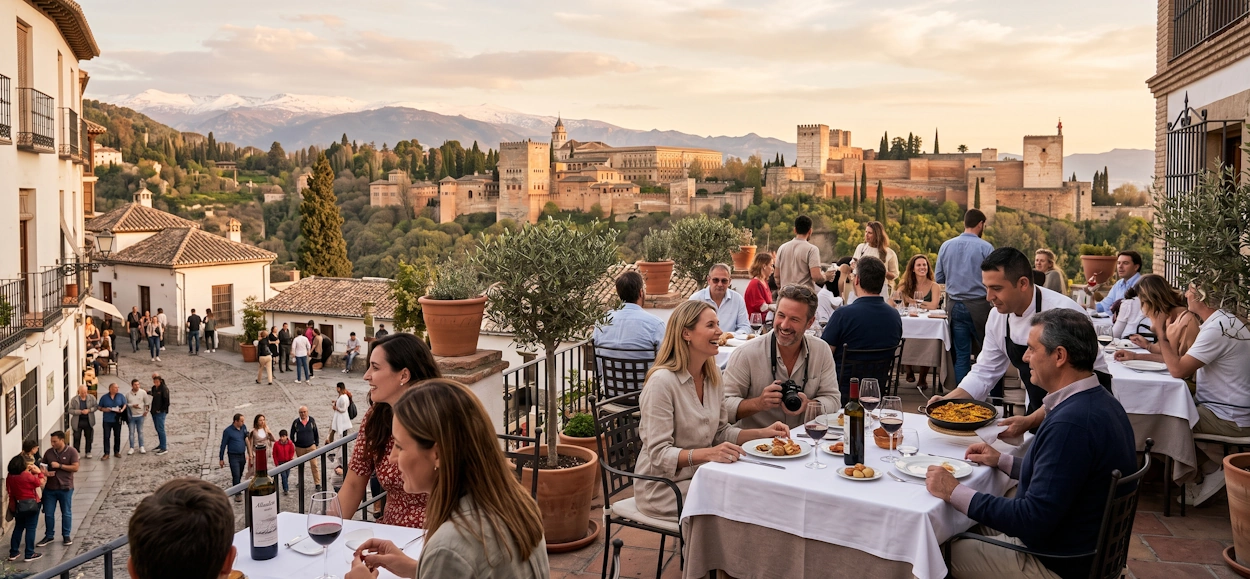
Undoubtedly, there is much more to Spain than beautiful beaches, sunny days, or remarkable heritage. To the natural advantages that history, geography, and even climate have bestowed upon us, we must add the know-how we have developed as a leading tourist destination, the experience of welcoming our tourists and making them feel even more at home than they do in their own homes. The most compelling proof is the thousands of visitors who choose to own a second home in Spain, invest, and, in some cases, even settle here permanently.
Maintaining that leadership during peak demand can't be easy. What does a destination need to remain competitive without compromising the experience?
Although progress has been made in reducing seasonality, there is still work to be done. The June-September period sees the highest volume of arrivals, and serving millions of visitors requires infrastructure, planning, coordination, innovation, and qualified professionals. To maintain competitiveness, Spain must manage the carrying capacity of its tourist municipalities, have well-managed businesses, and offer destinations capable of catering to savvy and hyper-connected travelers. The key is to offer consistent quality and maintain the standards that define us, even during peak demand periods.
You've spoken about the need for tourism to receive recognition commensurate with its importance. What does that recognition mean from a professional and social perspective?
Tourism deserves ongoing recognition. It should be the subject of more rigorous public discourse, greater institutional consideration, and social support commensurate with its importance. This is not about disregarding other sectors or industries, but rather about ensuring that tourism, with all its extraordinary diversity, has the space and recognition that corresponds to its economic, business, and social contributions.
One of the issues that interests us most at Sinergia Skål is talent. What would have to change for new generations to perceive tourism as an attractive profession with a promising future?
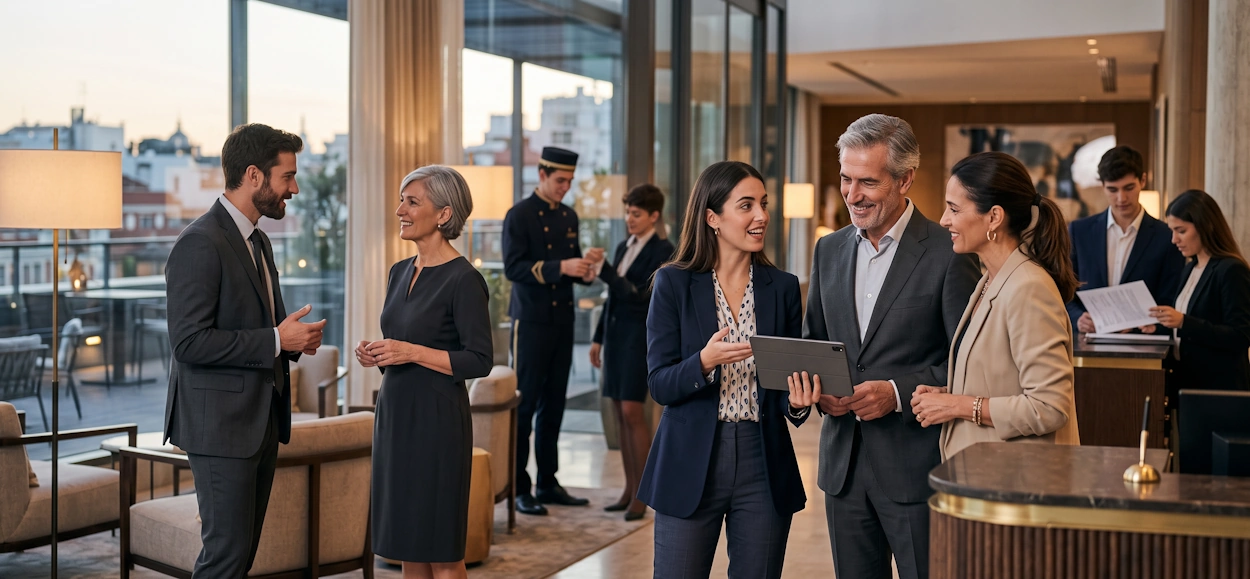
We need to work in three areas: the social prestige of tourism professions, pride in belonging to the sector, and raising awareness of career opportunities. I believe this country has come so far in terms of training and excellence that it's no longer acceptable to see tourism as a catch-all for those lacking qualifications or experience. On the contrary, this sector needs the knowledge, talent, judgment, and experience of its professionals, from hotel receptionists to senior management, from front-of-house service to the design and marketing of new tourism experiences.
Technology and artificial intelligence are transforming businesses and travel habits. Where do you see the greatest opportunities to improve tourism competitiveness without losing the human element that characterizes the sector?
The rapid advancement of technology, and specifically AI, is ushering in a new era that goes far beyond digitization. We are at the beginning of a revolution that points to accelerated evolution and will bring about profound transformations at all levels. Technology will allow us to understand travelers better than ever before and offer more personalized and accessible experiences. Artificial intelligence can optimize marketing, anticipate needs, streamline bookings, improve destination management, and free staff from repetitive tasks, among many other functions. In short, the possibilities will multiply exponentially, but we must be able to establish a healthy relationship with this technology without ever forgetting the primacy of human interaction. I want to emphasize that technology must be a tool, not a substitute for hospitality, as replacing human interaction would ultimately dehumanize it; it should function as an effective scenario simulator, but never dictate the strategy.

From the cross-cutting perspective provided by the Tourism Roundtable, what would you say are the three major challenges that will determine Spanish tourism competitiveness over the next decade?
Firstly, plan a sustainable growth in the broadest sense of the term —encompassing environmental, economic and social dimensions— which strikes a balance between the carrying capacity of destinations, access to housing, harmonious coexistence between tourists and residents, and territorial cohesion. Secondly, to attract and retain talent in the sector – which ties in with what I mentioned earlier about enhancing the status of tourism professions, which is of the utmost importance. And, finally, to involve Spanish society as a whole – ordinary citizens, tourism businesses and public authorities – in the transformation of the Spanish tourism model. By following this path, we will be able to combine differentiation and innovation to generate economic and social value.
After so many years working in tourism, what continues to inspire Carlos Garrido about this sector?
On a personal level, everything related to travel, discovering new destinations, and experiencing other cultures enriches and inspires me. Professionally, it's exciting to be part of an industry that works with people's happiness, experiences, and memories. Contributing to their well-being is a constant privilege and motivation for me, so I'm proud to work in tourism.
Carlos Garrido de la Cierva
President of the Spanish Tourism Board