




Pet-friendly tourism is not just a fad. It is the response to a social reality that destinations and tourism businesses should start to view in a different light.
At my house, it’s quite common for there to be more pets visiting than actually live there.
Those of us who live with pets know that they end up becoming part of our daily lives and that, in one way or another, they also influence many of our decisions.
Perhaps because of this close connection, I’m quite clear about something that part of the tourism sector still hasn’t fully grasped: when a person lives with a pet, many of their travel decisions are also influenced by it. Where to go. Which hotel to stay in. What mode of transport to use. Which restaurant to eat at. Which beach to visit. How long to stay at a destination.
And we’re not talking about a marginal issue. A preview of the first National Statistics on Animal Protection, published by the Ministry of Social Rights In June 2026, it is estimated that there are more than 15 million registered pets in Spain: around 7.5 million dogs and 5.6 million cats. Andalusia is also the autonomous community with the highest number.
The social dimension is also evident within our own community. The 2025 Social Survey by the Andalusian Institute of Statistics and Cartography It indicates that 43.2 per cent of those surveyed live with pets in their home.
That is why talking about pet-friendly tourism is not, in fact, just about pets.
It’s about people and a way of travelling that is becoming increasingly popular.

Allowing pets is not the same as being pet-friendly
This is probably one of the first concepts we should clarify.
We are seeing more and more establishments adding the words ‘pet-friendly’ to their offerings. But when travellers look into it further, they sometimes come across conditions: specific size or weight limits, additional charges, off-limits areas and restrictions that can make the experience quite different from what that label promised.
Naturally, there have to be rules.
Advocating for pet-friendly tourism does not mean advocating that anything goes. Those of us who travel with our pets also have a responsibility: to be considerate, to keep the area clean, to show respect for other guests, and to adhere to reasonable rules of coexistence.
Being pet-friendly must also be compatible with those who do not travel with pets.
The very Law 7/2023 on the protection of animal rights and welfare It stipulates that hotels, restaurants, bars and other establishments may allow pets access to areas not intended for the preparation, storage or handling of food. Where an establishment does not permit pets, it must indicate this by means of a sign visible from the outside.
The standard helps, but it is experience that makes the real difference.
There is a world of difference between setting reasonable rules and simply tolerating the presence of a pet.
A truly pet-friendly establishment isn’t necessarily one that offers a special bed, a designer feeding bowl or a welcome pack.
Above all, it is a business that has considered how to reconcile the presence of pets with a positive experience for all its guests, and clearly communicates its terms and conditions before the traveller makes a booking.
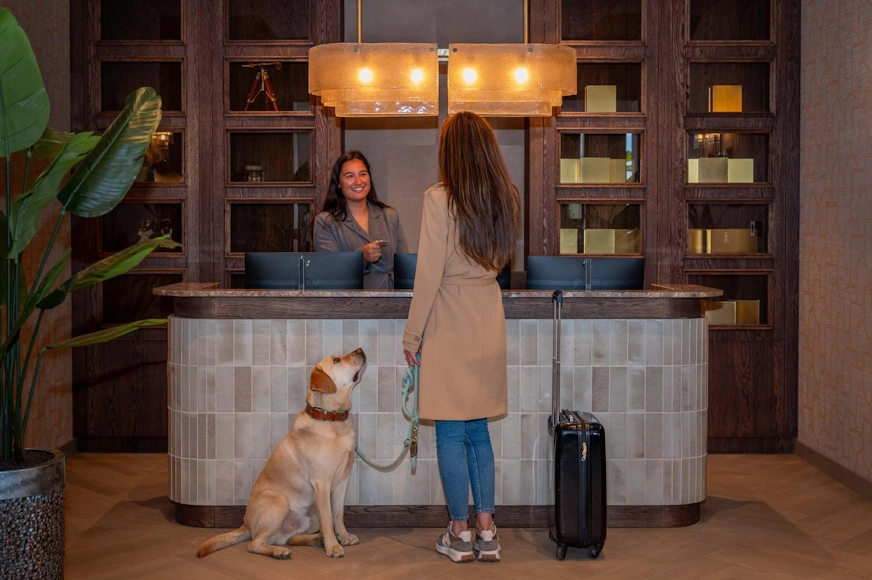
Pet-friendly tourism also presents an economic opportunity
There is something that tourism businesses should bear very much in mind.
For many people, being able to travel with their pet is now one of the factors they take into account when choosing accommodation, a restaurant or even a destination.
That makes pet-friendly tourism more than just an emotional issue.
It is also a tourist attraction, a point of differentiation and a business opportunity.
A traveller who finds a hotel where they and their pet are made to feel truly welcome has a strong reason to return. And a destination that can offer accommodation, dining, public spaces, beaches, veterinary services, pet care professionals and tailored activities has further reasons to attract these travellers and build their loyalty.
It is not the case that all hotels, restaurants or tourist attractions have to allow pets.
That wouldn’t make sense either.
The aim is that those who decide to target this market should do so in earnest, with a coherent strategy and clear terms and conditions right from the start.
The Costa del Sol has a lot to offer
And here we should take a look at ourselves as well.
The Costa del Sol It ticks many of the boxes needed to become a superb pet-friendly tourist destination: climate, outdoor living, terraces, seafront promenades, a range of hotels and holiday apartments, natural surroundings and a sizeable international community.
Furthermore, there are already specific examples. Fuengirola It has a 3,424-square-metre dog beach equipped with fencing, litter bins, showers and a drinking fountain. And the official tourist information from Marbella It features two dog-friendly beaches, as well as pet-friendly accommodation and services.
These are significant steps forward, but the real challenge is not simply to build up a network of isolated establishments. It is to enable travellers to create a complete experience.
The question shouldn’t be how many establishments use the term ‘pet-friendly’ on their website.
The really interesting question is actually a different one:
Is it possible these days for someone to organise a full holiday on the Costa del Sol with their pet without constantly coming up against obstacles?
Can you find accommodation, get around, eat out, enjoy the beach, visit certain places or take part in activities under reasonable and sufficiently clear conditions?
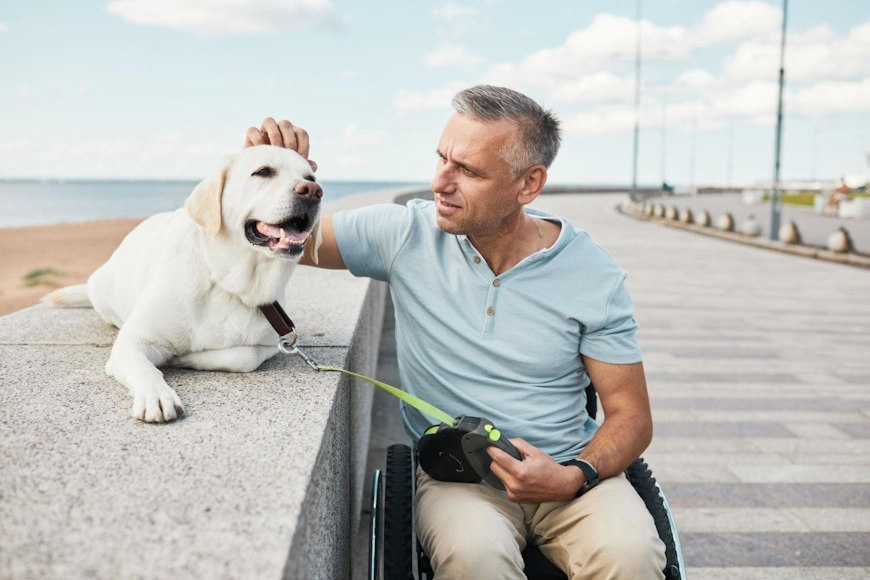
Transport is also part of the journey
Significant changes are also taking place in this area.
From July 2026, Renfe It allows passengers to travel with dogs weighing up to 40 kilos without a pet carrier on its AVE, Avlo, Long-Distance, Avant and Medium-Distance services, provided that the specific train offers this option and the stipulated conditions are met. This expansion extends a scheme – which was previously limited to certain routes – to virtually the entire network.
It does not, on its own, solve all the difficulties of travelling with a pet, but it highlights something important: when a company adapts its service to a new social reality, what once seemed complicated can begin to become the norm.
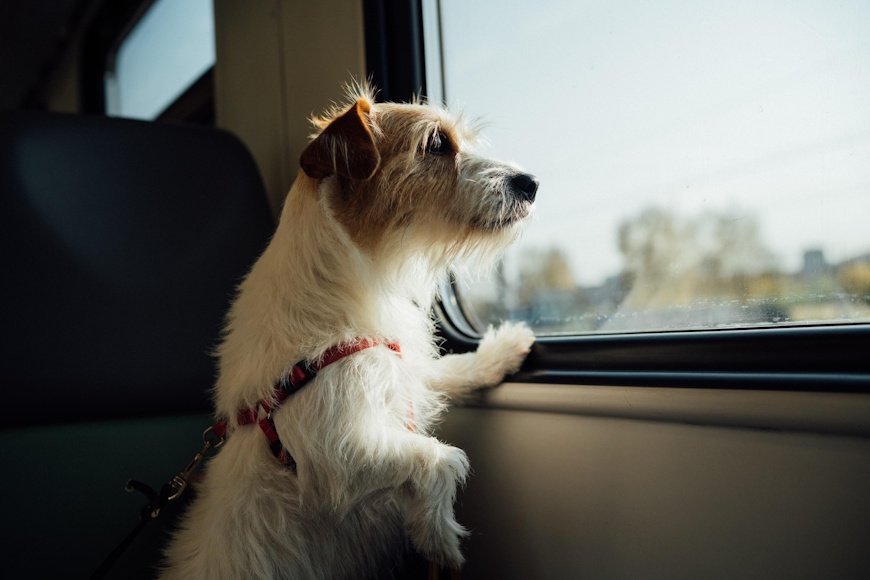
They can’t always be with us
There is also another reality that we rarely talk about.
Travelling with a pet does not necessarily mean taking it with you 24 hours a day.
A day out, a cultural visit, a dinner, certain activities or simply a few hours spent somewhere where our pet cannot come with us may mean we need to have some alternatives to hand.
That is why there is also a whole network of services surrounding pet-friendly tourism: pet sitters, dog walkers, day-care centres, grooming salons, trainers, vets and other professionals who can make a stay at a destination much easier.
For a traveller, knowing that these services are available also brings peace of mind.
And for a tourist destination, this means expanding its range of attractions and meeting needs that were scarcely taken into account a few years ago.
Coexistence and responsibility
Those of us who advocate for pet-friendly tourism must also talk about responsibility.
We cannot demand more accessible spaces, accommodation or facilities for our pets whilst neglecting our responsibilities.
Living together works both ways.
A well-cared-for and well-trained pet, a responsible owner and clear rules set by the establishment are probably the best combination for ensuring that this form of tourism continues to grow.
Because every bad experience also harms those who do things properly.
The future of pet-friendly tourism will depend as much on the adaptability of businesses and destinations as on the responsible behaviour of those of us who travel with our pets.
A new section to discuss tourism
Sinergia Skål, We have included ‘Pet-Friendly Tourism’ because we believe this issue deserves to be examined from a tourism and professional perspective.
We want to find out about businesses that are doing things well, discover destinations and experiences, talk to professionals, analyse challenges, learn about best practice and also highlight areas where there is still room for improvement.
We’ll be talking about hotels, restaurants, beaches, transport, regulations, businesses, destinations, services and, of course, pets.
But people will continue to take centre stage.
Because behind every pet that arrives at a hotel reception, there is someone who has chosen that hotel.
Behind every terrace where you can share a table with her are customers who have chosen to sit there.
And behind every destination that recognises this reality, there is also an opportunity to stand out from the crowd.
Pet-friendly tourism should not be seen as a concession.
Nor as a fad.
It is simply the result of a society in which millions of people have made their pets part of their way of life and, consequently, part of the way they travel.
Travelling with them shouldn’t be an obstacle course.
It should simply be another way of travelling.