

Tourism is an industry largely driven by women, who are present across virtually all its subsectors and professional levels. However, access to senior management positions and to the spaces where major decisions are made remains one of the sector's ongoing challenges.
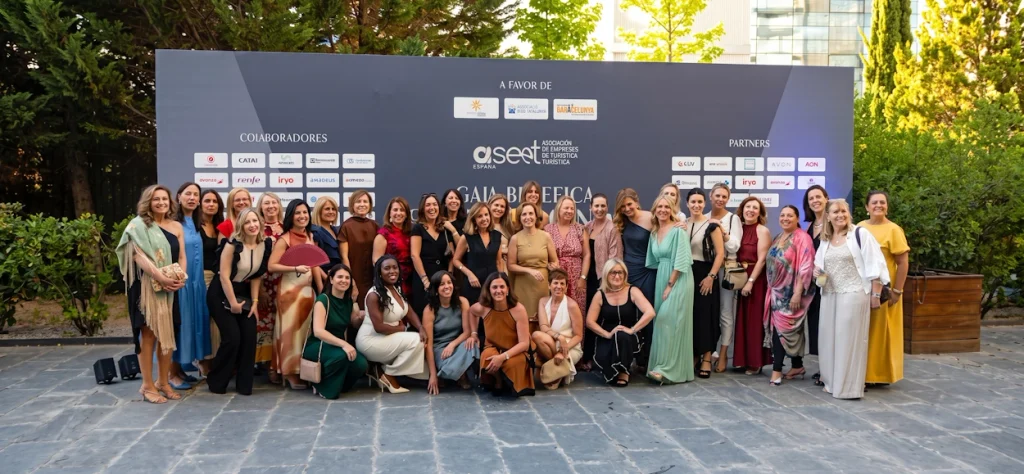
The Association of Women Executives in Tourism Companies (ASEET) brings together women in decision-making positions from a wide range of fields, including travel agencies, tour operators, hotels, restaurants, airlines, tourism organisations and communications. It promotes leadership, training, professional networking and greater female representation in tourism management.
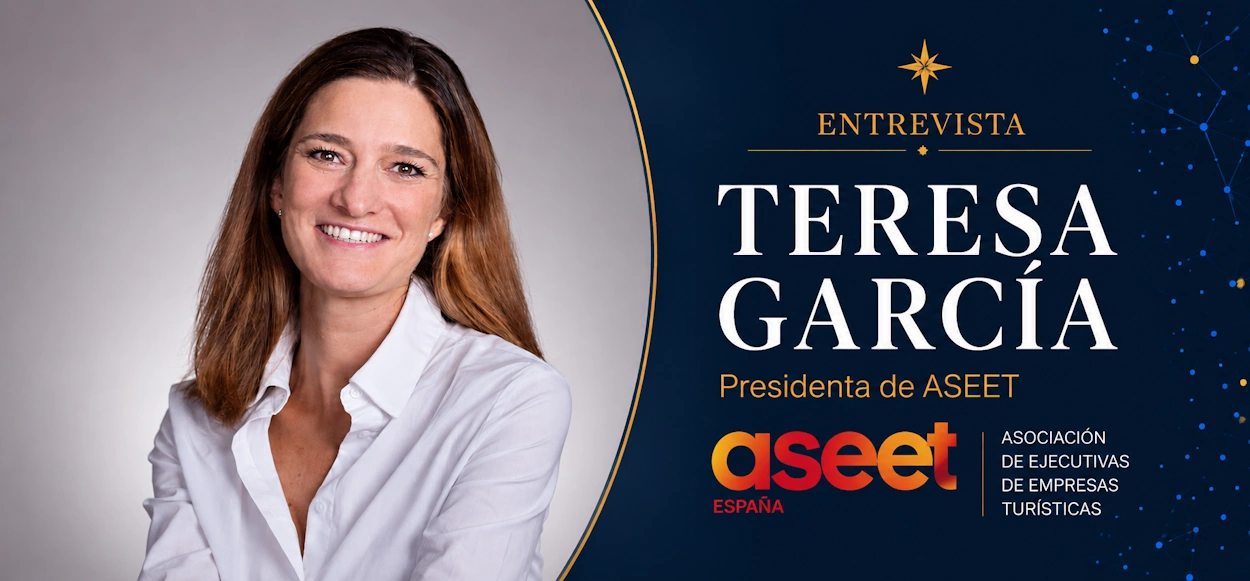
At Sinergia Skål, we spoke to Teresa García, president of ASEET, on leadership, talent, equal opportunities, the younger generation and the changes the tourism sector needs to make in order to fully harness the potential of those involved in it.
1. Teresa, ASEET brings together female executives from virtually all areas of tourism. What role does the association play today, and what are its main objectives?
ASEET’s main role is to raise the profile of women within the sector. It acts as a catalyst for change, whilst also collaborating on charitable projects that focus primarily on supporting women and children.
2. The tourism sector has a significant female presence in its workforce. However, this reality is not always reflected in top management positions. Why does this disparity persist?
The reasons why women do not reach certain positions are varied, and stem from a range of factors that are deeply entrenched in the sector; hence the importance of us all being aware of this and doing our bit to change these figures.
3. Would you say that in recent years there has been a real change in women's access to decision-making spaces, or is there still a long way to go?
As with any evolutionary process, there have been significant changes in the proportion of women participating in these areas; however, there is still some way to go, and true equality will only be achieved when we no longer have to talk about figures and percentages.
4. When we talk about female leadership, is there really a different way of leading or should we simply talk about different leadership styles regardless of gender?
Based on my experience, I am more inclined to believe that what actually exists are different leadership styles, rather than a gender-based leadership model, which is ultimately a form of bias that contributes to stereotyping rather than reflecting reality.
Answer: It contributes a great deal, because common challenges can be viewed from very different perspectives. We therefore try to address shared objectives from different angles and explore a range of possible solutions. This greatly enriches both the association and each of its members.
This is particularly true because common issues can arise from a wide variety of perspectives, so we try to tackle shared objectives from different angles and using a range of possible alternatives. This greatly enriches the association and each of its members.
6. One of the challenges for any sector is attracting and retaining talent. What are the new generations of professionals demanding, and what should tourism companies change to become attractive to them?
A well-established career path and opportunities. I believe the industry’s greatest challenge is to highlight the importance of working and building a career in an industry that accounts for more than 12 % of GDP. The professionalisation of the sector is one of the major challenges.
7. Work-life balance, career advancement, and access to management positions continue to appear in the debate on equality. Where do you think the main barriers lie today, and what measures are actually working?
The argument that women give up their careers for the sake of work-life balance has been a recurring theme used to shift the blame for a lack of career progression onto women. However, the reality is very different, and as I have mentioned, there are many factors that influence this outcome; the solution lies in acknowledging this and all of us playing our part in changing the figures.
8. Digitalization and artificial intelligence are rapidly transforming tourism. Can these tools also contribute to generating new professional opportunities and more open leadership models?
It is clear that AI is set to transform the world in which we work today, bringing greater efficiency and simplifying processes, with significant improvements in the time and workload we will be able to manage, thanks to tools that will carry out most of the work we currently do. New ways of working will require new leadership models, with much more streamlined management structures that will call for more humanistic management qualities, as there will be tools capable of handling the technical aspects.
9. ASEET places special importance on professional relationships and networking. To what extent are trusted networks still a necessary tool for professional advancement and generating business opportunities?
Professional relationships are ultimately what help us reach agreements and build trust. Similarly, it is these networks that help us progress both personally and professionally.
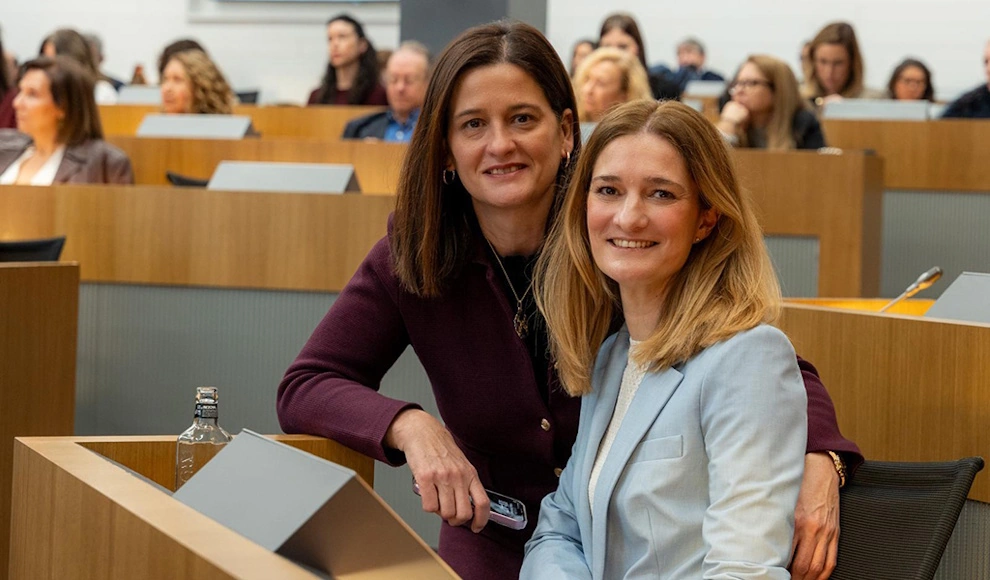
10. The association also maintains a strong commitment to social responsibility and solidarity. Why do you believe this commitment should be part of a business organization's activities?
ASEET’s commitment to social responsibility stems from the idea of giving back to society a part of what we have received. And that is a great deal. I believe that, both at a corporate and a personal level, committing to causes that go beyond your own needs and objectives opens your eyes to many other realities, helps you grow, and makes you recognise everything you’ve already achieved as an organisation and as a person. The saying that you get back much more than you give is true, even if it cannot be measured in monetary terms.
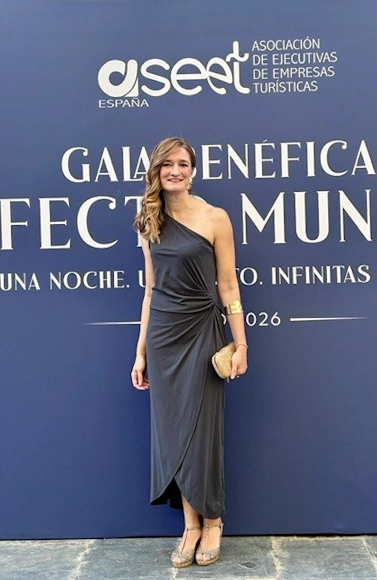
11. Málaga and the Costa del Sol They are home to a huge concentration of tourism businesses and professionals. From your perspective, what opportunities does a destination like this offer for fostering talent, leadership and new business initiatives led by women?
All of them are destinations with local produce, infrastructure and a thriving business community characterised by a high level of professionalism. They have everything needed to ensure that the women who are already there, building their careers and businesses, are recognised. With the support of organisations such as Skal Costa del Sol to give them that visibility.
12. Finally, if we look at tourism ten years from now, what would need to have changed for us to be able to say that female talent is fully represented, as a matter of course, in the sector's main decision-making spaces?
May we all have played our part in driving this change by taking small steps that contribute to it.