

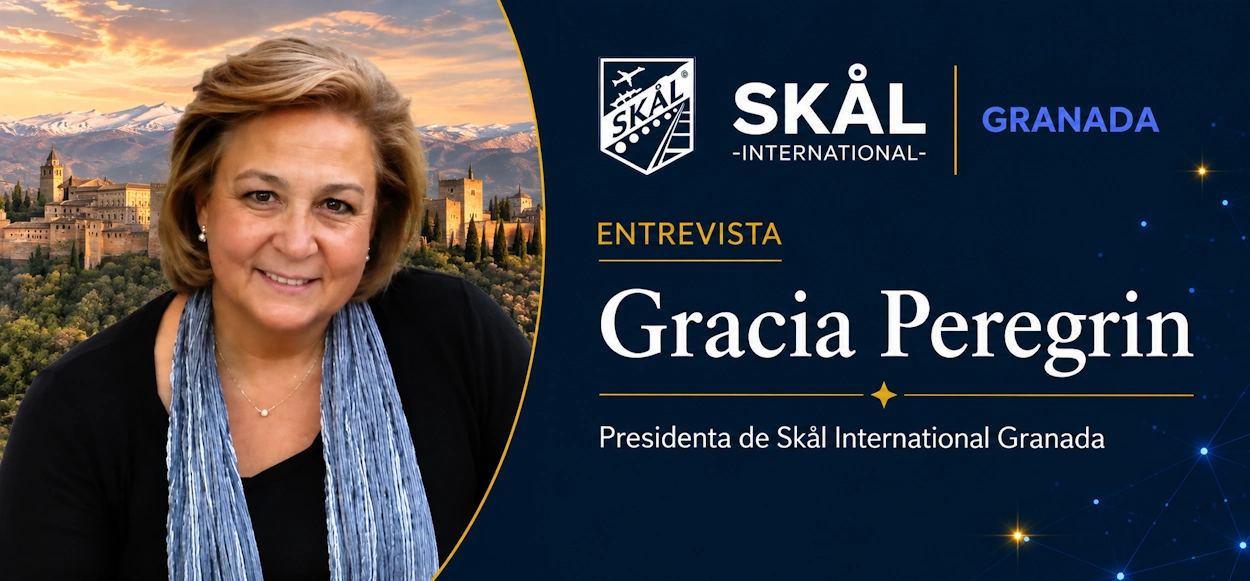
President of Skål Granada · Member of the Statutes Committee of Skål Spain
Gracia Peregrín Rubio has experienced tourism from very different and complementary perspectives. A graduate in Tourism and Art History, she has spent much of her professional career in public tourism management, culminating in her role as Director General of Tourism at Granada City Council. Alongside this experience, she has taught at the University of Granada and has a long-standing association with Skål. She was also the first woman to serve as president of Skål Spain, from 2011 to 2013.
Currently, as president Skål Granada and a member of the Statutes Committee of Skål Spain, she is familiar both with the day-to-day reality of a club and with the organisation's broader functioning.
In “Leading Skål”, we spoke to Gracia about Granada, tourism management, professional associations, new generations and the changes Skål needs to make as it looks to the future.
1. Gracia, your relationship with Skål has led you to take on responsibilities in different areas, and you are now at the helm of Skål Granada. What does it mean to you to lead your club, and what led you to take on this responsibility?
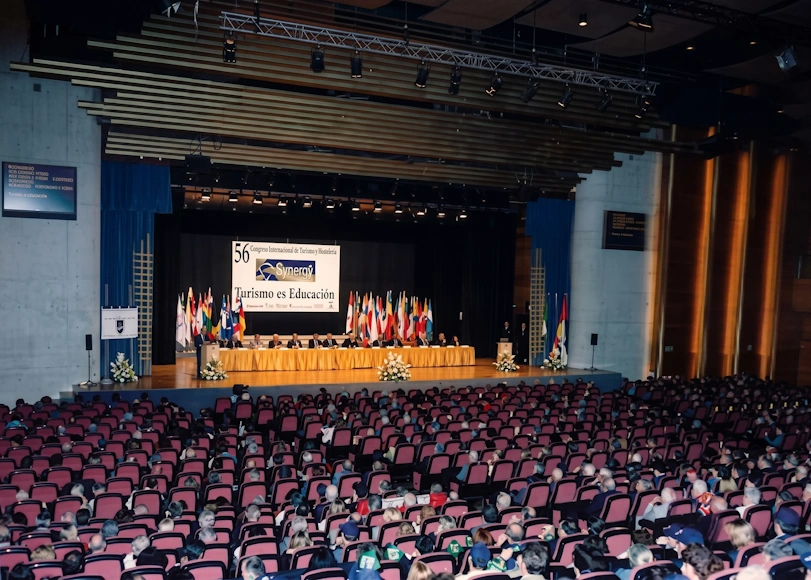
Leading the club is an honour because of its history and its close connection with the development of tourism in Granada since it was founded in 1964. That history also carries considerable weight: Granada hosted the 1995 World Congress, attended by 2,000 people, the largest participation to date, and was at the centre of a twinning ceremony with Jerusalem, where there was a single club in which, regardless of race or religion, everyone was united by tourism.
Taking on this responsibility at this time is also a significant challenge because of the structural changes that have taken place in the local tourism industry.
2. How would you define Skål Granada today, and what do you think distinguishes it within our organisation?
Today, Skål Granada is a club undergoing transformation. We need to address generational change and set realistic objectives that can attract new members while meeting both their social and professional expectations.
3. You have spent a significant part of your career in public tourism management. What has that experience taught you about the importance of public authorities, businesses and tourism professionals working together? Can Skål help build those bridges?
Governance in tourism is not only necessary but increasingly important in achieving sustainable development. At a time when overtourism is becoming a growing concern among residents, and when the perception of tourism as a sector offering little job security and limited social value is damaging its image, collaboration between the tourism sector and public authorities makes it possible to focus efforts on real needs and avoid wasting resources on ineffective measures.
Serving as both a bridge and a voice is undoubtedly one of our objectives. Skål Granada participates in initiatives that promote this type of governance, such as Granada's bid to become European Capital of Culture 2031. The agreement signed last year directly involves us in a project that will help shape the city's tourism development in the years ahead.
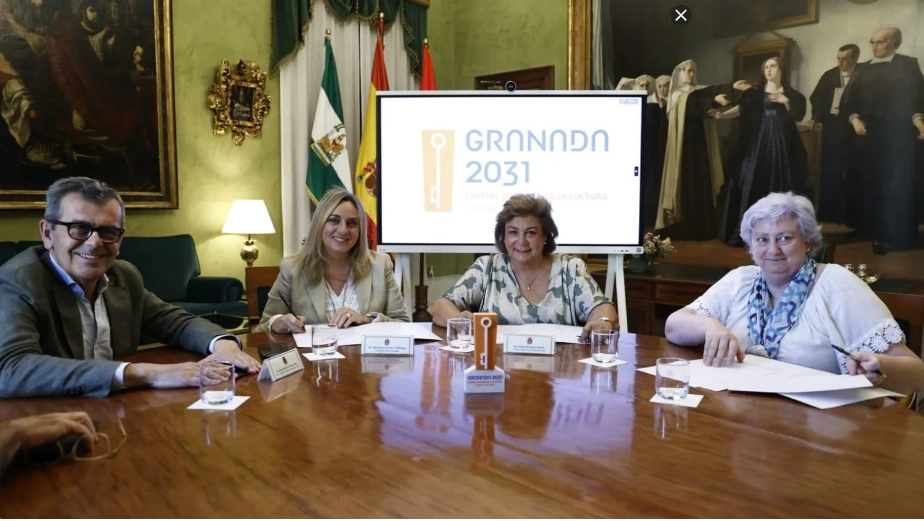
4. Granada combines heritage, culture, university, and tourism in a destination with enormous international potential. What do you think are its main tourism challenges today, and what role can Skål Granada play?
Sustainability, quality and professionalism are the main challenges.
In recent years, the city's accommodation model has changed dramatically. We have gone from a situation in which around 80% of hotels were locally owned and managed to one in which that figure is now around 20%. This has coincided with considerable growth in luxury hotels, which represents a significant step forward, but at the same time there has also been an increase in mass tourism associated with alternative accommodation, such as holiday rental apartments.
On the one hand, this means that many of the major companies now make their decisions outside the destination. On the other, the imbalance created by VUTs makes it more difficult to establish the necessary dialogue among all those involved and to reach a shared vision of how we want the tourism industry to develop.
Tourism depends on everyone: the industry, professionals and residents. Promoting the quality of services, the sustainability of both the destination and its businesses, and professionalism across all activities that contribute to Granada's tourism and cultural image will be among our main objectives in the coming years.
5. You also know the university world from the inside and are in direct contact with those who will become the tourism professionals of the future. What are we doing well, and what should Skål change to encourage new generations to become part of the organisation?
Our greatest asset for young people is the international nature of the association. Students see international training and internships as opportunities to gain real-world experience and improve their employment prospects, something we have not yet promoted sufficiently within Skål.
On the one hand, the University needs to engage with businesses to tailor training to the sector's needs; on the other, businesses need to make further progress in digitalisation and job stability. Skål Granada's proposal to develop a series of specialised micro-credentials in areas such as meetings, cultural events, heritage interpretation and gastronomy is a project we intend to implement next year.
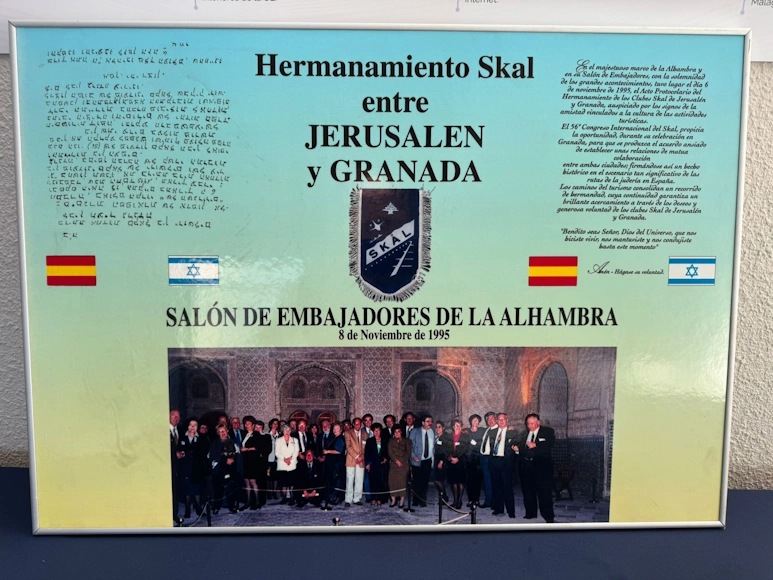
6. You are currently a member of the Statutes Committee of Skål Spain. Organisations with a long history need to preserve their essence while continuing to evolve. Do you think Skål is prepared to adapt to new ways of connecting, communicating and networking without losing what makes it unique?
What truly sets us apart is something that is highly valued in today's hyper-connected world: trust.
The confidence that comes from knowing that a Skål member is a tourism professional who will always be there to help is invaluable. Local clubs also allow us to gain a genuine understanding of the people behind a business.
It is true that generational change is proving difficult because I believe we have not yet managed to understand how young people communicate, which is essential if we are to convey our values and respond to their concerns.
7. If you were speaking to a tourism professional who did not yet know Skål, what would you say to explain why it is worth becoming part of this organisation?
Because of the genuine networking opportunities it offers and the trust you can place in the professionals you meet, from every sector of the tourism industry and from all over the world.
8. When your time at the helm of Skål Granada comes to an end, what would you like to have contributed and what kind of club would you like to leave for those who continue the journey?
I would like to have succeeded in connecting generations and to leave behind a club made up of people who share a passion for working in tourism.
Finally, complete this sentence: “For me, Skål is...”
For me, Skål is the community of people around the world who make tourism possible and share a passion for it.