

The Imserso social tourism programme for 2026–2027 begins a new travel season on 1 October. With nearly 880,000 places available, one of Spain’s most important social tourism programmes is back in action. But four decades after its inception, the question is no longer simply how many places are on offer or how much it costs to travel. It is also worth asking whether the model is evolving at the same pace as the older people who use it.
Today marks the restart of a tourism industry that, every season, draws in hundreds of thousands of people and whose impact extends far beyond those who pack their bags.
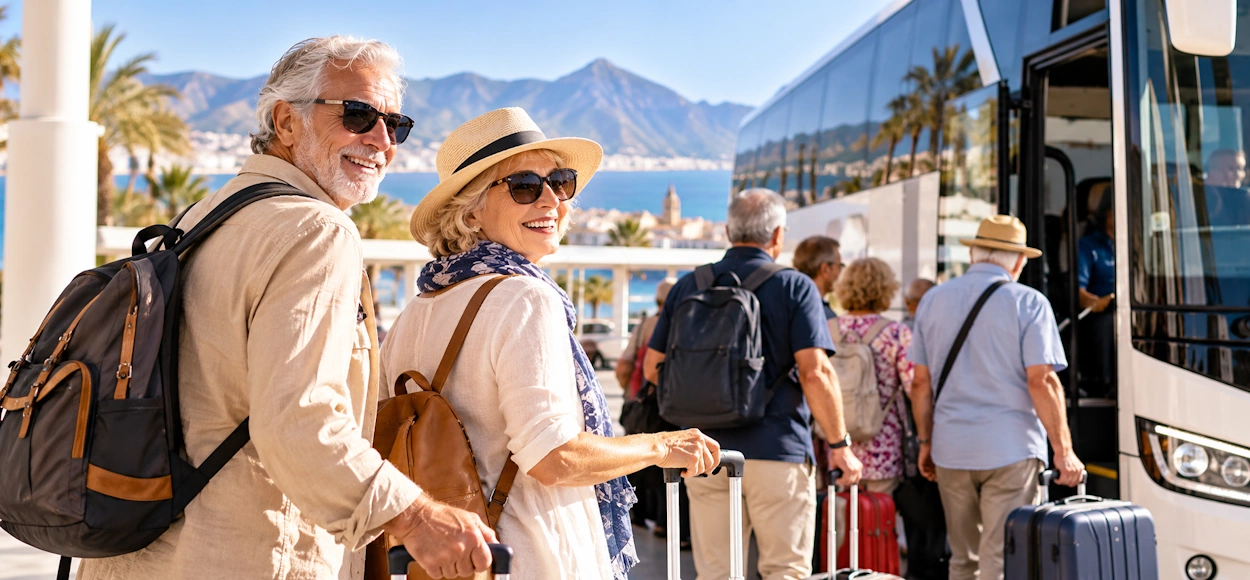
The first passengers of the 2026–2027 season will begin their journeys on 1 October, following the launch of ticket sales on 14 September. The first scheduled journey is to Oropesa.
The Imserso Tourism Programme is offering the following this season 879,213 places for a certified population of 4,602,255 people.
The figures give an insight into the scale of the programme, but they also prompt a broader reflection. Because talking about social tourism today means talking about travel, but also about active ageing, social relationships, accessibility, seasonality, employment in the tourism sector, and a senior traveller who bears little resemblance to those of several decades ago.
Imserso Social Tourism 2026–2027: nearly 880,000 places for a new season
The range is once again divided into three main categories. The tourism on the mainland coast accounts for 440,284 places, 50.1 % of the total. The island coastal tourism It has 228,142 places, representing 25.9 per cent of %. A further 210,787 places, representing 23.9 per cent of %, correspond to the so-called getaway tourism, which includes cultural tours, nature tourism, provincial capitals and trips to Ceuta and Melilla.
The programme also retains some of the measures introduced last season. These include 7,447 places at a price of 50 euros intended for pensioners on low incomes, as well as the option to travel with pets under certain conditions.
But perhaps the most interesting aspect is not just the figures. It is who is travelling.
The older traveller is no longer the same
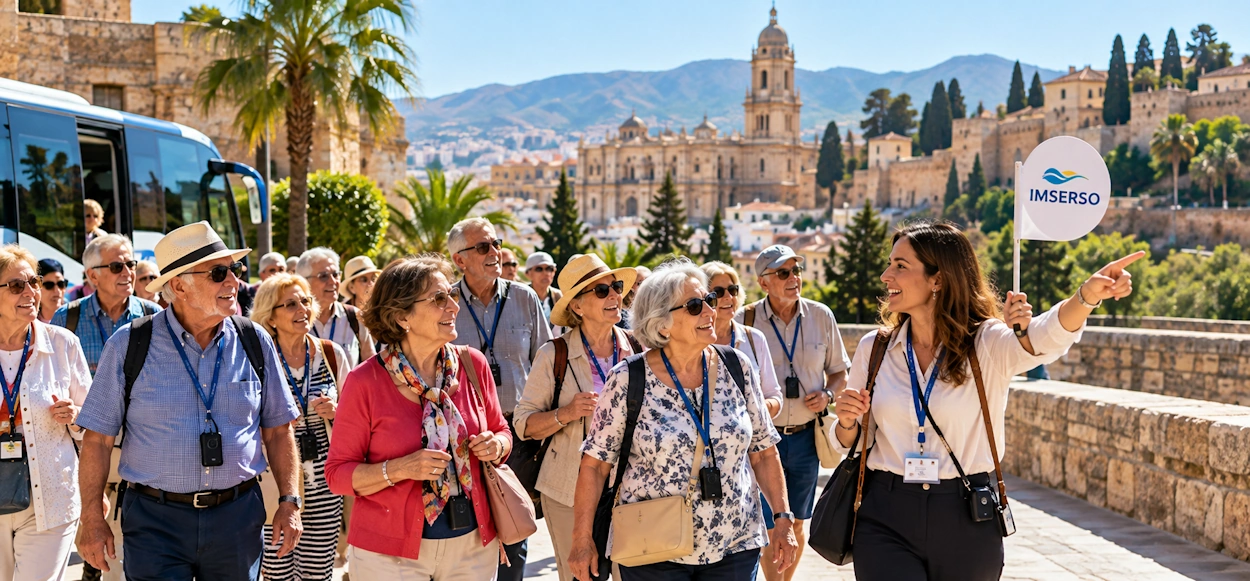
For a long time, senior citizens’ tourism has been discussed as if it were a virtually homogeneous group. This is no longer the case.
The term ‘senior traveller’ now encompasses people of completely different ages, financial circumstances, travel experiences, levels of independence and expectations.
Some travellers are looking for rest and security, whilst others are seeking culture, cuisine, nature, experiences, physical activity or destinations they have never visited before.
The latest projections from the National Statistics Institute currently put the number of people aged 65 or over at 21.1 % of the Spanish population. This is therefore not a marginal segment of the tourism market. It represents a growing section of society and, consequently, one of the major tourism markets of the coming decades.
People aged 65 and over also spread their trips more evenly throughout the year. It is precisely this ability to travel outside peak periods that makes senior tourism a natural ally of one of the sector’s key objectives: seasonal adjustment.
Much more than just a good-value holiday
To reduce social tourism to merely a subsidised holiday would be to oversimplify the scheme.
Imserso itself states that its objectives include promoting the independence of older people through cultural and recreational activities, helping to improve their health and quality of life, and encouraging active and healthy ageing.
There is also another aspect that has become increasingly important: unwanted loneliness.
Travelling means a change of scenery, but it also means socialising, sharing experiences and rediscovering spaces for social interaction. For some people, it may simply be an opportunity to explore a destination. For others, it can mean something far more significant: getting out and about again, socialising and feeling like an active part of society.
That social aspect is probably one of the programme’s greatest strengths and, at the same time, one of the aspects that receives the least attention when, each season, the debate centres on venues, prices, contract awards and hotels.
Agencies continue to play a role
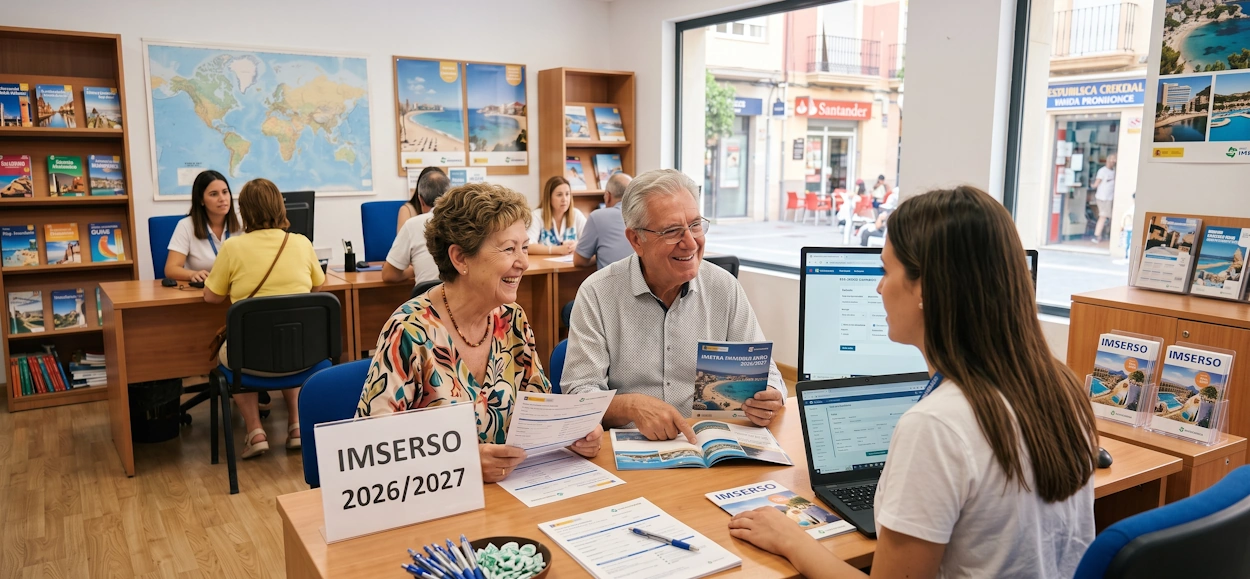
Digitalisation has also transformed the way in which people access the programme.
At present, bookings can be made via the platforms of the successful bidders, but the model retains the option of visiting the partner travel agencies.
This is no minor detail. Technology makes processes easier for many users, but digitisation should not necessarily mean doing away with personal support, especially when we are talking about a group that is hugely diverse in terms of digital skills and habits.
Through the Imserso Social Tourism programme for 2026–2027, the agency continues to offer something that is difficult for a platform to replace: advice, explanation and trust. The challenge is probably not to choose between technology and personal attention, but to ensure that the two can coexist.
Social tourism and seasonality management
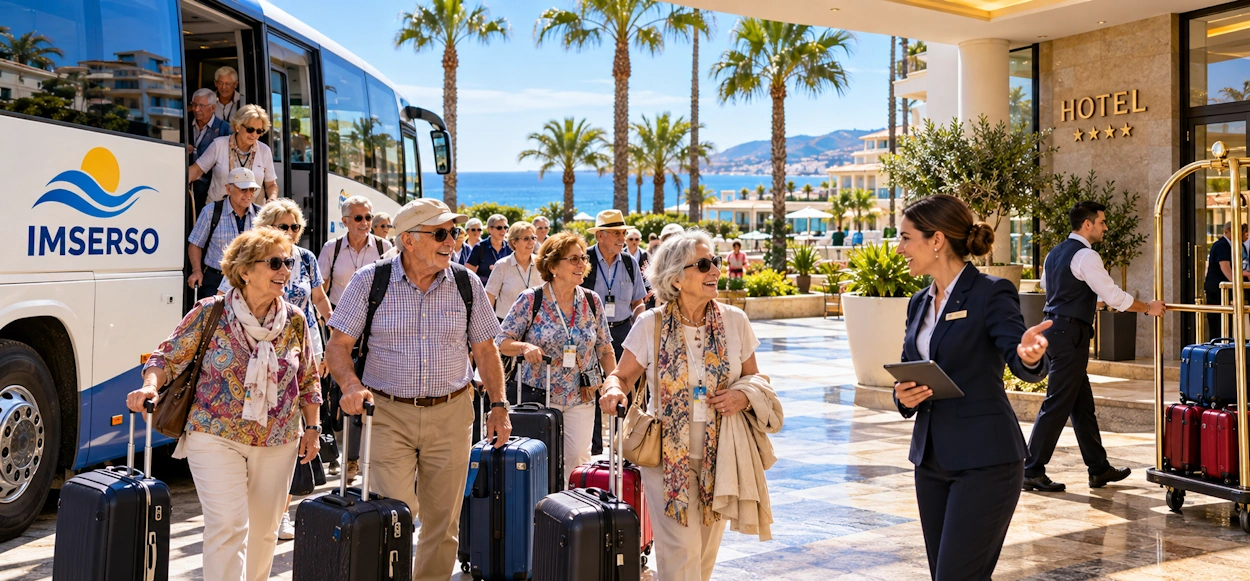
There is also another aspect of the programme that directly affects the tourism industry.
Social tourism also emerged as a means of helping to sustain business and employment during the months when demand is lowest. Hotels, travel agencies, transport companies, restaurants, tour operators and numerous other services at the destinations are involved, either directly or indirectly, in this activity.
In tourist areas particularly vulnerable to seasonal fluctuations, retaining visitors throughout autumn, winter and spring can mean keeping businesses open, safeguarding jobs and maintaining services that would otherwise see a significant drop in activity.
That is why the debate on the future of Imserso does not affect only older people. It also affects the tourism model.
And this raises an issue that periodically sparks controversy: how to ensure that the programme remains socially accessible whilst also being financially sustainable for the companies taking part in it.
Accessibility also means being able to travel
There is also an aspect that directly links social tourism with another of the major challenges facing the tourism sector: accessibility.
A population that is living longer needs destinations that are equipped to cater for the different stages of life. This means accessible hotels, adapted transport, clear information, suitable itineraries and staff capable of responding to different needs.
But it also means something less obvious: peace of mind. Knowing before you travel what you can expect at your destination can make the difference between deciding to travel or staying at home.
Senior tourism and the accessible tourism They are not equivalent concepts, but they inevitably share many challenges.
Senior tourism goes far beyond the Imserso scheme
There is also a fundamental issue: Not all senior tourism is social tourism.
Travellers aged over 65 constitute an increasingly significant tourism market in their own right. They travel independently, book through travel agencies, stay in hotels, go on organised tours, cruises and short breaks, and, in many cases, offer something particularly valuable to destinations: the flexibility to travel out of season.
Imserso plays an extraordinarily important role in this context, but it is not the whole picture.
That is why the time may have come to stop viewing older travellers solely in terms of their age and start looking at them in terms of their diverse interests, abilities and ways of travelling.
A 65-year-old may have twenty or thirty years of travelling ahead of them. And they probably won’t want to go on the same trip for all that time.
Forty years on, a new question
The Imserso Tourism Programme has been running for four decades and is now an integral part of Spain’s tourism and social history. The fact that it continues to operate demonstrates that there is still a need and demand for it.
But it is precisely because of its importance that it deserves constant consideration.
Today’s older people travel more, have access to more information, have gained more experience of travelling, and make up an increasingly diverse group.
The challenge is no longer simply to maintain a programme that has proved its worth. It is to ask ourselves how it needs to evolve in order to remain useful over the coming decades.
Do we need more destinations? More personalised products? Greater flexibility? A deeper integration of culture, gastronomy and nature? A new balance between digitalisation and personalised service? And how can we ensure that travellers, agencies, hotels, destinations and public authorities find a sustainable model that works for everyone?
On 1 October, travel will resume. But perhaps it’s also a good time to start something else: a discussion about the kind of social tourism we want for the future.
From Sinergia Skål, We will continue this discussion over the coming weeks, drawing on the views of tourism professionals, businesses, organisations and representatives of older people themselves.
Because talking about the future of social tourism is, in fact, also talking about the future of a society that is living longer and wants to continue travelling.
Sources
Imserso Tourism Programme · National Institute of Statistics