

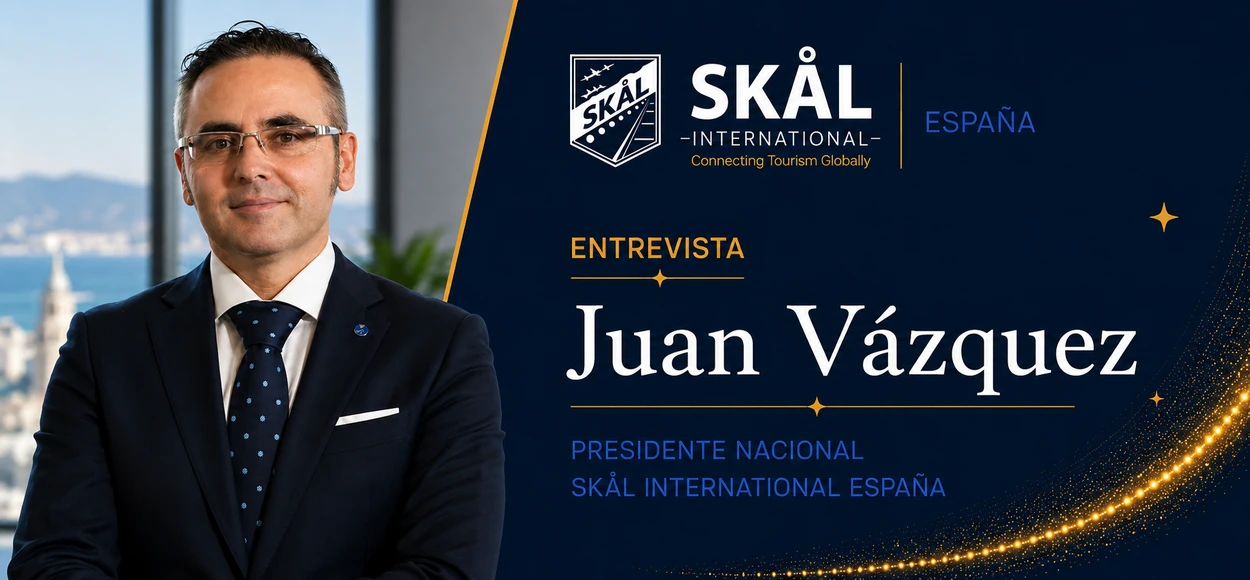
Juan Vázquez describes himself as "the eternal learner." Restless by nature, he admits that he is never fully satisfied with what he has achieved because he always thinks he could have done more or done it better. This constant need to learn, question, and improve also helps to understand his approach to the national presidency of Skål Spain.
His entry into tourism wasn't the result of a pre-established plan. It came about, as he himself acknowledges, by chance. Nor did Skål emerge as a calculated decision: a lunch, a second visit, and the feeling that those walls held a wealth of knowledge ended up transforming a coincidence into an important part of his professional and personal life.
As national president, he advocates for an organisation that is more attuned to the real needs of its members and capable of transforming their extraordinary professional diversity into knowledge, collaboration and opportunities. In this conversation, Sinergia Skål, Get to know the professional, the Skålega and, above all, the person behind the role.
Before talking about the president of Skål Spain, who is Juan Vázquez?
It's a difficult question to answer in the first person, since our self-perception is always distorted. Professionally, I'm a very restless person. Knowing that I know far less than I do, my main concern is to never stop learning and to apply what I've learned in every situation where I can contribute to improvement. Those who know me are well aware of how restless I can be. You could sum it up as "the eternal learner."
You came to tourism almost by chance. Who have been especially important in your career?
In the tourism industry, I've been fortunate to meet some wonderful people who have enriched my life. I'm here today thanks to Enrique Cibantos, who helped me with my first major project, not only by sharing his knowledge but also by instilling in me the confidence that I could do it; Ángel Carazo, who gave me my first opportunity to work in accommodation management; the Sevilla Rodríguez family, who helped me establish myself permanently in the sector; José María Úbeda, who encouraged me to take the next step within Skål and who helps me every day; Clemente Torras, who opened doors for me at Skål outside of Málaga; and José María Yagüe, who sadly is no longer with us, but who gave me the confidence to believe I could contribute more to Skål than I ever imagined. Without them, I wouldn't be on the Costa del Sol or at Skål today.
From the outside, we usually see the successes. Have you ever had moments when you genuinely doubted which path to take?
Beginnings are always difficult, especially considering that my initial training and professional background weren't related to tourism, which I entered by chance. There were several times when I wondered if my future lay in tourism, but just when it seemed I should look for new horizons, an opportunity would arise that allowed me to continue. One of my first disappointments was the first major strategic project that aimed to contribute to the change the destination needed, only to end up gathering dust in a drawer at the Public Administration. Not all professional satisfaction comes from financial compensation: every project carries a part of you, and if it fails, it causes the same disappointment as a personal failure.
What are you truly proud of professionally?
I'm never satisfied with what I do, so I'm not particularly proud of anything I've done so far. Looking back, I always think I could have done more and that what I did, I could have done better.
How did Skål come into your life and what made you stay?
It all happened by chance. I was invited to lunch at the Club and met some of the members there. A few months passed, and I returned to the Club one afternoon, where the conversation with the members was more relaxed and informal. From then on, I started going there regularly until I became a member myself. What made me stay was the feeling that within those walls there was a wealth of knowledge, freely available to anyone who wanted to ask.
What impression did that first lunch make on you?
The club's most veteran members were there, and the feeling was that of a group of people who had known each other forever, who met simply for the pleasure of seeing one another, and who, far from maintaining the distance that their professional backgrounds entitled them to, treated you like any other friend. This, which might seem normal in certain circles, was not what I had experienced in other environments, so it made a big impression on me.
When did Skål stop being an association you belonged to and become something you were willing to take responsibility for?
From almost the very beginning, I realized that Skål held a wealth of knowledge available to anyone willing to ask, but at the time it largely went unnoticed. I felt I had discovered it almost by chance, and that I could just as easily have missed it and, with it, the opportunity to enrich myself professionally. Something like that couldn't be left to chance, so we had to work to make it known.
Becoming the national president involves dedicating many hours and making decisions that won't always please everyone. Why did you decide to do it?
That's why I do everything: I believe things can be done differently and that no one is going to come in and change them. If I think I can contribute, I roll up my sleeves and get to work. Obviously, none of that is possible without a team to support you and help you bring your ideas to fruition, not only by working to implement them, but, more importantly, by questioning them and proposing better ones.
From your business experience, what gap do you observe between management theory and the daily reality of the tourism sector?
There are two fundamental issues. On the one hand, classical management theory places the company at the center and, from there, designs a product aimed at maximizing profitability. Modern management, however, requires putting the customer, their needs and preferences, at the center and designing a product that meets them. It's not about creating the product that pleases the business owner, but the one that satisfies the customer. The other issue is the sector's constant evolution, which demands agility and is incompatible with excessive bureaucracy. Public administration and the market move at different speeds. Public administration must provide support, assistance and certainty; it cannot become an obstacle that holds back activity.
Where is the balance between professionalizing management and maintaining the responsiveness that tourism demands?
Professionalizing doesn't mean standardizing. A professional is someone who knows the sector they work in, and that's what allows them to standardize certain processes, not the other way around. The person leading a company doesn't just oversee protocols; they must be aware of any changes in order to react quickly. To achieve this, you need knowledge, time to observe the sector—something impossible if bureaucracy consumes you—and an equally trained and committed team.
Technology and artificial intelligence are transforming the sector. How far can they go without losing the human element?
Technology is an extraordinary tool, but it's not the solution in itself. First, we need to know what we need and then look for the tool that will help us. Artificial intelligence will transform tasks and processes and give us access to much more information, but there are aspects it can't easily replace: personal relationships, trust, the ability to truly understand what another professional or a client needs, and ultimately, the ability to improvise. In an experience-based sector, people will remain fundamental.

Skål brings together professionals from very different fields. Can this diversity become a real asset for the sector?
Absolutely. The tourist experience begins the moment they decide to take a trip and never truly ends, because even after returning home, it continues with memories and connections. We can't focus solely on the service each of us provides; we need to understand and nurture the entire chain. At Skål, we have partners across various sectors: agencies, hotels, transportation, tour operators, institutions, services, training providers… Each one experiences a different aspect. When we share this knowledge, we all learn. It's not just about making contacts; it's about generating knowledge and opportunities from those contacts.
You said that "the organization must stop being a burden and become an ally." What exactly does that mean?
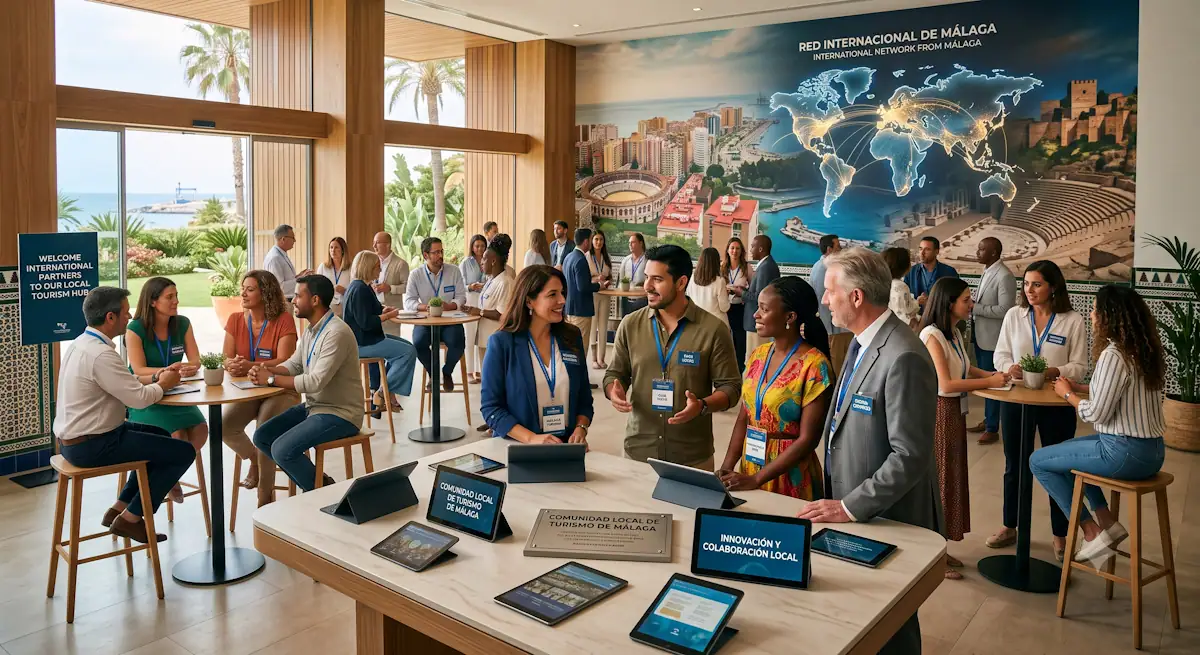
The main problem is common to many organizations: the disconnect between the board's objectives and the members' interests. If we want the Club to be attractive, for members to get involved, and for initiatives to be effective, we must ensure they feel a connection not only with the Association itself, but also with specific projects. Lack of time often leads members to delegate to the Board, and over time, this can lead to a sense of distance. As they say in personal relationships, familiarity breeds fondness. Without this ongoing interaction, it's very difficult to feel a connection between the Association and the professional needs of each member.
Are we losing part of the corporate culture based on personal contact?
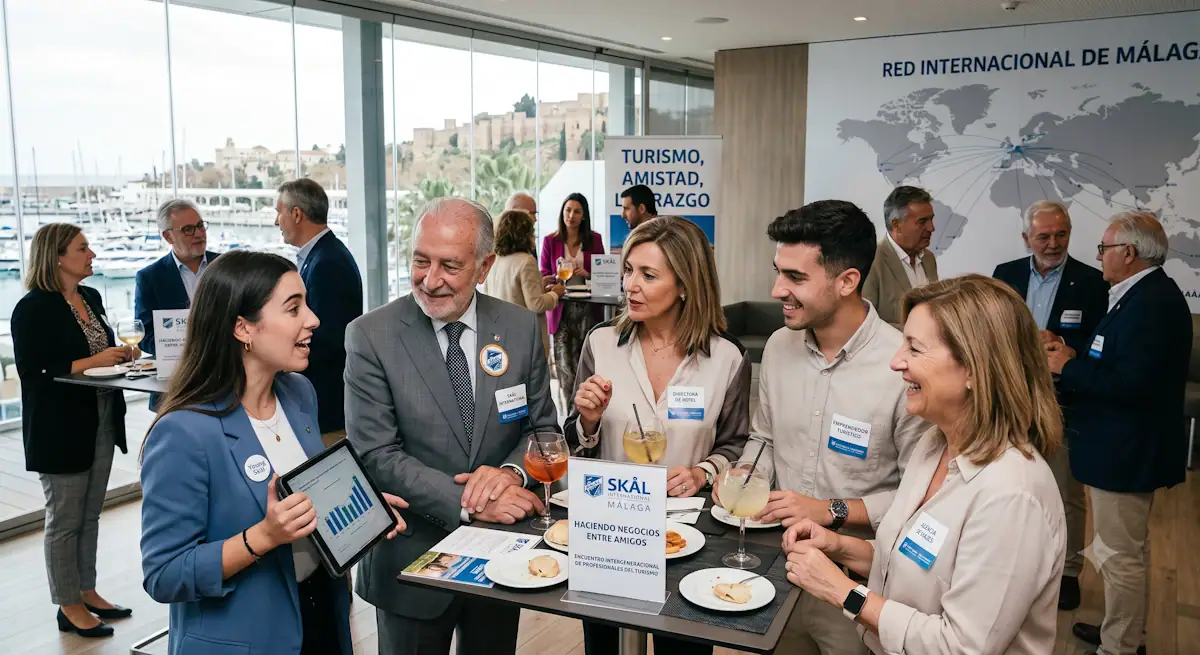
We have more communication channels than ever before, and paradoxically, often less time to talk face-to-face. Personal contact remains essential, especially in tourism. A conversation, a meal, a professional meeting, or a recommendation can foster a business relationship that's difficult to achieve solely through a digital platform. Reclaiming the value of professional relationships doesn't mean going back to the past; it means incorporating the best aspects of those relationships into new ways of doing business.
If a 35-year-old tourism professional asked you, "Why do I need Skål?", what would you answer?
To feel heard. Sooner or later, you'll need someone to listen to your project, understand it, and give you an opinion based on their experience, going beyond balance sheets, profit and loss statements, and funding options. That's true support, which isn't just about telling you, "Go for it, you can do it."
What kind of tourism would you like to see in ten years?
Tourism that is more integrated into its environment, considered as an industry rather than something everyone talks about and proclaims its socioeconomic importance, but which, in reality, they neither respect as an industry nor understand as an activity. Tourism that focuses on what it has always been: the means by which tourists' dreams come true, and not merely the cash cow everyone tries to milk. To achieve this, we need to work together.
What is your priority as national president?
The organization aims to contribute to the sector as a whole, and particularly to the destination, by drawing on all the knowledge its members possess—knowledge that undoubtedly contributes to successful and sustainable development. I want professionals to think of Skål as people, opportunities, knowledge, and collaboration. We have an extraordinary network and a rich history. The challenge is to transform all that heritage into value for the present and the future.
Leading a national organization also comes at a personal cost. What does it mean for you?
It means dedicating part of your vacation time to Association commitments, spending some of your free time attending events to which the Association is invited, and devoting another part to supporting events held at the Clubs. There are some unpleasant experiences you could perhaps avoid, but all of this, which would be pointless if done out of obligation, becomes a source of enjoyment when you do it because you feel comfortable and fulfilled in what you are doing.
After so many years of tourism and Skål, what still manages to excite you?
Every day is a different day that tests you. My main motivation is the continuous challenge.
When your time as national president is over, what would you like your colleagues to say about Juan Vázquez, not the president?
I would like them to have a new friend in their personal address book, someone they know they can always count on and meet up with simply for the pleasure of seeing each other.
And if you had to define Skål in a single sentence, what would it be?
One of the last remaining bastions of personal connection in an increasingly impersonal world.