

Gran Canaria is one of Spain's most established tourism destinations and, at the same time, faces new challenges: diversification, connectivity, major events, urban tourism, sport, health and wellness. In this context, opportunities for professionals to meet and exchange ideas take on particular importance.
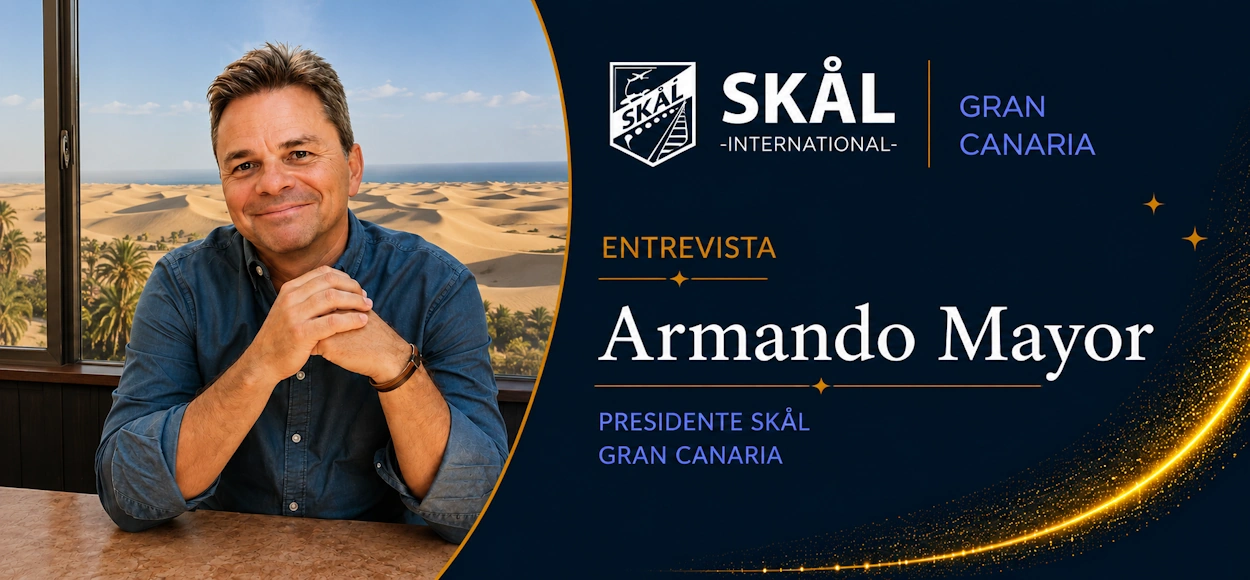
in October 2024. Since then, the club has promoted professional meetings focusing on the present and future of the destination, strengthening its role as a forum for dialogue, debate and collaboration among tourism stakeholders. Skål International Gran Canaria in October 2024. Since then, the club has promoted professional meetings on issues related to the present and future of the destination, reinforcing its role as a space for relationship, debate and collaboration between the different actors in tourism.
His experience leading Kalima Publicidad, an agency specialising in media buying, brand strategy, communication and tourism marketing, provides the perspective of someone who has spent years connecting brands with audiences. At Sinergia Skål, we talked to him about Gran Canaria, communication, events, new tourism opportunities and Skål's role as a professional meeting point. Sinergia Skål, We talked to him about Gran Canaria, communication, events, new tourism opportunities and about Skål's role as a professional meeting point.
1. Armando, you took over as president of Skål International Gran Canaria in October 2024. How did you first become involved with Skål, and what led you to take on the responsibility of leading the club?
My first contact with Skål was as an attendee at its events in Gran Canaria in the mid-1990s. Having just completed my Tourism degree, I was working as a tour guide for the tour operator Tiempo Libre Mundicolor, and I thought it was an excellent initiative by Skål to bring together professionals from across the sector, strengthen relationships and discuss tourism and its development in the Canary Islands.
When Manuel Florido took over as president, he asked me to join the board as vice-president. Skål Gran Canaria has always been very active in the islands, and in October 2024 I took over as president with the aim of ensuring the continuity and maximum visibility of the project initiated by Manuel and the rest of the board, made up of Javier Vega, David Morales and Jaime Arista.
2. Gran Canaria is home to one of Skål's historic clubs in Spain. What does it mean to you to carry on that legacy, and what new contributions do you hope to make during your time as president?
It is a great honour to inherit the legacy of my fellow members and, at the same time, a great responsibility. With everyone's support, we have set out to organise themed events that can achieve the greatest possible media impact. I firmly believe that we need to communicate what we do so that society, as well as Skål members and supporters, are properly informed.
Another of our objectives is to support initiatives that contribute to improving the tourism sector, whether they come from public institutions or the private sector.
3. Since taking over as president, you have promoted a number of professional meetings and debates. Beyond friendship and networking, do you want Skål Gran Canaria to become a genuine forum for reflection on the future of tourism on the island?
Yes, of course. In fact, in Gran Canaria, Skål is already firmly established as an important forum for discussing the future of the sector, with leading tourism professionals and key institutional representatives attending our events to contribute ideas and solutions that help strengthen Gran Canaria as a tourism destination.
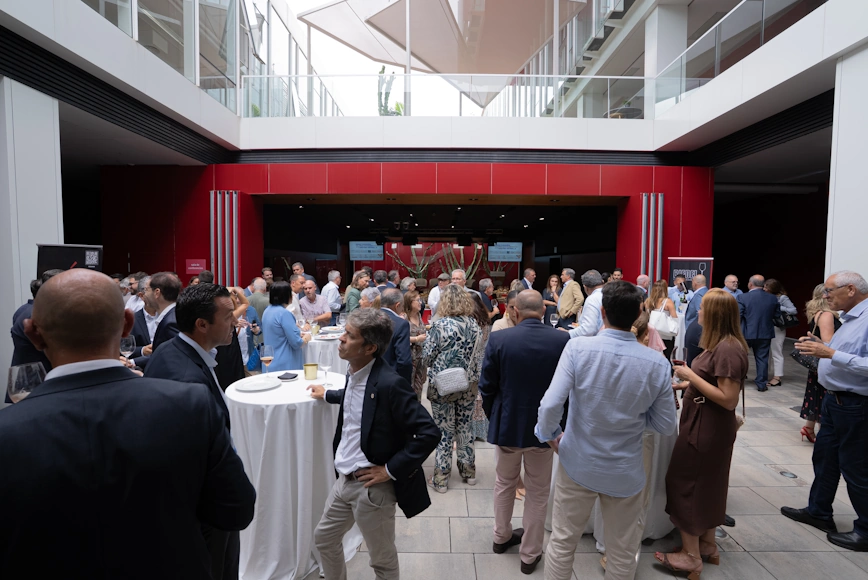
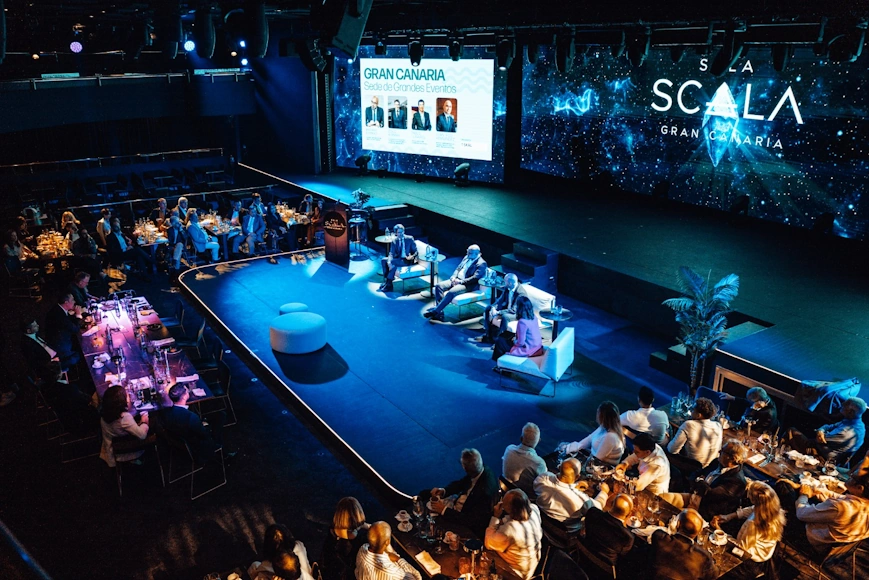
4. One of these areas of reflection has been the role of major events, conferences, incentive trips, and shows. To what extent can they become a tool for diversifying demand and strengthening Gran Canaria's international positioning?
Major events, conferences, incentive trips and shows can become a powerful strategic tool for diversifying tourism demand and strengthening Gran Canaria's positioning, provided they are planned as part of an overall destination strategy rather than as isolated initiatives.
Furthermore, they offer an exceptional opportunity to promote the Gran Canaria brand internationally. A professional conference, a sporting event, a festival or an international show not only attracts attendees, but also generates brand awareness, digital content, media coverage and word-of-mouth recommendations. When well managed, each event can serve as a showcase for the destination and help position Gran Canaria not only as a sun and beach destination, but also as a place capable of hosting top-tier professional, cultural, sporting and entertainment experiences.
5. You have also opened the debate on urban tourism and the Las Palmas de Gran Canaria model. Is the capital finding its own tourist identity, one that complements the island's traditional holiday model?
Yes. Las Palmas de Gran Canaria is developing its own distinctive and highly successful tourism identity thanks to the strong commitment of its institutions and, above all, its businesses and employees. Its main opportunity lies precisely in complementing the sun and beach holiday model of southern Gran Canaria rather than competing with it.
The city brings together several elements that are difficult to replicate in a traditional holiday destination:
· Vegueta and Triana, with their historical heritage and colonial architecture.
• Las Canteras, which makes it possible to combine beach and urban life all year round.
. Museums and cultural venues such as Casa de Colón, Museo Canario, CAAM – Centro Atlántico de Arte Moderno and the Elder Museum of Science and Technology.
• A gastronomic and restaurant scene that is an attraction in its own right.
. The port and cruise tourism, which attract a different visitor profile and create different patterns of tourism consumption.
6. Gran Canaria will be one of the Spanish host cities for the 2030 FIFA World Cup. Beyond the championship itself, what opportunity does an event of this magnitude represent for the island's image, infrastructure, and tourism promotion?
This is an event with enormous potential for Gran Canaria because of the global reach of sport, and especially of a World Cup. Gran Canaria already has experience in hosting major events and has first-class infrastructure. The World Cup will enable the island to reach new markets and attract new types of visitors.
In addition to the immediate increase in visitor numbers, the event can generate a lasting positive impact and encourage future visits, especially if football is combined with the island's leisure activities, gastronomy, nature and heritage. Hotels, restaurants, shops, transport providers, audiovisual companies and other service providers can all benefit from the event. It can also provide an opportunity to position Gran Canaria as a destination for future conferences, competitions and major international events.
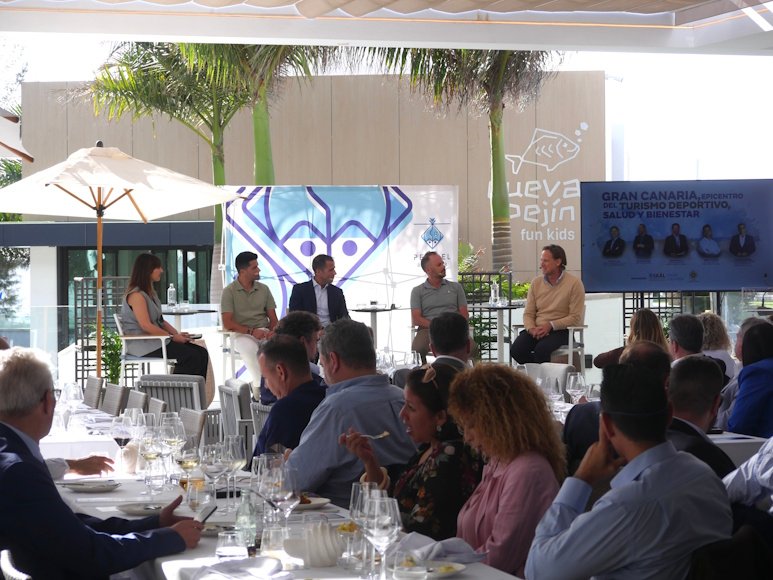
7. Another area with great potential is sports, health and wellness tourism. Can Gran Canaria turn its natural conditions and tourism expertise into an even greater competitive advantage in these segments?
Yes. Gran Canaria is already recognised as a comprehensive year-round destination for performance, recovery and wellness. It combines active tourism with the pursuit of experiences that promote well-being, better health and longevity. The challenge is to turn the island's natural advantages into a specialised, measurable and internationally recognised value proposition.
8. Your professional role at the head of Kalima Publicidad brings you into direct contact with brands, media outlets and companies. After more than twenty years of transformation in communication, has the way we should promote a tourism destination like Gran Canaria also changed?
Yes, it has changed a great deal. Twenty years ago, promoting a destination largely meant showcasing its beaches, climate, landscapes and cuisine. Today, that is no longer enough. We live in an environment where travellers have access to a vast amount of information and can compare destinations, experiences and opinions in a matter of seconds.
It is no longer simply about saying “come to Gran Canaria”, but about conveying why the island is worth experiencing, the emotions it can evoke and the unique experiences it can offer.
Furthermore, Gran Canaria has a major advantage: it offers much more than sun and sand. It has nature, culture, gastronomy, sport, heritage, diverse landscapes and a unique identity. The challenge lies in communicating all this richness in a contemporary, relevant and authentic way, adapting the message to very different audiences.
In this regard, I must highlight the work of Gran Canaria Tourism. They are doing an excellent job in improving connectivity and promoting the island, with the support of local businesses and the people of Gran Canaria.
After more than twenty years working in communication, I would say that the biggest transformation has not been purely technological. The relationship between brands and people has changed, and this also requires destinations to be more authentic, more creative and, above all, more aware that every visitor can become their best ambassador through the experience they share.
9. Today, a destination is shaped simultaneously through print media, television, social networks, digital platforms and the experiences shared by travellers themselves. What does a tourism brand need to stand out in an environment with so many messages and channels?
Above all, a tourism brand needs a clear, authentic and consistent identity across all channels, while the destination itself needs a story of its own that makes it recognisable and memorable.
In my experience, differentiation is not about communicating more, but about having something relevant and distinctive to communicate. A strong tourism brand ensures that travellers not only recognise the destination, but also remember it, want to experience it and share that experience with others.
10. Your professional experience is centred on connecting brands with audiences, while Skål seeks to connect people and professionals. What can these two worlds learn from each other, and how can effective communication help strengthen Skål's value?
I believe both worlds have much to learn from each other. In communication and marketing, we constantly work on understanding people: what motivates them, what they need, what builds trust, and above all, what makes them want to travel to a destination.
Brands have learned that simply conveying a message is no longer enough; they need to build connections, foster conversation and create experiences. Skål, for its part, has something many brands seek but do not always achieve: a genuine community built on personal and professional relationships, trust and shared experiences.
Effective communication can greatly enhance a brand's value by allowing it to articulate and showcase everything a destination offers. Skål provides an opportunity to tell its own stories: who its members are, what opportunities they create, what projects they drive, what connections are forged within Skål and what impact this network has on the tourism sector.
11. One of Skål's biggest challenges is attracting new generations of entrepreneurs and managers. What should a club like Skål Gran Canaria offer today to make a young professional feel that it is worth dedicating their time to and becoming part of it?
Networking. A club like Skål Gran Canaria has to offer something that is especially valuable for a young professional today: quality connections, real opportunities, and a shared purpose.
New generations do not join an organisation simply out of tradition or a sense of belonging. They need to feel that their time is well spent, both professionally and personally. That is why Skål should be a place where they can meet other entrepreneurs and managers, create business opportunities, share knowledge and explore new possibilities, while also contributing their own ideas and playing an active role.
Above all, we must convey that Skål is not simply a club to belong to, but a community to participate in. If we can help a young professional find a network of people in Gran Canaria from whom they can learn, with whom they can collaborate, do business and grow, then they will have good reasons to dedicate their time to Skål and remain part of it.
The great challenge is to preserve the values that make Skål special —friendship, camaraderie and collaboration within the tourism sector— and, at the same time, adapt them to the language, needs and expectations of new generations.
12. Finally, behind the president of Skål Gran Canaria and the managing director of Kalima Publicidad is Armando Mayor himself. After so many years involved in communication, tourism and working with the people who make it possible, what continues to inspire you about this sector?
I'm passionate about tourism and communication, and it gives me great satisfaction to see millions of people choosing Gran Canaria for their holidays year after year. I have many friends whose families have been coming to the island for decades, and I love being their host.
Tourism and communication have changed a great deal, especially in recent years, but that ability to connect, to create experiences, and to tell stories that leave a lasting impression remains. I'm motivated to keep learning, to meet new people, to support projects that add value, and above all, to contribute to ensuring that Gran Canaria continues to be a destination we can be proud of.
Finally, complete this sentence: “For me, Skål is...”
For me, Skal is an organisation that brings together tourism professionals, where people are the most important thing.
People who come together, who share, who help one another and who build relationships that go far beyond the professional sphere.
Behind every company, every role and every project, there is always someone with their hopes, their concerns, their experiences and their desire to make a contribution.
And that, for me, is where Skal’s true value lies: in the human connections we are able to forge.
It is also a way of experiencing tourism. Because tourism, rather than just hotels, restaurants, travel or destinations, is about people coming together. And Skal represents precisely that: people who use these encounters and discussions as a means of building something.
As president of Skal Gran Canaria, I would like our organisation to continue to be a place where no one feels like just a member, but rather part of a professional and caring family.
Because in the end, as the years go by, we may not remember every meeting or every event. What we will remember are the people we met, the conversations we had, the helping hands we received and the friends we made along the way.
That’s what Skal means to me: a professional network dedicated to helping and working together with everyone