



Tourism is an increasingly complex activity in which companies and professionals must operate in an environment shaped by new regulations, growing demands for consumer protection and technological transformation that continually brings new challenges.
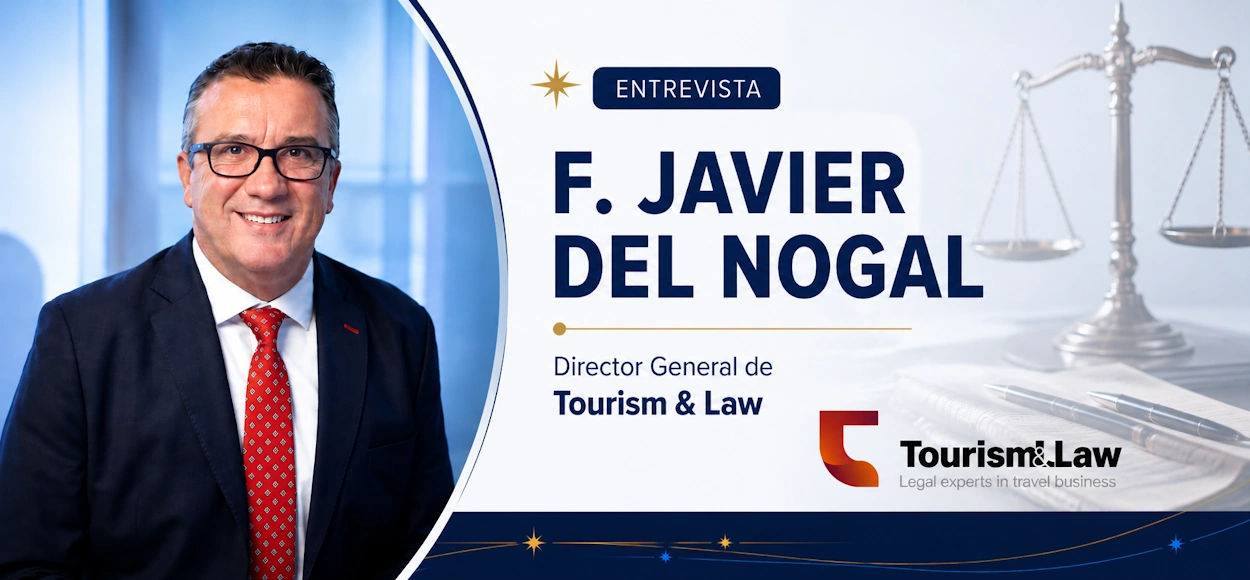
With a professional career spanning several decades in the tourism sector, Francisco Javier del Nogal has combined law, business management, insurance and risk prevention, specialising in legal matters that directly affect the day-to-day operations of tourism companies.
In At Sinergia Skål, we spoke with him about legal certainty, prevention, travel agencies, traveller rights, new technologies and the main legal challenges facing tourism in the coming years.
1. Javier, you have spent virtually your entire professional career working in law and tourism. What led you to specialise in an area as specific as tourism law?
Honestly, it was partly by chance. When I finished my law degree and started looking for a job, the first company to give me an opportunity was part of the Julià Group. From then on, as I have always been passionate about travel and tourism, I tried to focus my professional career on companies in the tourism sector, such as Julià Tours and Autocares Julià, always from a legal perspective. Little by little, I specialised in tourism law.
My move to what is now the Atlantigo Group , with the creation of the firm Tourism & Law, represented a significant step forward in both my personal and professional development and consolidated my commitment to tourism law.
2. Tourism & Law places particular emphasis on the concept of legal prevention. Do too many companies still only consult a lawyer once a problem has already arisen?
Fortunately, our emphasis on the importance of preventative advice is working, and more and more agencies and companies are relying on us for help and advice before a problem arises.
However, many companies still only come to us once the situation has already become a serious problem. And, of course, they are right to do so; that is what we are here for. But in most cases, if the company had contacted us much earlier and allowed us to advise them from the outset on developing their business, drafting documents and contracts, making complex decisions or responding to clients, the problem would not have needed to be resolved because it would probably never have arisen in the first place.
That is why we place so much emphasis on preventive legal advice. I know this is probably not the best business model, since clients are more likely to pay their bills when they have pressing problems. But we will continue trying to convince them that, in the medium and long term, the most cost-effective option is to have the right legal advice available on a day-to-day basis. As the saying goes, “prevention is better than cure”.

3. Tourism is subject to increasingly broad and complex regulations. Is there a risk that excessive regulation could ultimately harm the competitiveness of tourism businesses?
First of all, it must be said that proper regulation of tourism activity and effective monitoring of compliance are essential to ensure, among other things, respect for the rights of all parties, prevent unqualified operators from entering the market and remove fraudulent businesses or those that fail to meet minimum professional standards.
However, striking the right balance between the need for regulation to properly organise business activity and the legislator's responsibility to facilitate business development without creating unnecessary obstacles, while promoting employment and economic growth, is a genuinely complex challenge.
Personally, I believe that in the EU the balance is tipping towards over-regulation, making it increasingly difficult and costly for companies to comply with all the requirements. That is why preventive legal advice is so important.
But to answer your question directly, there is no doubt that in a globalised world, where companies often compete with others operating under different legal frameworks, excessive regulation can lead to a loss of competitiveness. Fortunately, the quality, experience and reputation of Spanish tourism companies more than compensate for this disadvantage.
4. For years, travel agencies have faced significant obligations relating to package holidays, consumer information and responsibilities towards travellers. Do you believe there is currently an appropriate balance between consumer protection and business responsibility?
Generally speaking, I think so. Of course, there are aspects that could be improved, but I believe that the regulation of package holidays has done more good than harm to the sector. In fact, the Spanish tourism sector is becoming stronger every day, both domestically and internationally.
Consumer protection also gives customers greater confidence to travel, which ultimately benefits everyone: travel agencies, tour operators, hotels, transport companies and others across the sector.
I believe that when customers travel through professional channels, they should not have to worry about investing a significant portion of their savings in their dream trip. They should be confident that the terms of the contract will be honoured and that the regulations protecting their rights will be respected.
5. European regulations on package travel are once again at the heart of the industry debate. What do you think should be the priorities for any future regulatory changes?
The key to future reforms should lie in clarifying and simplifying the regulations. Complex legal concepts, such as “linked travel arrangements”, which very few people fully understand, are still in place; some business models are not adequately regulated, and situations arise during a trip that are difficult to accommodate within the provisions of the current regulations.
This creates legal uncertainty, which is highly detrimental to companies, to us as their advisers and, of course, to consumers.
Other priorities for regulatory reform should include a balanced distribution of responsibilities among the different parties involved in a package holiday—including travellers themselves, who should also bear responsibility in certain circumstances—reducing unnecessary burdens on companies, introducing specific rules for crisis situations where, in my opinion, the general criteria cannot reasonably be applied, and achieving greater harmonisation across Europe. When the Directive is transposed into national legislation, differences sometimes arise between countries that make little sense and can even affect competitiveness.
6. Digitalisation, online sales and new forms of contracting have profoundly transformed the relationship between businesses and travellers. Is the law evolving at the same pace as technology?
In reality, almost nothing evolves at the same pace as technology these days... and the law is no exception. There are still “grey areas” where it is difficult to apply regulations designed for another era to new business models.
On the other hand, attempts to regulate emerging business models often prove more harmful than beneficial. Furthermore, the ease with which digitalisation allows companies to expand internationally without a local physical presence often makes it very difficult to determine which regulations apply in each specific case.
That being said, companies have an obligation to adapt to this new environment or risk being left behind. As legal professionals, our responsibility is to make it easier for companies to embrace new technologies without exposing themselves to legal risks.
7. Artificial intelligence is beginning to play a role in information, recommendation, customer service, and even contracting processes. What new legal questions does its use by tourism companies raise?
AI is undoubtedly a revolution that will have a significant impact on every aspect of our lives in a very short space of time. AI will help—or, in some cases, is already helping—legal professionals, businesses and consumers alike.
However, legal professionals cannot base their analysis, strategies or documents solely on AI because, firstly, AI makes mistakes—and quite often, as we have all experienced—and secondly, AI cannot replace the experience, instinct, knowledge of the client, careful analysis, balanced assessment of arguments and evidence, critical questioning of conclusions and ability to empathise with the other party that a good lawyer brings. In short, these human qualities are what often tip the balance in one direction or another, and I believe they will continue to do so for many years to come.
Similarly, companies cannot rely on AI for legal advice. I imagine many already use it for an initial assessment of a particular issue, whether to draft a document, understand their rights and obligations or evaluate their responsibilities. But it should go no further than that: an initial assessment.
If anyone believes that AI alone can make the right decisions in legal matters, I would tell them they are very much mistaken. There is no doubt that investing in good professional legal advice will save them far more money in the long run than the advice itself will cost.
And finally, consumers. The tourism sector has been affected in recent months by an increase in conflict in general. Customers are demanding more and more each day, and that's not a bad thing; it's good for a society to get used to fighting for its rights.
This change is undoubtedly due to many factors, but I believe one of them is the ease with which consumers can now turn to AI, present their case, trust its response, ask it to draft a document—or even a claim—and submit it wherever the AI itself tells them to.
However, relying exclusively on these tools to address a legal issue, however simple it may initially appear, can lead to claims or proceedings being brought without sufficient grounds, generating unnecessary costs and work for companies, professionals, public authorities and consumers themselves.
8. Data protection, commercial communications, cybersecurity, and the use of messaging applications are now part of the daily operations of any company. Are we sufficiently aware of the legal risks associated with these tools?
Our experience tells us that companies are generally well aware of the risks. Evidence of this is that more and more of them are asking us to advise them on data protection, review their communications and website content—which are their public face—or provide ongoing protection against cyberattacks.
In short, I believe the risks are well understood, but the regulatory burden can sometimes be so great that some companies simply look the other way, become overwhelmed and give up, or conclude that complying with all the requirements is too expensive and not worthwhile, falling back on the classic assumption that “it won't happen to me”.
But the reality is that these risks exist and can result in very significant penalties. Most companies are aware of this, yet unfortunately only a few take the preventive approach we mentioned at the beginning in order to avoid the negative consequences of failing to comply with these regulatory obligations.
We try to convey the message—and I want to emphasise this here—that the worst thing a company can do is ignore the problem and do nothing. If a company discovers that it is not fully compliant with a particular regulation, the important thing is to assess the situation as soon as possible, put the necessary measures in place and work towards full compliance.
Having specialist advice from the outset helps reduce risks, approach the process with greater confidence and be better prepared for any potential sanctions procedure.
9. After situations such as the pandemic, mass cancellations, international conflicts or extreme weather events, have companies and travelers learned to better manage extraordinary circumstances from a legal standpoint?
We have experienced so many extraordinary and varied situations in recent years that it is very difficult to learn how to manage them all. Experience undoubtedly helps and, hopefully, if another pandemic were to occur, there are things we would all handle better.
The pandemic caused considerable damage to travel agencies, hotels and transport companies which, in some cases, incurred costs that could have been avoided simply by handling matters correctly, having properly drafted contracts or ensuring that documentation was sent and received appropriately.
During the pandemic and throughout the extraordinary circumstances we have faced in recent years, we have been there, helping companies in the sector find the best solutions to genuinely complex situations. Many clients have engaged our services for this purpose, but we have also tried to help on a pro bono basis when circumstances required it, offering free online training, newsletters and other resources.
But sometimes we have to accept reality and acknowledge that situations may arise in which our ability to respond is limited or even non-existent. My recommendation is to focus on properly identifying, preventing and managing these risks and, where appropriate, consider transferring them to the insurance market.
Liability insurance, credit insurance, business interruption insurance, travel insurance for clients and accident insurance, among others, can be very useful tools for mitigating the economic impact of situations that a company cannot manage solely with its own capabilities or resources.
We can also help companies develop an appropriate risk management strategy, ensuring that contracts and suppliers are suited to the specific needs of each business. ensuring that contracts and suppliers are appropriate to the needs of each company.
10. Tourism & Law works with travel agencies, accommodation providers, transport companies, associations and tourism service providers. From this cross-sector perspective, what are the most common legal concerns among companies in the sector?
Many of these issues have already emerged throughout our conversation: regulatory complexity, legal uncertainty, excessive obligations and burdens, the appropriate distribution of responsibilities among all parties involved in providing tourism services, crisis management, and so on.
If we focus on broader issues, we can add others, such as unfair competition—particularly important for travel agencies and the hotel sector—competition from markets with less stringent labour and administrative regulations, the proper regulation of lobbies and pressure groups, regulatory harmonisation between autonomous communities, cyberattacks and their consequences...
But when it comes to more specific issues, I would say that day-to-day concerns centre on disputes with increasingly demanding consumers; data protection; employment matters; defending against lawsuits or administrative sanctions; appeals against public authorities; public tender specifications; licences; and, of course, fast, accurate and useful information on regulatory changes that affect businesses.

11. Malaga and the Costa del Solconcentrate an enormous amount of tourism and business activity. How important is legal certainty for a destination that wants to continue growing through quality, investment and professionalisation?
The greater the economic dependence on the tourism sector, the greater the attention that must be paid to the regulatory environment. Local authorities—provincial councils, municipalities and other local bodies—are responsible for some of the regulations affecting tourism, but we must not forget that primary responsibility for tourism matters lies with the autonomous communities. In any case, public authorities should support the sector, not hinder it.
Each public authority must ensure that any regulations it develops are discussed in advance with the sectors affected, are technically sound, easy to understand, fair to all parties and adapted to current circumstances. Crucially, they must also include mechanisms to ensure effective compliance, rather than remaining a mere declaration of intent or goodwill.
All of this is essential to provide companies with the legal certainty they need to carry out their activities.
In addition, I believe public authorities can and should support the sector in many other ways: improving infrastructure and public services, preserving heritage, promoting tourism nationally and internationally, providing information to visitors, creating or sponsoring cultural and leisure activities, offering support and creating forums for collaboration between companies and between businesses and public authorities.
12. Finally, after so many years advising companies and tourism professionals, to what extent do trust and personal relationships continue to be important in an increasingly regulated and technological business world?
For me, it is absolutely fundamental. It is essential. Particularly in the legal profession, without a personal and trusting relationship between lawyer and client, it is impossible to achieve the best possible results.
That is why we place such importance on long-term relationships, preventive advice, training and networking events—our Law & Friends event has already become one of the most highly regarded in the sector—as well as transparency in our work, clarity about our fees, regular updates on every step we take, meetings with clients, webinars and the distribution of practical, easy-to-understand information on developments affecting the sector.
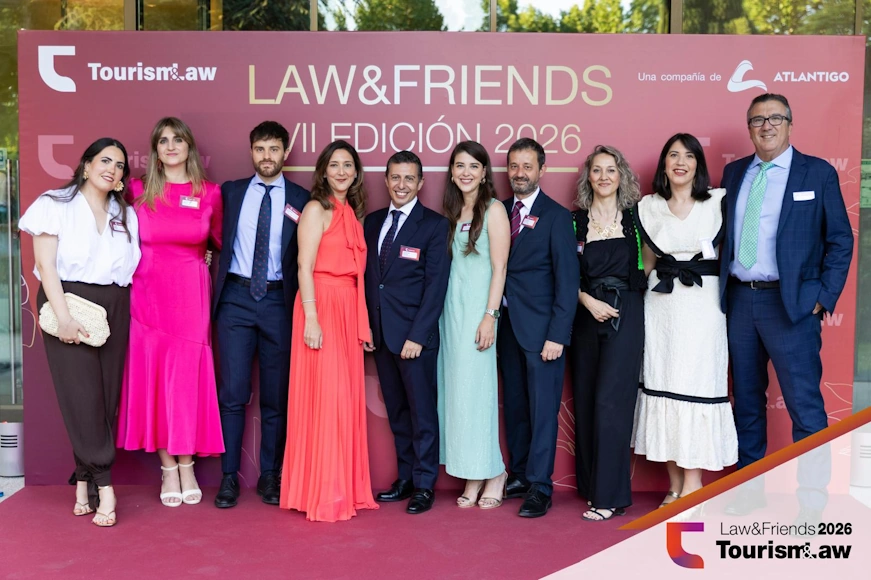
Everything we do is designed to foster a relationship that is almost as personal as it is professional. That is why the vast majority of our clients have continued to place their trust in us for many years.