

This year, ‘Cultural Málaga in Autumn’ boasts a particularly packed programme. New exhibitions, dance, photography, music and educational initiatives make autumn an opportunity to see the city from a different perspective and reinforce its position as a year-round cultural destination.
Málaga has long been building a tourist identity that goes far beyond just sun and beaches. Museums, heritage, gastronomy, festivals and contemporary arts are now part of an offering capable of attracting visitors even outside the summer season.
This autumn proves it once again.
October 2026 features a particularly extensive programme, with new exhibitions, dance and photography series, family activities and events that bring together heritage and contemporary art.
It’s not just about listing events. What’s interesting is seeing how culture allows you to experience Málaga in a different way.
Munch and Picasso: two ways of understanding modernity
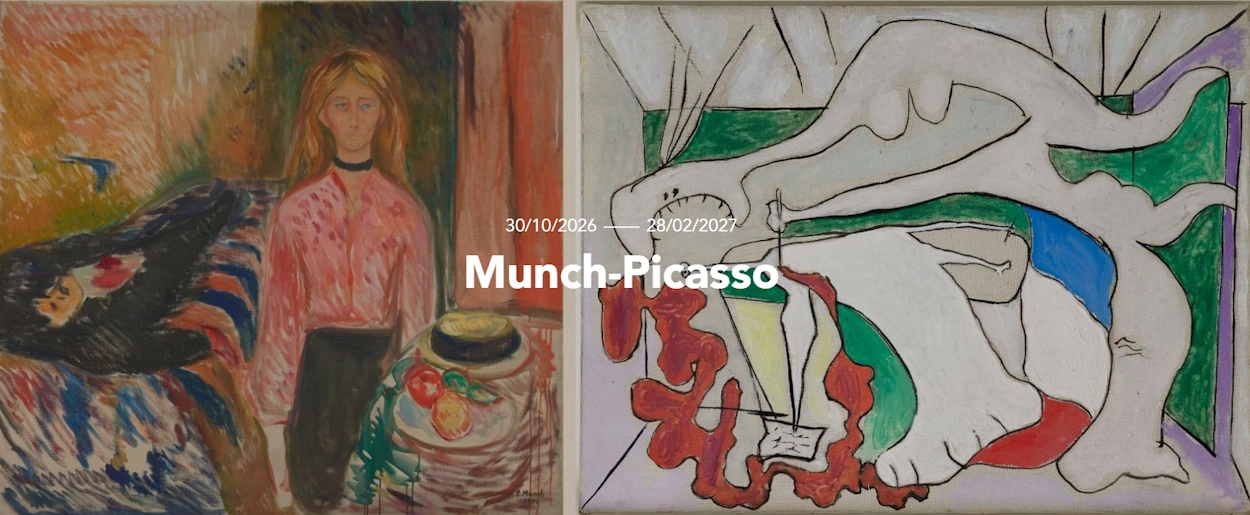
One of the major events of the autumn will take place on 30 October, when the Picasso Museum Malaga inaugurates Munch–Picasso, an exhibition which will run until 28 February 2027.
For the first time, the exhibition explores a dialogue between Edvard Munch and Pablo Picasso through more than a hundred paintings, drawings and prints. The exhibition focuses on thematic affinities and concerns shared by both artists, ranging from love and desire to illness, loneliness, death and existential angst.
The exhibition is also accompanied by a study day on 30 October itself, featuring experts from the Museo Picasso Málaga, the Munchmuseet in Oslo and the University of Málaga.
Beyond its artistic significance, an initiative of this kind reinforces one of Málaga’s great cultural strengths: its ability to use the figure of Picasso as a starting point for fostering international and contemporary dialogue. At Sinergia Skål, we have also explored this relationship between the artist and the city in Picasso and Málaga.
Andalusia takes a look at itself at the Carmen Thyssen Museum
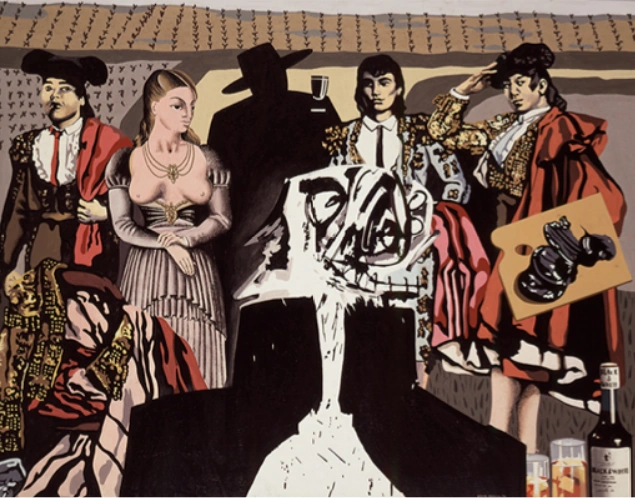
The Carmen Thyssen Museum, Málaga has just opened Olé! The myth of Spanish culture through the lens of Andalusia, open from 3 October 2026 to 21 February 2027.
The exhibition sets out to examine how the image of Spain has been visually constructed through the lens of Andalusia, and brings together a vast array of artists, including Goya, Sorolla, Romero de Torres, Picasso, Equipo Crónica, García Rodero and García-Alix.
The proposal is particularly interesting from a tourism perspective because it raises an issue that remains highly topical: how perceptions of a region are formed, and how much of them is based on reality, how much on an outside perspective, and how much on clichés.
For generations, Andalusia has been one of Spain’s great visual icons. Re-examining that imagery through the lens of art allows us to view the region in a more nuanced way and also to ask ourselves what images we wish to project today.
The Mediterranean as a shared space
Another important event will take place on 21 October with the exhibition The Mediterranean: a landless continent, on display at MUCAC Málaga until 7 March 2027.
The title itself is a statement of intent.
The Mediterranean can be understood as a border, a route, a shared memory or a space for cultural exchange. For Málaga, a city with historic ties to that sea, this reflection also takes on a clear territorial dimension.
An exhibition like this brings together contemporary art, history and tourism from a less conventional perspective: not just what we see when we visit a destination, but also the cultural and human connections that have shaped it.
Dance takes over the city
Malaga’s cultural autumn is not limited to museums.
Dance Málaga 2026 is taking place this year with 18 proposals, five more than in 2025, and features flamenco, contemporary dance and family-friendly shows. Among the names announced are Sara Baras, Farruquito, Luz Arcas, Pastora Galván, Daniel Doña and Ana Morales.
The growth of the cycle is also of interest from the perspective of the destination.
The performing arts help to diversify the cultural experience and attract a variety of audiences. And, unlike other tourist attractions, they have a special ability to encourage repeat visits: every season offers something different.
You don’t visit a city just to see what remains. You also visit it to experience what is happening at that particular moment.

Photography and new perspectives
The autumn programme also includes more recent additions such as News, by the American photographer and musician Patrick Sansone, presented by MEET on 9 October.
The exhibition brings together works created between 2019 and 2024 and offers a perspective on the slow decline of the so-called American dream.
The fact that Málaga is hosting this sort of international project also enriches the city’s cultural narrative.
Not everything has to be directly linked to local identity. A strong cultural destination needs to be able to showcase its own identity whilst, at the same time, serving as a welcoming space for ideas, artists and debates from elsewhere.
Culture for different audiences
The council’s programme for October also offers a wide variety of events.
There are family workshops, reading clubs, guided tours, film screenings, events linked to Marina Abramović and exhibitions such as Ins Blaue / Let’s see what happens, the result of the twinning arrangement between Málaga and Passau.
Initiatives to promote cultural accessibility for groups with special needs are also being developed; this is a particularly important aspect if culture is to truly form part of a city that is open to residents and visitors alike.
The richness of a cultural programme is not measured solely by its big names. It is also measured by its ability to engage diverse audiences and offer different ways of getting involved.
Cultural Málaga in autumn: a city that makes you want to come back
Visitors arriving in Málaga in October will not find exactly the same city as those who visit in spring or summer.
Exhibitions change. Programmes are refreshed. New initiatives emerge. Museums present different narratives and theatres stage new productions.
That capacity for renewal is of enormous value to the tourism industry.
Major monuments endure and form the foundation of a destination’s heritage, but cultural events provide an extra reason to return.
A visitor may already have explored the Cathedral, the Alcazaba or the Picasso Museum, and yet still find a different reason to return to Málaga every year.
That is where much of the value of culture as a tourist attraction lies: it is not used up after a single use.
Beyond the summer
For decades, much of the Costa del Sol’s tourism promotion was inevitably linked to the climate, the beaches and the peak holiday season.
That tourist heritage remains fundamental, but Málaga has gradually added other dimensions to its identity.
Museums, music, literature, heritage, the performing arts, gastronomy and contemporary art all help to create an experience that is not solely dependent on the high season.
Autumn 2026 provides a good example.
From Munch and Picasso to Carmen Thyssen’s reinterpretation of the Andalusian imagination, via dance, the Mediterranean, contemporary photography and family-friendly events, the city offers a programme that speaks to both those who live here and those visiting from further afield.
And that balance is important.
Because a cultural destination shouldn’t just be a city that organises activities for tourists.
It should be, above all, a city where culture really comes to life.
This autumn, Málaga offers plenty of opportunities to find out for yourself.