

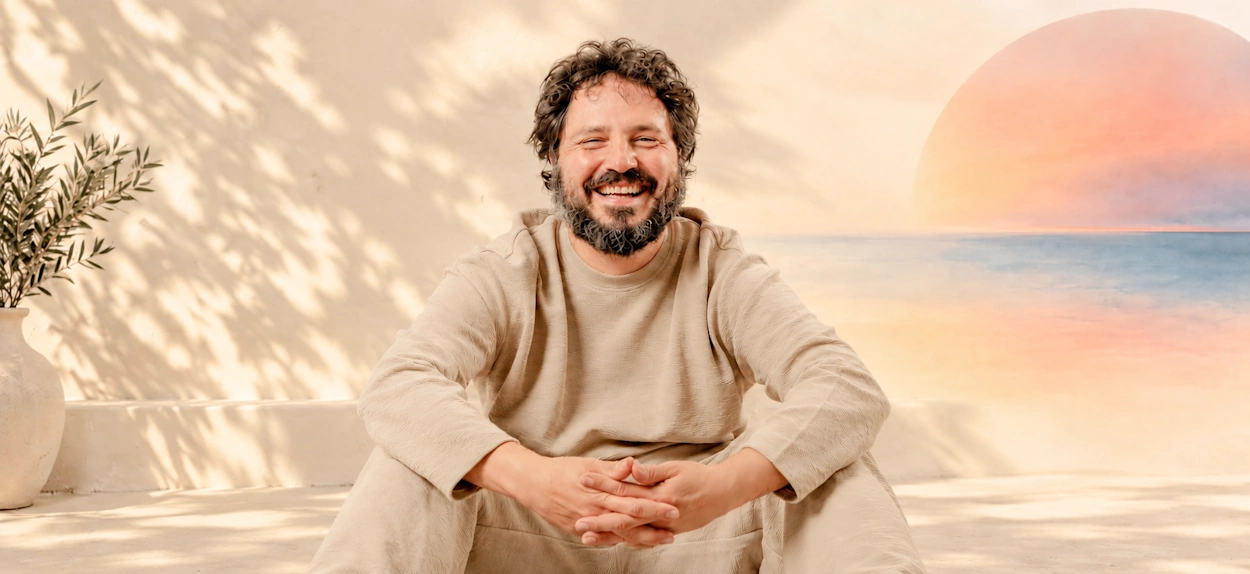
There are artists who talk about the places they visit, and others who manage to weave those places into their songs. Throughout El Kanka’s career, Málaga, Andalusia, Madrid, Latin America and many years on the road have formed part of a personal landscape that blends with music, humour and a highly distinctive outlook on life.
In 2026, he published Calm, an album that celebrates precisely something hard to find in a profession characterised by touring, travelling and constant exposure. Ten tracks in which he once again blends different styles and influences, whilst encouraging us to pause, observe and live at a different pace.
In this interview for Sinergia Skål, we want to talk less about promotion and more about experiences: about Málaga, about journeys that leave a lasting impression, about how a city is perceived when you arrive there as a musician, and about how culture can also help us to discover and understand a destination. interview also explores his relationship with travel, music and the places that ultimately become part of his creative process. At Sinergia Skål, we have also examined this relationship between culture and identity in Picasso and Málaga.
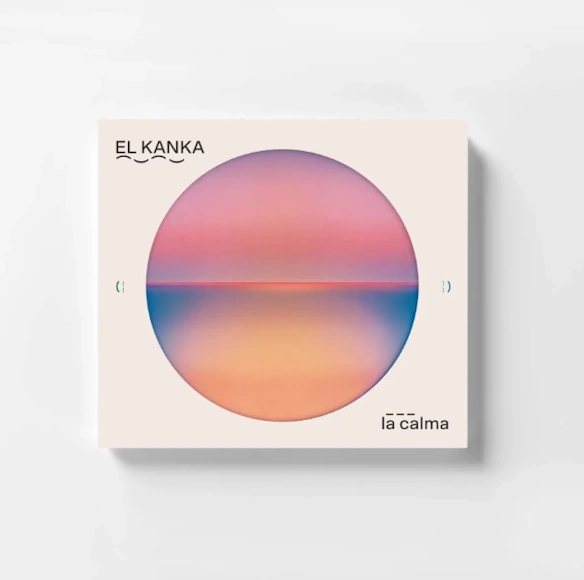
Interview with El Kanka: Málaga, his roots
1. Málaga plays a major part in your identity and features time and again in the way you speak, the way you remember things and the way you compose. After so many years of travelling and living abroad, what does Málaga mean to you today when you return?
Well, I think that, as for anyone, the place where you were born, grew up, experienced your first loves and heartbreaks, and so on, is always an anchor, a set of roots. I feel as though I’m truly coming home, not just because of the number of people (family, friends and so on) who are still waiting for me when I go back – and there are plenty of them – but also because of the little piece of me that’s still there.
2. Your new album, Calm, highlights precisely the need to slow down. To what extent does that quest relate to a professional life that has, for years, been characterised by roads, airports, hotels and concerts?
I’m sure it does, a great deal. Not in any explicit way – that is to say, I wasn’t thinking about it whilst writing the song – but it’s clear that it’s a very unusual profession, where every day is different and it’s generally difficult to establish a routine…
3. Travelling is an inevitable part of a musician’s life. Is there anywhere you’ve visited thanks to music that has, in some way, changed the way you write, think or see the world?
Well, you learn something everywhere… Perhaps especially in Latin America, because obviously, even though we understand each other perfectly as we speak the same language, we’re very different peoples with very different histories, and there are far more differences when it comes to our outlook on life… But I’ll also tell you that there are plenty of differences (and similarities) between a Galician and an Andalusian, hehehe.
4. You’ve travelled to many cities in Spain and Latin America. When you arrive somewhere new, are you the sort of person who tries to really get to know the place, or, after so many years on tour, do you find it difficult to break out of the hotel-soundcheck-concert routine?
Well, to be honest, I’m not really the adventurous type… I like meeting people and I like going out for a meal, but I’m not (if you know what I mean) the sort to go out of my way to see the pyramids… I’m saying this as someone who recognises a shortcoming, but I suppose that, partly because of all the travelling I’ve already done for my job, I don’t feel like going any further than is strictly necessary… That said, if I manage to stay a few days longer (which isn’t usually possible), I try to immerse myself a bit in the atmosphere of whichever city I’m in.
5. Music can shape the image of a region almost as much as its cuisine, architecture or landscapes. Do you think a city can also be understood through its songs and musicians?
Of course, an entire identity is built through creative expression, and music is by far the most popular and widespread form of it.
6. Your music blends rumba, flamenco, Latin American rhythms, boleros and many other influences. To what extent has travelling and experiencing other cultures helped to broaden your own musical language?
I think quite a lot… And in fact, rather than just broadening it (which it has done), it has brought into sharper focus certain aspects that were already there… As for my, shall we say, Latin-influenced style (bolero, chacarera, etc.), I think I’ve had it since I was a child, as my father was a great lover of Latin American song and folklore, but I’m sure it has intensified as a result of my visits to the other continent.
7. Andalusia is evident in the way you express yourself, without it becoming a cliché. How can you maintain your own identity whilst remaining open to everything that comes from outside?
Well, quite naturally, really… I’ll always be who I am and I don’t shy away from that; on the contrary, I’m proud of my roots and I embrace them, but I wouldn’t want to be a narrow-minded person who thinks that everything about me is the best, and everything else is worse… Naturally, I’m curious about things that are different from me; that’s what makes life rich, and it doesn’t clash with what I’ve brought with me from home.
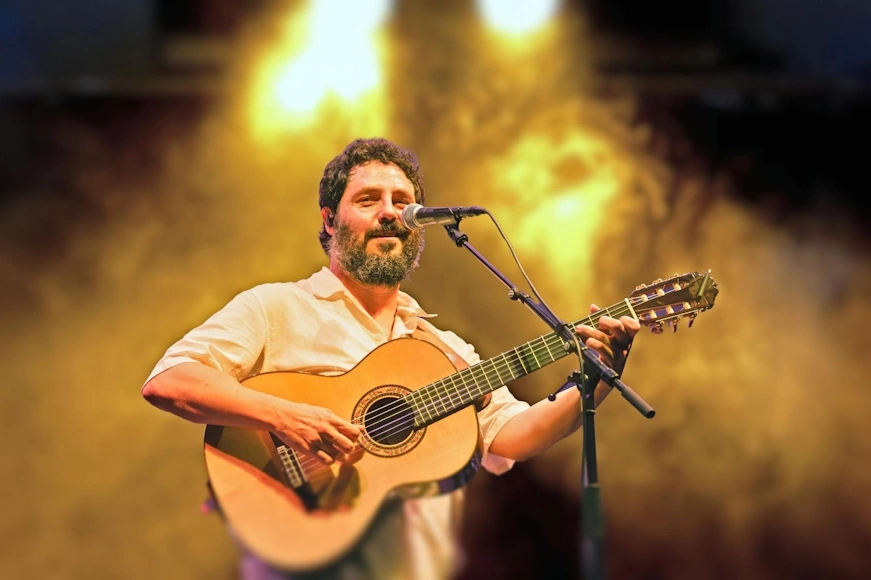
8. Concerts, venues and festivals have also become a reason to travel. Do you think cities fully appreciate the value of live music for their cultural identity and also for their appeal as a destination?
It depends on how each city feels about it… If I were to talk about mine, for example, I’d sadly have to say no, because not much has been done for live music, let alone for the local scene; I think it’s still a work in progress… Although, in any case, it’s a bit of a stretch to talk about the “cities” as a whole because, well, I’m sure that in any city there are different views on the matter depending on the group of people you speak to.
9. Málaga has changed enormously over the last few decades, and tourism has played a major part in that transformation. As someone from Málaga who returns to the city time and again, how do you view that change, and what would you like Málaga never to lose along the way?
Unfortunately, I’d say it’s already lost a great deal… Look, I don’t know what the solution is, because we’re also in a country that has built its economic model around tourism, for obvious reasons, but the truth is that I, for one, find it sad to see how cities (especially the city centre) are losing their identity… And it’s even sadder, now that a much-needed debate on housing has begun, to see how thousands of people in Málaga are being overwhelmed by rising rents.
10. After travelling so many kilometres and seeing so many different places, what have you learnt about the difference between visiting a place and feeling that you’ve really been there?
Hmm, let’s see… I suppose there’s a grey area when it comes to this… It’s not the same as going somewhere once for a gig – doing a soundcheck, playing the gig and coming back – as it is having been there 30 times (you get the picture), staying for two days, staying for a week, or actually living there… The more time you spend there and the more you get involved, the more you get to know the place and the more that place seeps into you too. I’m a bit of a mix of many places now… Or, as Facundo Cabral sang, “I’m not from here, nor am I from there”.
11. If someone who doesn’t know Málaga asked you to show them just one place to start getting to know your city, where would you take them and why?
Hahaha, well… I love Málaga so much I wouldn’t know which one to choose… As I’ve told you, I’m all about food and bars, so I’d take them for some espeto at El Palo – it’s still an area that’s retained a lot of its character – or to the Baños del Carmen, the Casa del Guardia, the Casa del Perro… I’d also take them up to Gibralfaro to show them the city from above.
The interview thus offers a very personal perspective on Málaga, the changes it has undergone, and the way in which an artist comes to belong to many different places.
12. And finally: if you had to start writing a song about Málaga today, what image, sound, smell or moment would kick off that first verse?
The Surrealist City
That I love and need so much
It always tastes like country food to me
And it’s the first one on my list
hahaha