

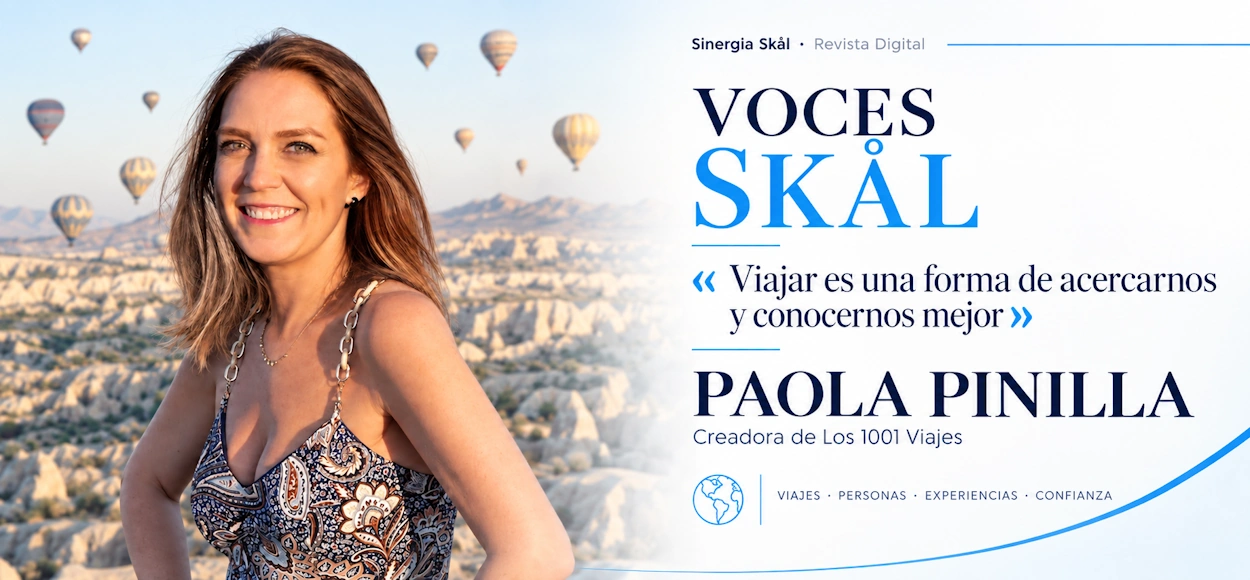
Paola Pinilla, the founder of *Los 1001 Viajes*, has visited 79 countries and has turned her travel experiences into a bridge between Chile, Spain and people.
Interview with Juanjo Oliván
Paola Pinilla has made travelling a way of seeing the world and connecting with people. Born in Chile, educated in Barcelona and Zaragoza, and with family ties to Andalusia, she found in the Costa del Sol the place from which to bring together two regions that are central to her life.
An industrial civil engineer with a background in finance, the pandemic marked a change of direction that led her to turn her passion for travel into a professional venture. This is how Los 1001 Viajes came about: an initiative based on first-hand knowledge of destinations, listening to people’s needs and designing personalised experiences.
Having travelled to 79 countries, Paola advocates a form of tourism built on authenticity, trust and human connection. In this conversation, she talks about Chile and Andalusia, the new meaning of luxury, sustainability, professional relationships and what she has discovered in Skål International Málaga-Costa del Sol.
Between Chile, Spain and the Costa del Sol
Paola, you were born in Chile and have spent a significant part of your life in Spain. What has that personal and professional journey been like, one that ultimately led you to forge such close ties with the Costa del Sol?
I spent my childhood and teenage years in Spain, specifically between Barcelona and Zaragoza, although my connection with Andalusia goes back much further. My father is from Seville, so, in a way, Andalusia has always been part of my life, and perhaps it wasn’t so surprising that, in time, fate ended up bringing me here.
Interestingly, it was after the pandemic that I decided to settle permanently on the Costa del Sol. Like many people, COVID made us rethink certain things and also opened up new possibilities, particularly thanks to remote working and greater flexibility to work from anywhere.
And I believe that the Costa del Sol ticks many of the boxes for this: quality of life, climate, international connections and, above all, a very open and dynamic environment. What began as a family and emotional connection to Andalusia ended up becoming a personal and professional decision as well.
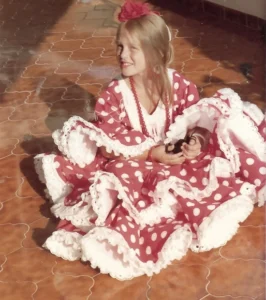
In your profile, you mention that you’ve visited around 79 countries. Is that figure correct now? How has travelling so much changed the way you see the world and understand tourism?
Yes, the figure is 79 countries, although I always say that travelling isn’t a numbers game. What matters is what each one of them leaves you with.
Having lived in Chile for so many years gave me the opportunity to explore practically the whole of South America, as well as to travel on several occasions to the United States and other destinations in North America. The ties that exist between Chile and the United States – both personal and professional – meant that I had many opportunities to get to know that country.
Furthermore, my frequent trips to Spain allowed me to gradually discover Europe, making the most of each visit to explore a new country. I have always been very curious about other cultures, keen to understand how people live, what sets us apart and, above all, what we can learn from and contribute to one another.
Later on, I had the opportunity to travel around Asia, a continent that I find fascinating precisely because of its enormous cultural diversity. I have also travelled extensively in the Caribbean, although in this case mainly on holiday.
Australia and New Zealand were other very interesting experiences. New Zealand, in particular, surprised me because I found many similarities with Chile: the landscapes, the natural surroundings, the connection with the ocean and that feeling of being in countries far removed from the world’s major centres. Although, to be fair, I found their small towns to be much more developed than many of those we come across in Chile.
Africa is perhaps the continent I’ve explored the least. But now that I live on the Costa del Sol, practically opposite Morocco, I think the time has come to give it a go.
And I think that travelling so much has also changed the way I view tourism. When you visit lots of different destinations, you begin to realise that a good trip doesn’t just depend on a nice hotel or a spectacular location. It’s very much about the experience, the people, authenticity and the ability to connect with the local culture. Ultimately, travelling makes you realise that tourism is, above all, a way of bringing us closer together and getting to know one another better.
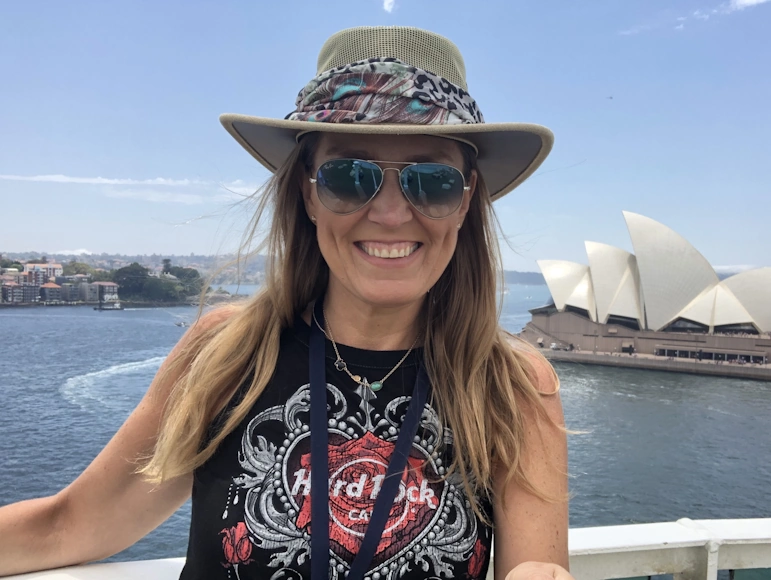
When travelling becomes a career
Before launching *Los 1001 Viajes*, you had built up a varied professional career. What were the most significant stages of your career, and what lessons have you learnt that have shaped your current project?
The truth is that, for many years, my career has been more closely linked to the world of numbers. I am an industrial civil engineer and I worked mainly in the field of finance. However, I have always been passionate about tourism on a personal level, although I never imagined it would end up becoming such an important part of my professional life as well.
It was during the pandemic that the opportunity arose to collaborate with an agency in Madrid, and that was, in a way, my first professional foray into the world of tourism. The experience allowed me to realise that I could combine two things that had always played a major part in my life: my professional experience and my passion for travelling and discovering new destinations.
Once I had settled on the Costa del Sol, I thought it would be really interesting to build a bridge between this region and Chile. And that is precisely the spirit of 1001 Viajes: to introduce the Costa del Sol and Spain to the Chilean public and, at the same time, to introduce European travellers to Chile and other destinations in South America.
I believe my greatest strength lies precisely in my insider’s knowledge of both worlds. Having lived in Chile and Spain, having travelled to so many destinations and understanding the cultural differences, I am able to offer a very personal perspective and, above all, advice based on first-hand knowledge of the places.
1001 Viajes was born out of this idea: not simply to sell a destination, but to be able to recommend it based on experience, to understand what each traveller is looking for, and to create bespoke itineraries that truly resonate with their interests.
When and why was ‘Los 1001 Viajes’ founded? What is the story or significance behind that name, and what does this project mean to you today?
‘1001 Viajes’ was born right in the midst of the pandemic. It was a time when, like many others, I had plenty of time to pause and look back. I began to take a sort of personal journey through my life as a traveller, recalling all the places I’d visited, the experiences I’d had and, above all, everything I’d learnt whilst travelling.
And that’s where the name came from. I thought of *One Thousand and One Nights* and thought it would be lovely to apply that idea to the world of travel: stories, destinations and experiences that all link together. That’s how *Los 1001 Viajes* came about.
Today, this project fulfils me completely because it allows me to put all the knowledge and experience I’ve gained over so many years of travelling at the service of others. For me, a journey shouldn’t simply be about reaching a destination, but about having an experience that truly means something to the person undertaking it.
And what probably gives me the greatest sense of satisfaction is the feedback from my travellers. When they tell me that a recommendation worked out, that they discovered a place they didn’t know about, or – especially – that I was able to help them fulfil a long-held dream, I feel that it all makes sense.
I think that’s the best thing about *1001 Viajes*: being able to share my experiences to help others create their own travel stories.
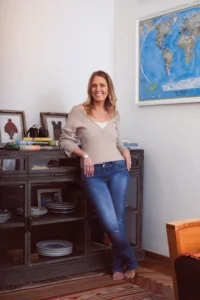
You talk about designing bespoke trips and experiences with soul. What does it mean to you to really get to know the traveller before putting together a proposal?
For me, getting to know the traveller is almost as important as getting to know the destination. Before I start thinking about hotels, restaurants or activities, I need to understand who I’m dealing with: what they like, what they expect from the trip, what pace they enjoy, what experiences excite them, and also what they’d rather avoid.
Not everyone travels in the same way. Some people want to explore a destination in depth, others are looking for peace and quiet, some prioritise food, nature, culture or wine, and others simply want to switch off and feel well looked after. Even two people travelling to the same place may need completely different trips.
That’s why I try to listen carefully before making a proposal. Sometimes a conversation gives you far more information than any questionnaire ever could.
And that, I believe, is where the true value of personalisation lies: it’s not simply a matter of changing a hotel or adding an excursion, but of putting together a trip that makes sense for that person.
When you really get to know a traveller, you can recommend something they might not have found on their own. And when they come back later and say, “That was exactly what I was looking for”, you know you’ve got it right.
For me, a journey with soul is precisely that: a journey tailored to the person who is going to experience it, not simply an itinerary that might suit just about anyone.
A tourism link between Chile and Andalusia
Chile and the Costa del Sol are the two main focal points of your work. What do these destinations have in common, and what can they offer each other from a tourism perspective?
Chile and the Costa del Sol are the two main focuses of my work because they are the destinations I know best and where I have lived. I spend a good part of my time travelling between the two, which allows me to stay very much in touch with both markets and have a fairly up-to-date view of what they have to offer.
At first glance, they may seem like very different destinations, but they have more in common than we might imagine. Both boast a wealth of natural beauty, a fascinating culinary scene, wines, coastline, wellness experiences and, above all, a range of options that allow you to combine relaxation, nature and high-quality experiences.
Chile, for example, boasts extraordinary natural beauty and truly unique experiences which I believe could be particularly appealing to visitors from the Costa del Sol, who are accustomed to certain standards of quality and are increasingly seeking out different kinds of holidays and authentic experiences.
Conversely, I believe the Costa del Sol still has a great deal of untapped potential amongst Chilean travellers. I have noticed that, traditionally, many Chileans who travel to Spain tend to focus their visits on Madrid, Barcelona or the Balearic Islands. However, the Costa del Sol has a great deal to offer them: climate, cuisine, culture, golf, wellness, shopping, charming villages and excellent transport links, as well as the chance to combine it with a visit to Andalusia.
I believe that with effective communication and by showcasing everything the region truly has to offer, the Costa del Sol could also become a leading destination for Chilean travellers.
And that’s where I rediscover the meaning of *1001 Journeys*: to act as that bridge between two destinations I know personally, and to be able to show each market what I believe it can discover and enjoy about the other.
Based on your experience of both markets, what are Chilean travellers looking for when they visit Andalusia, and which aspects of Chile might prove particularly appealing to Spanish travellers?
I believe that Chilean travellers who come to Andalusia are, to a large extent, looking to experience a different side of Spain to the one they already know or are more familiar with. Beyond Madrid and Barcelona, Andalusia offers a very appealing combination: climate, cuisine, culture, history, charming villages, the coast and a more relaxed way of life.
In the case of the Costa del Sol, moreover, there is an aspect which I believe holds great potential for the Chilean market: being able to enjoy a holiday with excellent accommodation and dining options, activities and experiences, whilst still soaking up that Mediterranean atmosphere that makes you want to stay a few days longer. And Andalusia offers the perfect complement to the coast with cities such as Málaga, Seville, Córdoba and Granada.
For Spanish travellers, on the other hand, I believe Chile has something very special to offer: the chance to enjoy truly extraordinary experiences in nature without having to compromise on high-quality tourist facilities. It is a country where, on a single trip, you can encounter the desert, vineyards, glaciers, forests, volcanoes, the ocean and such unique places as Rapa Nui.
But perhaps the most interesting thing is that Chile still has a great deal to offer Spanish travellers. Beyond the best-known destinations, there are small hotels, culinary ventures, wine routes and experiences linked to nature and local communities that allow you to discover a much more authentic side of Chile.
And I think that’s precisely where my role lies: not just telling a Chilean to “come to Andalusia” or a Spaniard to “travel to Chile”, but understanding what each traveller is looking for and showing them that other side of the destination which they may not yet be familiar with.
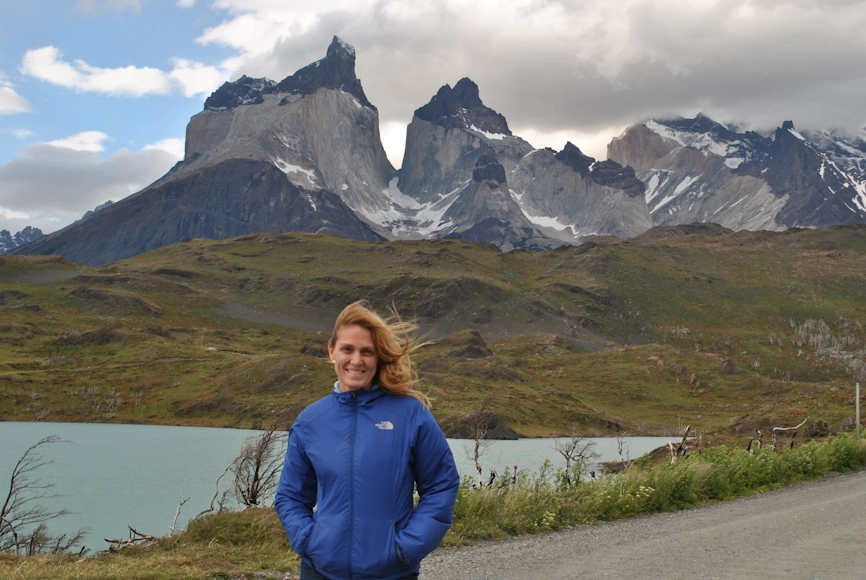
Golf, experiences and connections between markets
Golf plays a prominent role in both your personal life and your professional career. To what extent does it help to generate travel, relationships and opportunities across international markets?
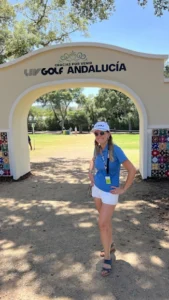
Although I don’t play golf myself, since moving to the Costa del Sol I have come to understand how important this sport is for tourism and for the region’s economy. Golf is much more than just a sporting activity: it is a major driver of travel and, above all, of longer stays, attracting a type of traveller who seeks to combine the sport with fine dining, wellness, shopping, nature or culture.
Furthermore, it has a very interesting feature from a professional point of view: it fosters relationships. Many people travel in groups to play golf, and personal and professional bonds are forged around that experience. It is a very international environment, and the Costa del Sol is ideally placed to connect with those markets.
For me, as a tourism professional, the interesting thing is precisely understanding that ecosystem, even though I’m not a golfer myself. A golfing holiday can be so much more than just a round of golf: it can include a great dining experience, a visit to a winery, a tour of Andalusia or a few days’ relaxation on the coast.
And I think there is also an interesting opportunity for Chile. We have a range of golfing experiences that can be combined with stunning scenery, wine, fine dining and the natural environment, and which may appeal to those seeking something a little different.
Ultimately, golf is another example of how a particular hobby can serve as a gateway to discovering a destination whilst, at the same time, fostering relationships between people and markets.
Three projects with a common theme
Your professional work is also linked to Expan Incoming and Regenera Luxury. What are your current responsibilities within each project, and how do these roles complement your work with Los 1001 Viajes?
They are three different projects, but for me they share a common thread: tourism, the connection between markets and the creation of meaningful experiences.
At Expan Incoming, I work as an international sales representative for this Chilean DMC, which has 30 years’ experience in the market. My role is primarily focused on developing business relationships and promoting what Chile and South America have to offer to tour operators and tourism professionals in Europe and other international markets. It is a role that is very much B2B-oriented, centred on generating leads and understanding what each market is looking for so that we can develop suitable proposals.
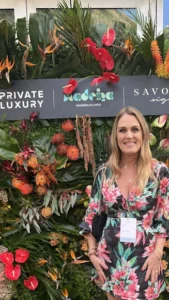
Regenera Luxury is a unique and fascinating project because it is linked to a new way of understanding high-end tourism, incorporating principles of regeneration and sustainability into the development of destinations and the industry. My role involves the commercial and development side of the business in Chile and on the Costa del Sol, helping to forge connections and introduce this concept to companies and professionals in the sector.
And “Los 1001 Viajes” has a more personal feel to it. It’s my own project and is much more focused on the traveller themselves – getting to know them, understanding what they’re looking for and designing bespoke experiences, particularly by building that bridge between Chile and Spain.
I believe that these three activities complement one another precisely because they allow me to understand tourism from different perspectives: from the traveller’s point of view, from the perspective of commercial development amongst professionals, and from the perspective of the evolution of the destinations themselves and the industry.
What’s more, it means I’m constantly in touch with people, companies and projects from different markets. And that network of contacts and the knowledge I’m gaining end up enriching the way I work at Los 1001 Viajes as well.
The new luxury and the regeneration of destinations
Luxury tourism is evolving towards more personalised, authentic and responsible experiences. What does “luxury” mean to you, and what role should sustainability and the regeneration of destinations play?
For me, the concept of luxury has changed a great deal. For a long time, it was mainly associated with an extraordinary hotel, certain services or material possessions. Today, I believe that true luxury has much more to do with time, tranquillity, privacy and, above all, being able to enjoy an experience that is truly meaningful to each individual.
A traveller may stay in a spectacular hotel and yet feel that the experience has not been special. In contrast, a small place to stay, a meal prepared by a local, or an experience that is not accessible to everyone can become far more precious memories.
That is why I believe that personalisation and authenticity are becoming increasingly important in high-end tourism. And sustainability should no longer be seen as an afterthought or something that is added at the end of a project, but as an integral part of the way we think about and develop destinations.
That is where I am particularly interested in the concept of regeneration. Sustainability often seeks to reduce our impact; regeneration raises an additional question: how can we ensure that our tourism activities make a positive contribution to the destination and the communities that make it possible?
I believe that tourism has enormous potential to drive economic development, preserve heritage, showcase local culture and create opportunities for communities. But to achieve this, we need to look beyond what the traveller receives and also ask ourselves what remains in the destination once that traveller has left.
For me, that is the future of luxury: not consuming more, but living better; enjoying exceptional experiences without that necessarily meaning a greater environmental impact; and ensuring that tourism benefits both the traveller and the destination.
Skål as a professional and social network
When and how did you first hear about Skål International Málaga-Costa del Sol? What made you decide to join the club, and what does being part of this professional community mean to you today?
I found out about Skål International Málaga-Costa del Sol through social media, after seeing a post about an awards ceremony. It caught my attention and I started looking into what Skål was and what sort of activities it organised. I even went to the office in person because I wanted to find out more about the project first-hand.
When I arrived on the Costa del Sol, I had virtually no professional connections. That’s why joining Skål seemed to me to be a great way to get to know the industry, make a name for myself and, above all, start building a network of contacts in an environment that was still new to me.
And the truth is that right from the start I’ve felt very welcome and supported by the members. For me, it has been – and continues to be – an extraordinary source of support.
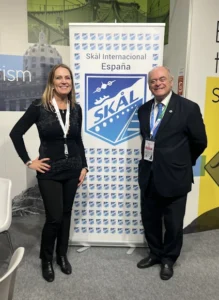
I have also had the opportunity to take part in various activities and enjoy experiences that I could hardly have imagined when I first joined. I’ve been able to attend FITUR twice, and this year I even had the chance to give a talk at the Skål stand on wine tourism and nature tourism in Chile. It was particularly lovely for me because I was able to share something I know about and which forms part of my work.
I believe that one of Skål’s great strengths is precisely its networking, but for me it goes a bit further than that. I see it as a network of friends within the sector – people with whom you can share knowledge, open doors, forge partnerships and, of course, do business.
And that’s what I value most: that the relationships feel very genuine. It’s not simply a matter of building up a network of contacts, but of forging connections that, over time, can develop into friendships, collaborations and professional opportunities.
To conclude, at Skål we talk a great deal about the value of personal relationships within the tourism sector. Based on your professional and travel experience, do people and trust remain an essential part of this industry?
Of course. For me, the human factor remains the most important aspect of this industry. After so many years of travelling and working with people from different countries, I am convinced that tourism is built, above all, on relationships and trust.
We are living in an age where technology and artificial intelligence are transforming the way we work, and I believe they can be extraordinary tools for improving productivity, accessing information and making many processes more efficient. But there is one thing they can hardly replace: the warmth of a conversation, the trust that is built between two people, or the peace of mind that comes from knowing someone is advising you based on their own experience.
When a client trusts you to organise an important trip, they’re not just buying a service. They’re entrusting you with part of their expectations, their time and, very often, their dreams. That trust is built on listening, knowledge and a personal touch.
Perhaps that’s why I feel such a strong connection to Skål. In an increasingly digital world, being able to meet up, talk face to face, share experiences and build genuine relationships is even more valuable.
Ultimately, destinations may change, tools may evolve and the way we travel may change too, but people will remain at the heart of tourism.